The 18 Million Barrel Signal: How Hormuz Is Being Held Open by Force
The US military escorted 40 tankers carrying 18 million barrels through the Strait of Hormuz in one of the largest wartime convoy operations ever staged. The number is not routine — it signals that despite active combat with Iran, global oil markets are finding a narrow path through a chokepoint that could easily close.
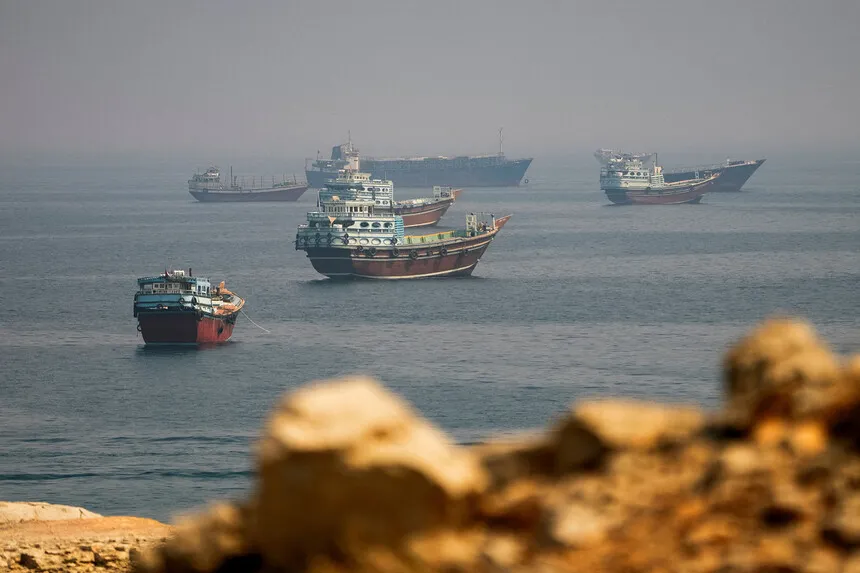
The number that matters
Eighteen million barrels. That is what passed through the Strait of Hormuz in a single escorted transit on the last day of last month — carried on roughly 40 tankers, shielded by US warships. It sounds like a steady number. It is not.
Before the Iran conflict escalated in late February, the daily average through the strait was about 20 million barrels. What moved recently represents roughly 90 percent of pre-war volumes. That is the difference between a functional chokepoint and one that is barely breathing. And the gap between those two states is where energy markets have been living ever since.
Chris Wright, the US energy secretary, confirmed the figure on CNBC and pushed a straightforward narrative: Iran no longer has the capacity to hold the global economy hostage. The logic is part of a broader campaign to show that deterrence is working and that the strait remains open — even as the US struck approximately 60 Iranian military targets during the same escort operation.
But the operational details tell a more complicated story.
Ships going dark
Most of the tankers that passed through on the 1st turned off their transponders — the devices that broadcast a vessel’s position to the world. They did this to avoid detection. That is not normal commercial behavior. That is behavior shaped by threat.
The US administration has argued for some time that the real volume moving through Hormuz exceeds official figures precisely because of this transponder phenomenon. Ships that do not advertise their location are still ships that carry oil. The difference is whether they arrive — and whether insurers will cover them.
This matters for Asian importers more than any other region. Japan and South Korea depend on the Gulf for the overwhelming majority of their crude. When tankers start going dark, it signals that the risk calculus has shifted from inconvenience to danger. Insurance premiums follow. Shipping routes follow. And governments scramble for alternatives that may not exist at scale.
What the US is actually targeting
The 60 strikes documented during the escort window were not random. They targeted air defense systems, radar installations, naval assets, mine-laying capability, and communications infrastructure. According to Trump, the objective went beyond degrading Iran’s ability to fire — it was destroying Iran’s ability to see.
“They’re trying to look at ships, but they can’t because we blew up their radar,” Trump said. That framing is strategically precise: if you cannot track a vessel, you cannot target it with precision. Drone attacks and anti-ship cruise missiles become far less effective against a fleet that is both escorted and invisible.
One US official told CNN that Iran has not exported a single barrel of oil since July. That is a staggering admission — a major producer effectively offline for months. But the same official acknowledged that Iran still retains the ability to threaten commercial shipping through asymmetric tactics. Drones. Mines. Fast-attack craft. The kind of tools that do not require radar to be dangerous.
Why 18 million is a signal, not a statistic
The 18 million barrel figure deserves attention for what it communicates to markets. It says: the strait is open, but only under armed escort. It says: commercial shipping will continue, but at higher cost and higher risk. It says: the US is willing to project force into a busy maritime chokepoint during active combat — a decision that expands the operational footprint and raises the stakes for everyone nearby.
It also says something about timing. The operation took place during what appears to be an escalation phase, with US forces trading strikes with Iran while simultaneously protecting commercial traffic. That dual mandate is demanding. It requires naval assets to be in two places at once — hunting and herding. The fact that it has held together so far is noteworthy. Whether it can sustain that balance is an open question.
For East Asia, the direct implication is simple: Tokyo and Seoul are watching closely. Both nations rely on Hormuz for the bulk of their imported crude. Any disruption — even a temporary one — sends shockwaves through refineries and economies that have built their energy logistics around uninterrupted Gulf flows. A Korean-flagged vessel was reportedly struck during recent incidents, a detail that makes this existential rather than abstract for Seoul.
Who wins, who loses
The US wins in the short term by demonstrating that it can project power through one of the world’s most critical maritime passages while simultaneously degrading an adversary’s surveillance and strike capability. The message to Riyadh, Abu Dhabi, and other Gulf partners is clear: American naval power still guarantees freedom of navigation — for a price.
Iran loses. It has been unable to export oil since July. Its ability to disrupt traffic has been degraded but not eliminated. It remains a threshold power capable of disruption without having the capacity for denial.
Asian importers occupy an uneasy middle ground. They benefit from the escorted flow but bear the risk premium. Higher insurance costs, longer routing options, and the ever-present threat of escalation are the new normal. The question for Seoul and Tokyo is not whether the oil will move — it is at what cost, and for how long.
What happens next
The most important variable is whether the US can maintain this escort posture without drawing its own vessels into a broader engagement. Sixty strikes in a single operation is not a limited action. It is a sustained campaign. If Iran responds by targeting US assets more aggressively — or by widening the attack to commercial shipping with greater coordination — the cost of keeping the strait open rises sharply.
Market participants are already pricing in the risk. The 18 million barrel figure will not prevent volatility. It will not eliminate the insurance premium. What it does is establish a baseline: the strait is functional, but functionally fragile.
For East Asia, the takeaway is stark. The era of taking Hormuz for granted is over. The question now is how much longer the current arrangement — US escorts, dark transponders, elevated risk — can hold before the system fractures.