Abu Dhabi Talks Reveal Where Moscow, Washington, Kyiv Actually Stand
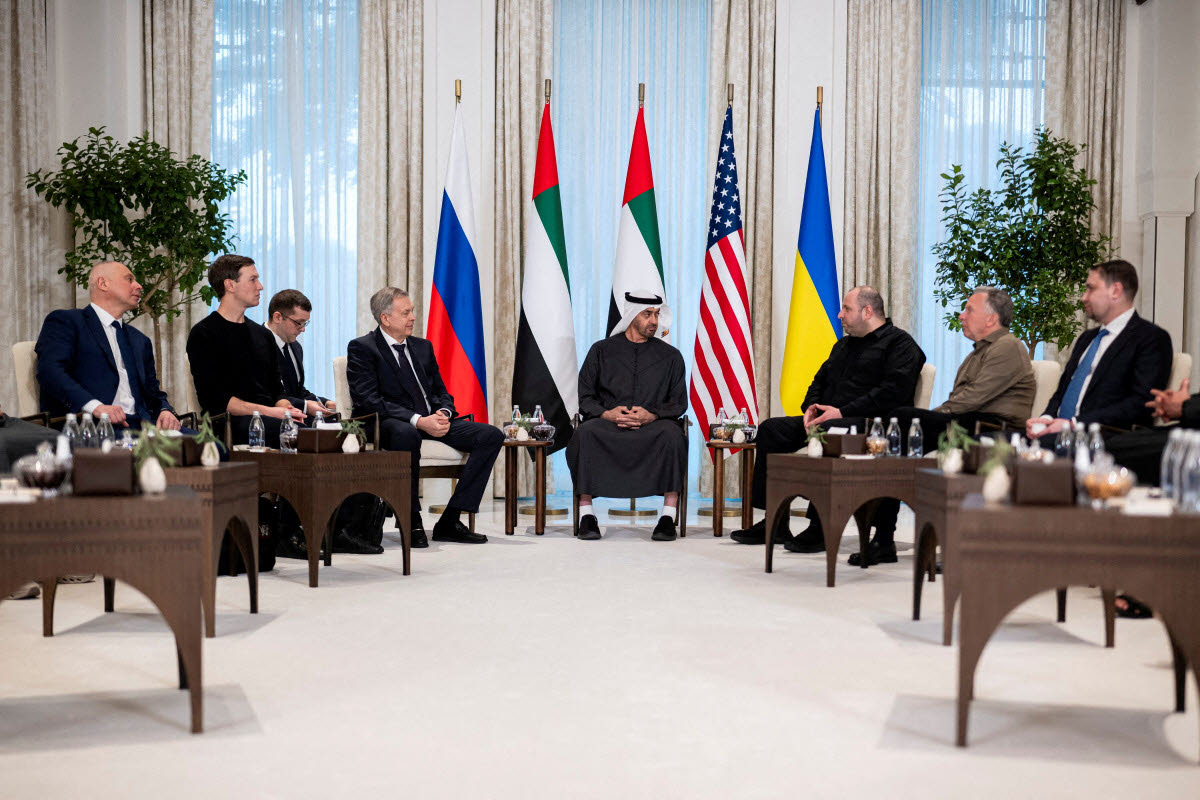
The trilateral talks in Abu Dhabi cover three narrow but consequential items: an energy truce, Black Sea shipping safety, and prisoner swaps. Each one reveals where the warring sides actually stand—and where the process could stall.
The Narrow Agenda That Says Everything
The three agenda items in Abu Dhabi are deliberately small — an energy truce, Black Sea shipping safety, prisoner exchanges — but they cut directly at the war’s infrastructure, not its ideology. That is the point. After months of positional grinding, the parties appear to be testing whether any de-escalation is survivable before talking about anything larger.
Donald Trump confirmed the trilateral meeting is set for January 10–11 in Abu Dhabi and has publicly signaled what none of the participants have said outright: that Moscow and Kyiv now want an agreement more than they have at any previous point in the conflict. Whether that reading reflects genuine intelligence inside therooms or political positioning ahead of the talks is impossible to verify from outside. But his characterization matters because it sets the frame — if both sides truly believe a deal is within reach, every subsequent move will be calibrated differently.
Who Decides What Russia Sends
Russia announced its delegation composition on January 7, revealing five members: one presidential aide, two diplomats, and two military officers. The mix is telling. Military officers sitting alongside diplomats signals that the talks will not be purely political exercises — they are expected to produce concrete, verifiable outputs. Energy infrastructure shutdowns, maritime corridor routes, and prisoner lists are operational problems that require people who understand logistics, not just rhetoric.
The inclusion of a Kremlin aide is equally significant. It means Putin is keeping a direct line to whoever emerges from those sessions, rather than delegating entirely to the Foreign Ministry. This is not a bottom-level technical meeting disguised as high diplomacy; someone with authority over outcomes is in the room.
Ukraine has not yet publicly disclosed its delegation structure, which itself is a signal. Kyiv tends to be careful about revealing negotiating compositions before the fact, likely to preserve tactical ambiguity. That caution should not be read as reluctance — it is standard practice for a state that lacks the diplomatic bandwidth to absorb surprise concessions.
The Energy Truce Is Not Just Humanitarian
An “energy truce” sounds like a confidence-building gesture. It is also the single most consequential item on the table because it determines whether Ukraine survives its next winter intact and whether European gas markets get any relief from the supply shocks that have punctuated this war.
Russia has systematically targeted Ukrainian energy infrastructure since 2022, leaving much of the country without reliable power through cold months. If both sides agree — even implicitly — to pause strikes on energy facilities, the immediate effect would be measured in megawatts delivered to hospitals, heating plants, and water treatment centers. The secondary effect would ripple through European energy markets, potentially softening price spikes that have returned with seasonal regularity.
But an energy truce is fragile by design. Verification requires shared satellite imagery, on-the-ground monitoring, and a willingness to investigate allegations quickly. Either side can accuse the other of violations and use them to justify escalation. The devil will be in whether both sides treat the truce as binding or as temporary shelter.
The Black Sea Grain Corridor Has a Longer Memory
The Black Sea grain corridor was first brokered under Turkish and UN mediation in 2022, collapsed, and was only partially reinstated later. Its return to the Abu Dhabi agenda suggests both sides see renewed value in reopening maritime exports — Ukraine needs them for revenue, Russia needs them to demonstrate that it is not blocking global food flows indefinitely.
The corridor is not merely an economic issue. Control of Black Sea shipping lanes is strategic leverage. Every merchant vessel that passes through signals whether the blockade holds or cracks. For Ukraine, restored export capacity means hard currency for weapons purchases and reconstruction. For Russia, allowing grain shipments while simultaneously striking energy infrastructure sends a calibrated message: restraint in one domain does not equal retreat across all domains.
The real question is enforcement. Who inspects the corridor? Who decides what constitutes a violation? Turkey played a central role previously, but the Abu Dhabi format places the United States at the center. That shift increases American influence over the terms but also makes Washington more directly accountable if the corridor fails again.
Prisoner Exchange as the Low-Hanging Fruit
Prisoner swaps are almost always the first area where tangible results emerge in conflict negotiations. They carry low strategic risk compared to territorial or security arrangements, they generate visible goodwill, and they humanize the conversation in ways that other agenda items do not. A completed exchange can create the perception of momentum that other, harder deals need to survive politically.
Kyiv has consistently treated prisoner issues as morally non-negotiable, framing each release as a state obligation rather than a bargaining chip. Moscow has used captured soldiers as leverage in past rounds of negotiation. Both positions create friction even when both sides claim to want progress. The Abu Dhabi format avoids public naming of specific cases, which is deliberate — keeping details off the record prevents either government from being forced into premature announcements that could complicate future trades.
Ukraine’s Economy Is the Quiet Driver
Ukraine’s third-quarter GDP contraction of 0.7 percent year-over-year is the smallest decline in recent quarters, but it marks a dangerous inflection point. If the trend continues, Ukraine faces its first full-year negative growth since Russia’s 2022 invasion began. Economic exhaustion changes bargaining behavior. A government under sustained fiscal pressure has less room to absorb prolonged military stalemates and more incentive to accept compromises it would otherwise reject.
This does not mean Kyiv is desperate. It means the calculus is shifting. Every month of continued infrastructure destruction carries compounding costs — lost tax revenue, higher reconstruction bills, deeper dependence on foreign aid. An energy truce that reduces the pace of damage buys time, and time is something Ukraine currently cannot afford to lose.
Domestic Politics Will Test the Framework
Trump’s vision of a broad European-security agreement raises a structural problem: the United States cannot unilaterally deliver European buy-in. Democrats controlling elements of Congress have already signaled skepticism toward unconditional support for Ukraine, and some factions are pushing for stricter conditions on aid packages. If legislative resistance grows, Washington’s ability to act as credible mediator shrinks, because leverage without political backing is just rhetoric.
Conversely, if Congressional opposition weakens the administration’s hand, Russia and Ukraine will detect it. Neither side trusts a mediator whose domestic foundation is uncertain. Any agreement reached in Abu Dhabi will need to survive scrutiny not just from Moscow and Kyiv but from Capitol Hill, European capitals, and their own electorates.
What Happens Next
The talks conclude on January 11. A joint statement, if one emerges, will be the first real test of whether the three agenda items have produced converging interests or merely agreed to disagree privately. Expect the statement to be deliberately vague on language but precise on mechanisms — a truce framework, not a truce outcome.
The energy truce will likely be the first area where partial progress appears, because the incentives align most clearly: both sides feel immediate pain from continued infrastructure targeting, and both can claim humanitarian motivation. The Black Sea corridor will require more time and third-party guarantees. Prisoner exchanges may produce the earliest verifiable result, potentially announced separately from the main communique.
Whether this becomes a durable opening or a brief pause depends on what happens after the delegates leave Abu Dhabi. The framework exists. The agendas are concrete. The window is narrow.