After Cook, What Does Apple's New CEO Actually Inherit
Tim Cook's departure ends the most transformative run in Apple's history. John Ternus takes over at a moment when the AI gap, China exposure, and the weight of incremental hardware all converge.
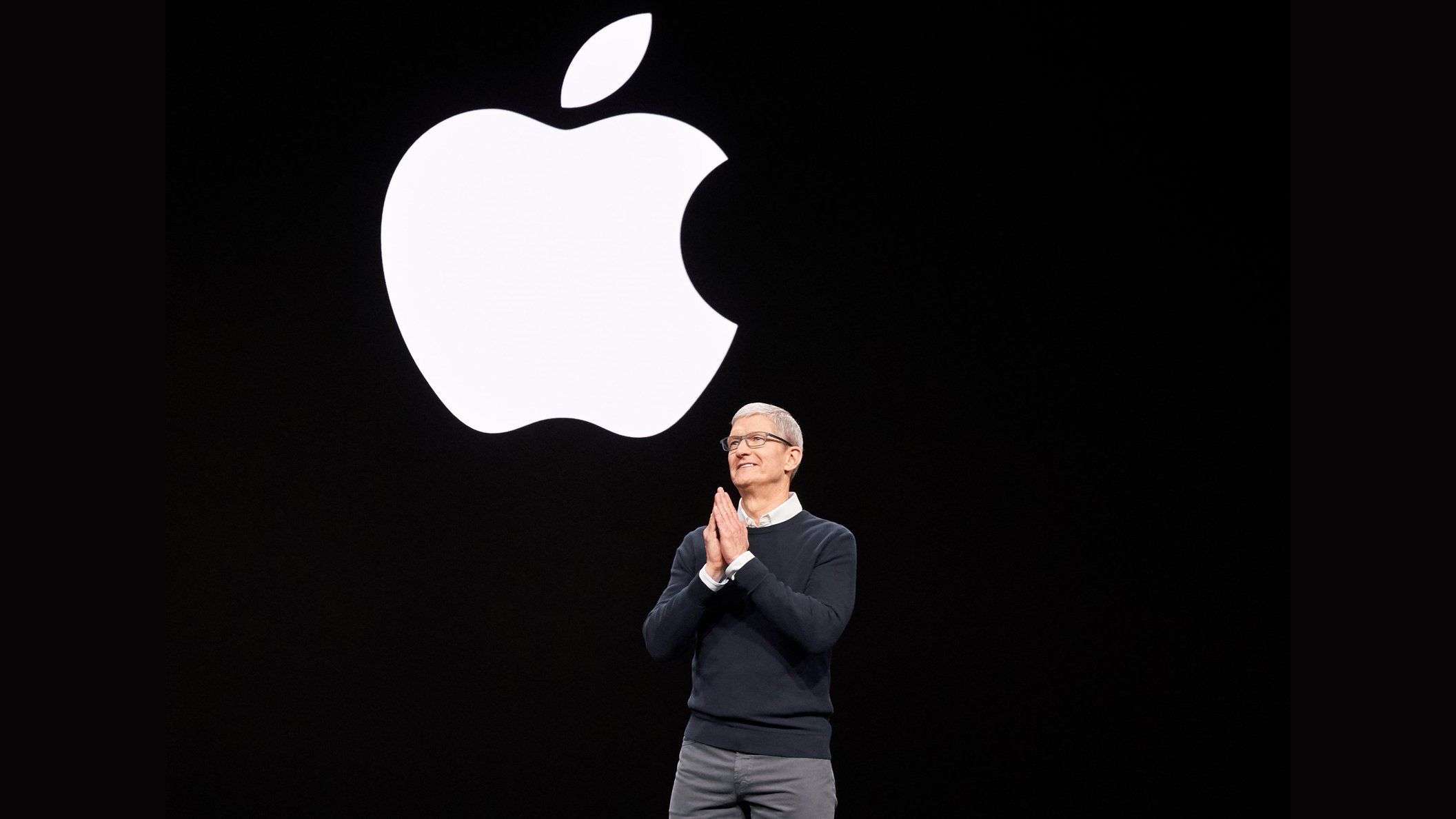
The Man Who Built the Most Valuable Company
Tim Cook is leaving behind something most executives never get the chance to build: a trillion-dollar empire with recurring revenue baked into its DNA.
When he took over in August 2011, Apple was a hardware company with a music subscription and a struggling Services division. Fifteen years later, the company reported all-time quarterly revenue records heading into his departure, powered by a Services business that generates more annual revenue than many Fortune 100 companies. The Apple Watch became the world’s best-selling wearable. AirPods created an entire product category. Apple Pay, Apple Music, Apple TV+, and the App Store became structural pillars that no longer depend on the iPhone cycle alone.
Cook did not invent these things single-handedly. But he was the operational force that turned Apple from a product-dependent company into a consumer ecosystem with pricing power, supply chain dominance, and a services moat that competitors still cannot crack.
John Ternus, his successor, gets to inherit that entire architecture. The question is whether he can defend it.
An Engineer at the Wheel
Ternus joined Apple in 2001 as part of the product design team, which means he was there when the iPod was taking shape and the company was still searching for its post-PC identity. He became vice president of hardware engineering in 2013 and has overseen some of Apple’s most ambitious physical products: the iPhone 11 series, the 14-inch and 16-inch MacBook Pro redesigns, the Apple Watch line, and likely the Vision Pro hardware itself.
Cook described Ternus as having “the mind of an engineer, the soul of an innovator, and the heart to lead with integrity and with honor.” That is a generous endorsement. The more useful description is simpler: Ternus is a hardware person in a moment when Apple’s future may be defined by software and intelligence.
Cook was an operations man who turned supply chain mastery into competitive advantage. Ternus is a hardware engineer who helped design the products inside that supply chain. The difference matters.
Apple is about to announce the iPhone 18 Pro and what is being called its first foldable iPhone. Those are hardware moments. Ternus will step into the CEO role with the weight of those launches on his shoulders, and the pressure to deliver the kind of tangible product excitement that Cook rarely generated on stage.
The AI Question No One Is Asking About
Apple’s public AI strategy has been deliberately vague. While Google, OpenAI, Microsoft, and even Samsung moved aggressively with generative AI features embedded into phones, laptops, and operating systems, Apple took a different path — one that prioritized privacy and delayed investment.
That cautious approach bought time. It also created a gap that competitors are now filling in real time. Google’s Pixel AI features, Samsung’s Galaxy AI tools, and Microsoft’s Copilot integration across devices have reshaped consumer expectations about what a smartphone should do.
Ternus inherits a company that is late to a fundamental shift in how people interact with their devices. Apple Intelligence exists, but it is narrowly scoped compared to rivals, and the rollout has been gradual. The Vision Pro attempt at spatial computing was met with confusion rather than enthusiasm. The next iPhone may fold, but folding is hardware theater unless the intelligence inside it feels genuinely different.
This is the risk Cook’s operational excellence papered over for years. You do not need a revolutionary AI strategy when you can rely on brand loyalty, ecosystem lock-in, and incremental upgrades. You do not need that crutch when your quarterly revenue keeps setting records. But those conditions change.
Ternus will need to answer a question Cook never had to face: what does Apple do when hardware refinement is no longer enough?
The China Problem
Cook built Apple’s manufacturing engine around China. The company’s supply chain remains deeply concentrated there, and China is both its largest manufacturing base and one of its largest markets. That dual dependency is a strategic liability that grows more dangerous by the year.
Ternus will be leading Apple through an increasingly hostile trade environment between the United States and China, alongside domestic Chinese competition from Huawei and others who are moving aggressively into AI-powered devices. Apple’s market share in China has been under pressure for several years, and the company’s regulatory scrutiny in Europe and the United States continues to mount.
Cook remains as executive chairman, and Apple specifically noted his role in “engaging with policymakers around the world.” That is a telling assignment. It suggests the company expects the political and regulatory landscape to remain the primary challenge for its leadership — not the product landscape.
Ternus’s engineering instincts may not translate well to a world where geopolitical decisions shape product strategy more than consumer demand does.
What Happens Next
The farewell party at Caffé Macs on August 23 drew approximately 200 people and featured a performance by OneRepublic. It was a intimate sendoff for a man who built an empire. Cook said the privilege of leading Apple was “the greatest of his life.” That sentiment rings true — he oversaw the most remarkable business transformation in technology history.
But the applause should not blind anyone to the structure Ternus inherits. Apple is financially strong. It has record revenues. It has a leadership team that includes some of the most capable engineers in the industry. It is launching new product categories and entering new ones.
The company also faces a moment where incrementalism stops being a virtue and starts being a liability. Cook’s operational genius kept Apple ahead by perfecting the existing playbook. Ternus’s challenge is to write a new one — one that addresses AI, navigates geopolitical risk, and convinces consumers that Apple’s next leap is as consequential as its last.
September 1 is not an ending. It is a test. The question is whether Apple’s greatest CEO was also its last great operational transformer — or whether Ternus can prove that Apple still has a future defined by something other than refined hardware and a legendary supply chain.