AI's Energy Bill Is About to Crush the Grid
A new Harvard study reveals hyperscale data centers already consume as much electricity as entire states—and the worst may not be over. The AI build-out is reshaping global energy policy, climate commitments, and grid infrastructure.
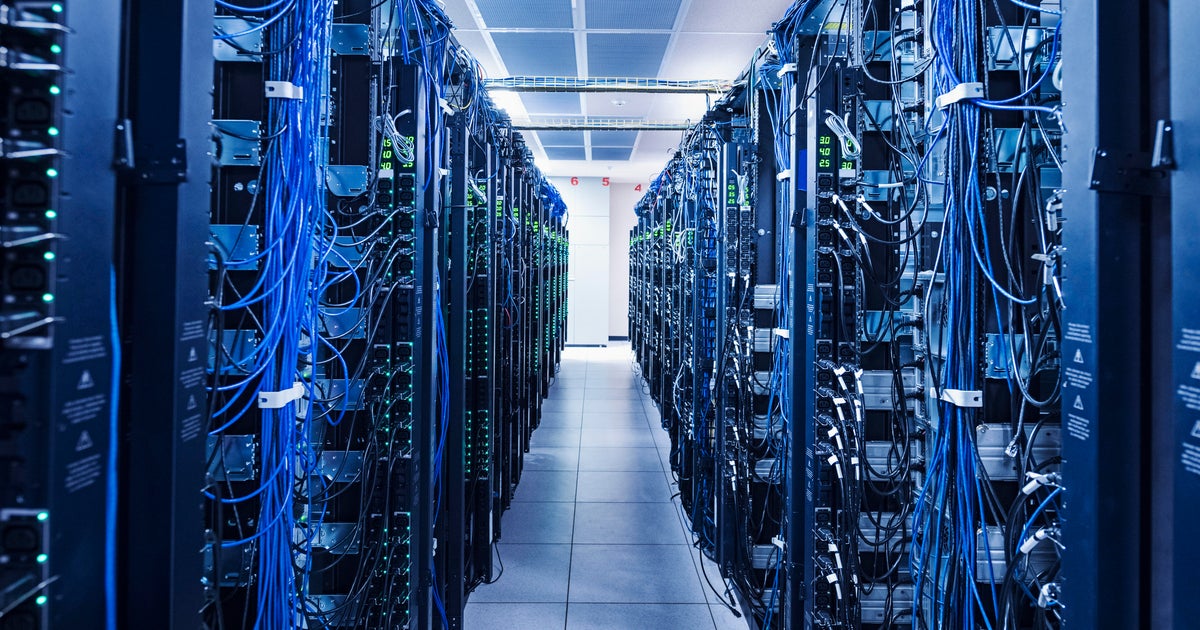
A windowless factory that never sleeps. That is how Gianluca Guidi describes the hyperscale data center he has spent two years studying at Harvard. The facility hums with tens of thousands of computers running around the clock, each one burning electricity to process your emails, stream your shows, and answer your questions to generative AI software. The heat they produce requires constant cooling. The result is a pattern of energy hunger that no one fully understood until now.
A Study That Understates the Problem
The research, published in Nature Sustainability, tracked 403 hyperscale data centers across the United States between May 2024 and April 2025. Those buildings consumed 82 terawatt-hours of electricity—roughly 1.8 percent of all U.S. electricity output. By comparison, that is comparable to what the state of Missouri uses in a year or what Denmark, a country of five million people, consumes. The same facilities emitted 26 million metric tons of carbon dioxide.
But Guidi cautioned that those numbers are almost certainly too low. His data cut off in April 2025. In the time since, construction of large-scale data centers has more than doubled. An additional 2,000 facilities are currently planned or under development. “The industry is growing faster than anyone can track it,” Guidi told CBS News. When a researcher working in real time says the data is ancient history within months, the trajectory is already moving well beyond what was measured.
Who Pays the Bill
This is not simply an environmental story. It is a story about who shoulders the cost of AI’s infrastructure. Data centers do not plug into a shared household circuit. They connect directly to the electrical grid, often requiring dedicated transmission lines and massive substations. In rural communities across the Southeast and Southwest, where most new facilities are being built, local grids were designed for far lighter loads. Residential customers and small businesses in those areas now compete with billion-dollar computing factories for the same megawatts.
The financial mechanism behind this competition is opaque. Hyperscalers like Amazon, Meta, and Microsoft negotiate power purchase agreements, often locking in long-term contracts that insulate their own costs while leaving ratepayers exposed to infrastructure upgrades. When a data center draws enough power to replace a natural gas plant, the grid operator must build something to replace it—or find another source. That decision filters down to every bill on the system.
The Climate Talk No One Signed
Meanwhile, negotiators at COP31 in Turkey last week launched a voluntary pledge calling on companies and governments to power AI with cleaner energy. Simon Stiell, the UN climate chief, framed it bluntly. “We cannot ask people to accept higher bills, more planet-heating pollution and deeper inequality today in exchange for promises of a better tomorrow,” he said during the pledge’s launch. Claims about future emissions savings, he added, cannot excuse rising pollution now.
No U.S. tech company has signed. The absence is strategic, not accidental. Voluntary frameworks create accountability without binding commitments. For hyperscalers operating at the pace described by Guidi, even symbolic signatures carry risk—they signal that the energy problem is real and that public pressure will follow. The silence speaks louder than any press release.
The Transparency Gap
Guidi issued his challenge directly: “We’ve proven we can build AI really fast. Now, let’s prove that we can build it right.” He argued that evidence of energy impact should appear before a foundation is poured, not after a facility is operational and entrenched. He also stressed that public input matters at that stage. “The evidence shouldn’t show up after the buildings do, and neither should the public’s voice,” he said.
That framing cuts against the current incentive structure. Data center developers face no federal requirement to disclose projected electricity demand or carbon output before breaking ground. State-level reviews vary wildly—some states require environmental impact statements, others do not. The result is a patchwork where the quickest path to permitting often means the slowest path to accountability.
What Comes Next
Several outcomes are possible, and none are easy. One path leads to accelerated natural gas generation to meet data center load, which locks in fossil fuel dependence precisely when grid decarbonization is supposed to accelerate. Another path forces utilities to make costly transmission investments funded partly by ratepayers, creating political friction in states already grappling with high electricity bills. A third path involves hyperscalers building their own generation assets—solar farms, wind projects, or potentially nuclear units—which could move faster than traditional utility planning but raises questions about whose priorities drive the grid.
The Harvard study provides a baseline, but baselines are dangerous anchors. They suggest a problem that is known and contained when the opposite is true. Eighty-two terawatt-hours was a snapshot of a body still growing. With 2,000 more facilities in the pipeline, the question is no longer whether data centers will reshape the energy landscape. It is who gets displaced by that reshaping and whether the displacement happens quietly or recklessly.
Guidi’s frustration is directed at the pace itself. The technology is impressive, he said, and he considers himself a proponent. But he pushed back on a narrower distinction that keeps surfacing in policy debates. “Are we confusing what’s possible or what’s profitable with what’s actually good for society?” he asked. That is the harder question. The energy numbers are only the beginning.