AI's Physical Footprint: Finland's Wolves and the Data Center Land
Google's deforestation of 1,300 acres in Finland is driving wolves into villages — a stark symbol of the AI boom's collision with nature that could spark global tech regulation.
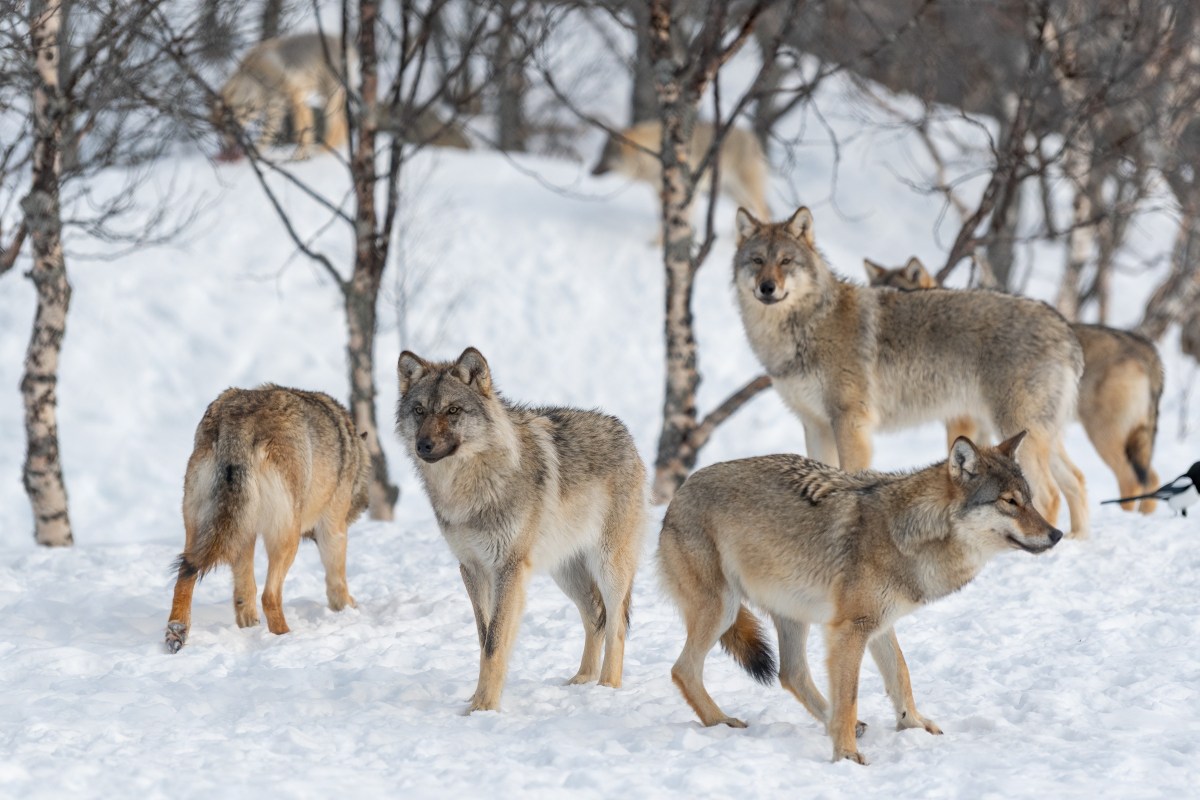
The Wolves Are Coming
In the Finnish village of Otanmäki, Anni Ranta no longer sleeps well. For generations, her family has called this northern settlement home — surrounded by boreal forests that once hummed with wolves, bears, and the steady rhythm of untamed nature. Now, those wolves are descending on her street, driven out by a different kind of hunger.
They’re here because Google’s data centers demanded them gone. Earlier this month, Finnish authorities ordered Tuike Finland Oy, a Google affiliate, to immediately halt illegal logging across 1,300 acres of forest. That’s roughly 250,000 trees — mature, ancient, integral to the ecosystem that sustained wildlife for centuries. What was left behind was mud, stumps, and silence.
The disruption didn’t stay contained. With their habitat flattened, prey species scattered, the wolves had nowhere to go but toward human settlements. “We had wolves coming into the village because all the wild animals moved out of the forest,” Ranta told the Guardian. “They fled.” Her family now debates whether to leave the area entirely.
Ranta isn’t just losing trees. She’s losing the world as she knew it. “I don’t want them here,” she said, referring to the data centers. “I don’t want them in Finland at all. I don’t like the whole idea of AI and the world changing.” Her words carry the weight of someone watching her community become collateral damage in a revolution she doesn’t understand — or welcome.
A Global Pattern in Disguise
This isn’t Finland’s crisis alone. It’s a blueprint.
Across the United States, data center developers are bulldozing forests, draining wetlands, and clearing land at a pace that outstrips environmental oversight. In West Virginia, a grove of critically endangered Eastern chestnut trees faces destruction for an Anthropic hyperscale facility. Outside Fort Wayne, Indiana, once-bountiful wetlands are being tilled for a new Google data center. In Southern New Jersey, an operator recently received a $1 million fine after inspectors found 62 illegal gas generators belching exhaust into residential neighborhoods.
The pattern repeats: infrastructure expands, regulations lag, communities bear the cost. But Finland’s case stands out for its symbolism. This isn’t just about concrete and steel. It’s about wolves.
When you remove 1,300 acres of mature boreal forest overnight, you don’t just lose trees. You lose an entire food web. The ground squirrels, the birds, the predators — they scatter or starve. The wolves, apex hunters who have roamed these woods since before modern Europe existed, find themselves displaced into spaces they’ve never encountered. Villages become their new hunting grounds.
The Unseen Cost of “Green” Tech
There’s a broader irony here that policymakers rarely address: the push for sustainability often masks unsustainable consumption. Data centers consume massive amounts of electricity — some estimates suggest the AI industry could account for nearly 10% of global electricity demand by 2030. Much of this power comes from grids still reliant on fossil fuels. Meanwhile, the physical land requirements for these facilities are enormous: a single hyperscale data center can span hundreds of acres, often replacing habitats that took millennia to develop.
Google and its competitors frame data centers as essential infrastructure — the backbone of a smarter, more efficient world. But the environmental math doesn’t add up. You cannot build infinite growth on finite land without consequences. The Finnish case exposes the gap between tech industry rhetoric and ecological reality.
Why This Matters Beyond Finland
The outrage in Finland isn’t isolated. It’s part of a growing global movement demanding accountability from tech giants. Across Europe, citizens are increasingly unwilling to accept that AI development requires environmental sacrifice. The European Union’s existing regulatory frameworks — the Data Center Act, the Energy Efficiency Directive, the Natura 2000 conservation network — are being tested by projects that move faster than compliance can keep pace.
But Europe isn’t the only battleground. In the United States, where environmental review processes are often weaker and land-use decisions are delegated to local authorities, data center developers face minimal resistance. A 2024 report from the Natural Resources Defense Council found that just 12% of proposed data centers underwent rigorous environmental review. The rest slipped through with little oversight.
The result? Communities like Otanmäki become laboratories for unregulated tech expansion — testing grounds where the costs of AI infrastructure are absorbed by those least equipped to fight back.
The Regulatory Question
So what happens next? Finland’s authorities acted decisively — ordering a suspension, demanding a report, forcing accountability. But their intervention came too late for the 250,000 trees already felled. The wolves have already left the forest. The damage is done.
This raises a critical question: Should there be international standards for AI infrastructure development? Currently, there aren’t any. Data centers fall into regulatory gray zones — treated as industrial facilities, not technology installations with global implications. Environmental reviews vary by country, often favoring developers over communities.
Some experts argue for a new framework: the “AI Infrastructure Act,” which would require standardized environmental impact assessments, mandatory habitat restoration plans, and community consent for projects exceeding certain land thresholds. Others suggest leveraging existing climate agreements — treating data center emissions under the same accounting as industrial polluters.
The Human Cost
Beyond policy debates lie real people. Antti Jakonen, a resident of Muhos, put it plainly: “It has been done in the wrong way. American style. No sense. No sense at all.” His frustration echoes through villages across Finland — and beyond.
For Ranta and her neighbors, this isn’t abstract. It’s daily life. It’s wolves stalking livestock. It’s children unable to play in forests that once defined their childhood. It’s uncertainty about whether their community will survive the transformation.
The data centers themselves remain distant, windowless boxes humming with servers. But their footprint — physical, ecological, social — stretches far beyond their boundaries.
What’s at Stake
Finland’s crisis is a microcosm of a much larger collision. As AI continues to evolve, the demand for computing power will only intensify. Every new model, every advanced algorithm, every surge in generative AI usage requires more data centers. More land. More energy. More environmental disruption.
The question isn’t whether this conflict will escalate. It’s whether regulation will keep pace — or whether communities like Otanmäki will become the norm rather than the exception.
Ranta’s fear — that the world is changing “too fast, too soon” — isn’t unique to Finland. It’s felt in Indiana, West Virginia, New Jersey, and increasingly around the globe. As AI reshapes society, the physical costs of that transformation are becoming impossible to ignore.
The wolves are coming. And the question is whether we’ll let them in — or build walls high enough to keep them out.