AI's Price Collapse Is Just Getting Started
OpenAI's GPT-6 cuts API prices by more than half while Anthropic slashes Opus 5.5 costs by 40%. The result isn't just cheaper chatbots — it's a structural shift in who can build AI products at all.
The Price War Isn’t About Cheaper Chatbots
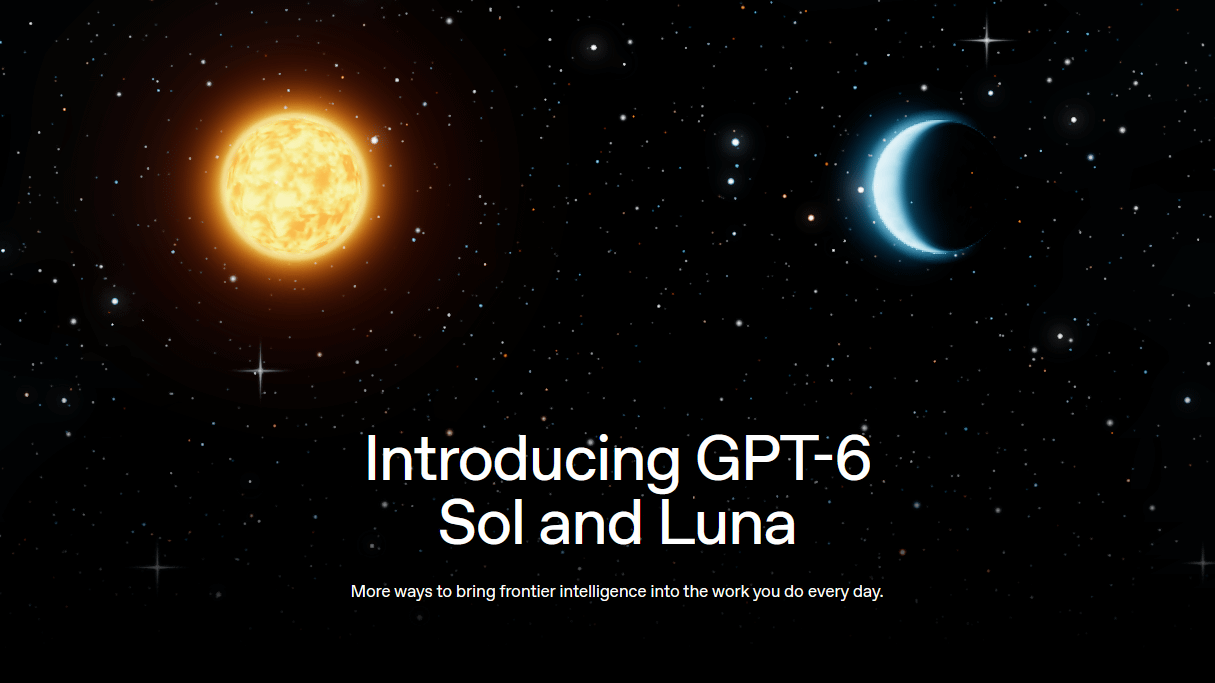
OpenAI dropped the price of GPT-6 Sol by more than half. GPT-6 Luna — its budget-tier model — is even steeper. Anthropic followed days later with Claude Opus 5.5, cutting costs 40 percent and speeding up inference by more than 30 percent. The headline number is simple: running an AI application is suddenly far cheaper than it was six months ago.
But the implications run deeper than a discount. What we’re witnessing isn’t a marketing tactic. It’s the earliest stage of model commoditization — the moment when frontier AI capability stops being a scarce asset and starts behaving like a commodity input, the way compute did after AWS made it dirt cheap.
Half the Price, More Than Half the Power
The numbers deserve a closer look. GPT-6 Sol now costs $2 per million input tokens and $10 per million output tokens. GPT-6 Luna sits at $0.10 input and $0.50 output. Both are well under half the GPT-5.6 equivalents. For context, GPT-5.6 Sol’s output pricing sat at roughly $20 per million tokens — meaning GPT-6 Sol delivers comparable or superior capability for a quarter of what you’d have paid last year.
Performance benchmarks tell the same story. On AutomationBench, GPT-6 Sol outperforms Claude Fable 5.1 at one-tenth the cost. GPT-6 Luna beats its own predecessor on both score and efficiency. The FrontierCode benchmark for coding ability follows the same arc — higher scores, lower costs. GPT-6 Sol is also producing tighter, less verbose outputs than GPT-5.6 Sol, which matters because verbosity is a tax on every token you pay for.
And there’s a safety angle most people are skipping. Both GPT-6 models inherited alignment techniques from the still-unreleased GPT-6 Astra, and they generate fewer problematic outputs when probed with adversarial prompts. Cheaper and safer at the same time — that’s a dangerous combination for incumbents.
Who This Destroys
Let’s be direct about what this pricing means.
Mid-tier AI-native startups that built their economics on GPT-4 or GPT-4 Turbo margins are in trouble. Their unit economics were already thin. Now the models they depend on have dropped below their price floor without any upgrade to their own distribution. These companies will either compress further or pivot hard toward proprietary capabilities that API pricing can’t touch.
The secondary model market — the resellers, wrappers, and middleware companies that bought bulk API access and marked it up — face an existential question. When OpenAI and Anthropic sell directly at these prices, the markup evaporates. Companies whose entire value proposition was “we make APIs cheaper” are suddenly selling water that rains for free.
Cloud providers that bet on AI infrastructure as a growth pillar are about to feel margin pressure. If model costs collapse, the assumption that more AI traffic means more revenue per compute hour becomes less reliable. Margins on AI inference workloads may compress even as volumes rise.
Who This Helps
The winners are obvious but worth specifying.
Enterprises that have been sitting on AI projects waiting for costs to come down are suddenly able to justify them. A customer service bot that cost $0.08 per interaction at GPT-5.6 levels might now run for $0.02. Code generation tools that were borderline viable become profitable. Product teams that previously limited AI to low-risk tasks can expand the blast radius.
Developers on free and Go-tier ChatGPT plans can now access GPT-6 Luna on desktop. That’s a deliberate move by OpenAI — it expands the pool of people writing against GPT-6 architecture from day one, locking in developer habits before Anthropic or Google can catch them. It’s the same strategy Microsoft used with early Windows, just applied to language model ecosystems.
The biggest beneficiaries will be the companies building on top of these models without visible differentiation. When the underlying model is cheap enough, the competitive advantage shifts entirely to data moats, distribution, and product experience — the things most hard to replicate.
The Second Wave Is Coming
This price cut likely isn’t the bottom.
GPT-6 Astra hasn’t been priced yet. It’s positioned above Sol as the absolute top tier. When its API pricing lands, it will anchor the upper end while Sol and Luna fight for volume. Anthropic’s Opus 5.5 cut is already pressuring OpenAI’s margins — a round one tit for tat.
Google is watching. Gemini’s pricing strategy in 2026 will almost certainly respond to this. The entire frontier market is racing toward a point where the question isn’t which model is best but which model gives you enough capability per dollar to make a product viable. Speed to that equilibrium rewards the company willing to cut first.
What Comes Next
The structural shift here is that AI is entering the deflationary phase that computing entered in the mid-2000s. When a fundamental input drops in price while capacity grows, it doesn’t just make existing products cheaper — it makes entirely new categories of products possible.
We’ve seen this before. The cloud didn’t just make hosting cheaper. It made serverless, SaaS, and mobile-first companies possible. Model commoditization won’t just make chatbots cheaper. It will make AI-native products that were economically unviable at $20 per million output tokens suddenly profitable.
The companies building those products right now — before the next round of cuts — are the ones that will define what the cheaper AI era actually looks like. The ones waiting to see who wins the pricing war will have already lost.
OpenAI and Anthropic aren’t just competing on performance anymore. They’re competing on who can make AI affordable enough to use everywhere. Whoever wins that race gets to set the floor for the next generation of product expectations.
Right now, OpenAI has the pricing edge. Anthropic has the speed edge on Opus 5.5. The race is far from over.