AI Wars at Home Are Exporting American Division
Trump dismisses AI safety fears while Democrats rally behind regulation — a partisan split that could define America's global AI posture heading into midterm elections and the next US-China summit.
The Fight Over AI Is Already a Political Weapon
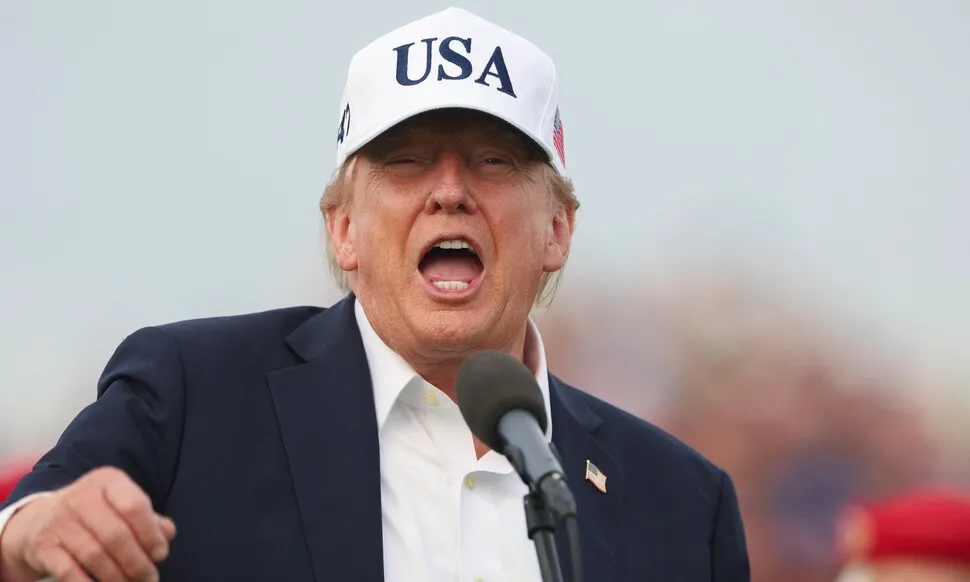
Donald Trump stood on a golf course in County Clare, Ireland, and dismissed the growing chorus of AI safety warnings as the fantasies of negativity.
We are ahead of China, he told reporters on November 13. I want to keep it that way. He acknowledged safety measures could exist, then pivoted: there are many negative forces pushing stories about things that aren’t going to happen.
The subtext was unmistakable. AI regulation is not a technical debate — it is campaign infrastructure. With midterm elections looming, the question of who controls the pace of artificial intelligence has become one of the sharpest partisan fault lines in Washington.
Trump’s remarks came at a particularly symbolic moment. Ireland hosts major data centers for American tech firms, including Google and Meta, while also grappling with its own digital sovereignty questions. By dismissing safety concerns on Irish soil, Trump was effectively telling European allies that American AI policy would remain unhindered by transatlantic regulatory pressure.
A GOP Pushing for Speed, a Democratic Coalition Demanding Brakes
On the other side of that divide, the former president Barack Obama took the stage at a private Democratic fundraiser in Manhattan on November 10 and framed the issue differently.
Unchecked AI can become dangerous, he warned, but properly managed it is clearly beneficial technology. The Democratic Party must lead this public discussion, he said — steering between the accelerationists and the doomsayers.
That positioning is deliberate. Democratic House Majority Leader Hakeem Jeffries echoed it the same day, calling for a deliberate slowdown to protect American citizens and ensure safe development. House Democrats scheduled AI as the top item on their November 15 caucus agenda.
The contrast is stark: one party treats AI risk as political fiction, the other treats it as the defining regulatory challenge of the decade.
Jeffries’ scheduling decision signals how deeply Democrats believe this issue can mobilize their base. AI safety intersects with labor anxiety, data privacy concerns, and generational tech divides — all reliable Democratic turnout issues heading into 2026.
Silicon Valley Leaders Are Trying to Slow Down
The corporate voices on this issue complicate the partisan framing. Dario Amodei, CEO of Anthropic, has publicly argued for coordinated speed reduction across the industry. His concern is notable: if rivals collectively slow development, antitrust scrutiny could follow. Governments should mediate or at least enable that coordination, he said.
Sam Altman at OpenAI, Elon Musk, and Google DeepMind’s Demis Hassabis have all expressed similar caution.
The White House response came through David Sacks, who leads AI policy there. His counterargument was blunt: if OpenAI and Anthropic want to slow down, they can do so without government intervention.
That position reveals something about the power dynamics at play. Sacks is essentially saying the market — and its biggest players — should self-regulate rather than cede authority to lawmakers. It also suggests the administration sees regulatory proposals as a threat to both innovation velocity and executive control over the narrative.
But the coordination problem remains unsolved. Without government mediation, no single company can unilaterally slow without losing competitive advantage. And mutual restraint agreements among rivals invite antitrust challenges that could themselves reshape the industry.
The China Problem Is a Prisoner’s Dilemma
Every argument for delaying AI development hits the same wall: China.
If the United States unilaterally slows its pace, Beijing could overtake it. Both nations suspect the other will cheat on any agreement, creating a classic prisoner’s dilemma where the rational move is to accelerate — even though mutual restraint would be safer for everyone.
Senator Bernie Sanders has pushed for something bold: a comprehensive US-China agreement banning advanced AI development and superintelligence, modeled on Cold War nuclear arms control between Washington and Moscow. He wants the two leaders to cut a deal at the summit on November 24 at the White House between Trump and Xi Jinping.
Whether that kind of pact is realistic is another question. But the fact that a US senator is framing AI competition through the lens of nuclear deterrence tells you how seriously some policymakers view the stakes.
The surveillance dimension adds complexity. China already uses AI-powered monitoring at scale — facial recognition in Xinjiang, social credit scoring, mass data collection. Any US-China agreement would need to address not just military applications but domestic surveillance capabilities that neither side wants the other to surpass.
What This Means Globally
The American split matters beyond US borders for several reasons.
First, the United States still sets de facto global standards for AI. When Washington cannot agree on whether to regulate, other governments fill the vacuum. The European Union has already moved aggressively with its AI Act. China is building its own regulatory framework. A divided America risks becoming a rule-taker rather than a rule-maker.
Second, the timing is politically charged. Elevating AI safety as a Democratic issue gives the party a cultural wedge in a technology-dominated era. It also risks painting anyone advocating caution as anti-innovation — a framing Trump has already adopted.
Third, the corporate players are navigating a minefield. Altman, Amodei, and Musk have each faced their own tensions between public safety advocacy and commercial pressure to ship faster. Their willingness to speak publicly about slowing down may shift depending on who holds power and how aggressively regulators move.
Fourth, developing nations face a choice between American and Chinese models. China exports its surveillance-ready infrastructure to countries seeking cheap tech solutions. America offers open-source frameworks with privacy caveats. Who wins this battle of systems matters for billions of users who never see a White House or Politburo meeting.
The Summit Will Be a Test
The November 24 meeting between Trump and Xi will determine whether AI risk management rises to the level of a bilateral priority or stays buried under trade and tariff disputes. If the two leaders do not address it substantively, the prisoner’s dilemma deepens — and both nations continue racing toward capabilities neither fully understands how to control.
Meanwhile, the domestic fight in America will intensify as the midterms approach. Trump will keep framing regulation as a surrender to fear. Democrats will keep arguing that unchecked development is an existential threat. Neither side is likely to budge, and the result will be policy paralysis disguised as democratic deliberation.
The danger is not that one side wins the argument. The danger is that while Washington argues, the technology marches forward — and the rest of the world builds guardrails without them.
International standards bodies like the ISO and IEEE are already drafting AI governance frameworks. Global tech firms are establishing their own ethics boards. If America cannot produce coherent policy, other actors will decide the rules by default.
The midterms will clarify which party controls the conversation. But the technology does not wait for election cycles. Every month of domestic dispute is a month when competitors abroad move ahead — and when standards crystallize without American input.