Airport Malaria Deaths Expose a European Biosecurity Blind Spot
Two Frankfurt Airport workers died after being bitten by Anopheles mosquitoes imported on aircraft—a rare but growing threat as climate change expands disease vector habitats. Europe's public health systems are not designed to fight infections at its doorways.
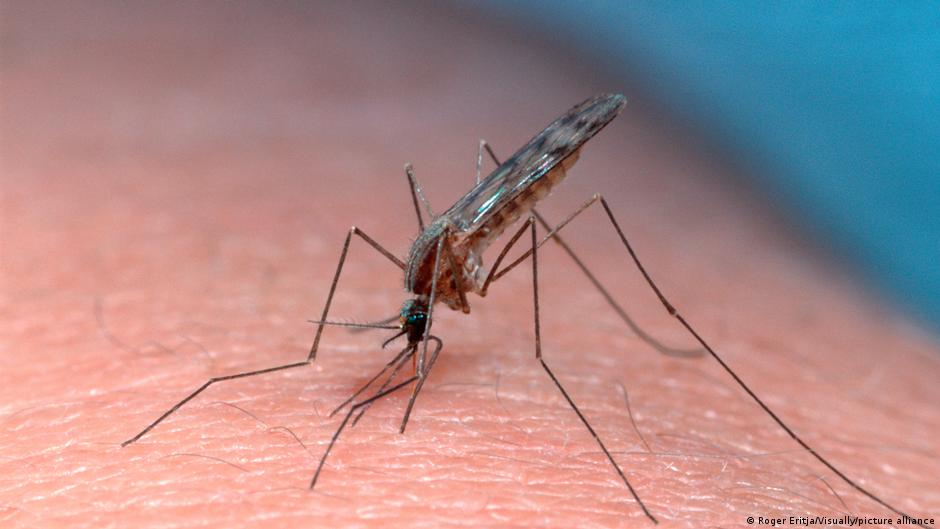
Two people died. The mosquitoes that killed them may already be gone.
At least two employees at Frankfurt Airport have died after contracting malaria from infected Anopheles mosquitoes that arrived on aircraft. Six workers were infected in total. The others are recovering. But the fatalities are stark evidence of something Europe has not yet accepted: its airports are becoming entry points for climate-driven disease vectors, and the continent’s health infrastructure was never built for this.
The first worker died in July. The second in August. Neither had traveled to a malaria-endemic region. The Robert Koch Institute confirmed the mosquitoes were likely imported on planes, not bred locally—at least not yet. Peter Tinnemann, head of the Frankfurt health authority, told reporters the mosquito is probably already dead and the risk to the general public is negligible. That was an accurate assessment for now. It will not stay accurate for long.
Airport malaria is rare. It is no longer exceptional.
The last documented case at Frankfurt Airport was in 2023. There were earlier incidents in other European hubs: Amsterdam in 2019, Paris in 2018. Each time, the response was the same—install traps, run genetic analysis, reassure the public. The infections were treated. Life returned to normal.
But the pattern is not normal. It is a trajectory.
Malaria kills hundreds of thousands of people annually, mostly in sub-Saharan Africa. In Europe, cases almost always involve travelers returning from endemic regions. Airport malaria—the infection of someone who never left the continent—is the result of a mosquito that flew inside a plane, or hitched in luggage, and bit someone at the gate, in the terminal, or in a nearby neighborhood. It is a disease that exploits the gap between global travel and local immunity.
The mosquitoes captured at Frankfurt are being sent to the Institute of Tropical Medicine in Antwerp for genetic analysis. Scientists are trying to determine their species and origin. That process takes time. By the time the results arrive, the window for containment may have closed.
Climate change is moving the vector. Infrastructure is not keeping pace.
Anopheles mosquitoes have always existed in parts of Europe. What has changed is how far north and west they can survive, and for how long. Warmer temperatures extend their breeding season. Milder winters allow more of them to overwinter. Rainfall patterns shift, creating new standing-water habitats near airports, which are often built on reclaimed land with drainage systems that can harbor larvae.
Frankfurt Airport sits in a region where temperatures have risen roughly 2 degrees Celsius above pre-industrial levels. The growing season for mosquitoes is longer. The window for importation events is wider. Last year’s case was a warning. This year’s deaths are the consequence of ignoring it.
The real problem is not the mosquito. It is the system.
Germany has one of the most advanced public health research institutions in the world. The RKI is well-funded, technically capable, and scientifically rigorous. But it is designed to respond to outbreaks that originate in populations, not to prevent infections that enter through a single point of air travel.
The European Centre for Disease Prevention and Control (ECDC) coordinates cross-border health responses, but it has limited authority to mandate action at individual airports. Fraport, the airport operator, installed mosquito traps and informed employees after the infections became known—not before. That is reactive, not proactive. It is the standard operating procedure for every major European hub.
There is no EU-wide protocol for monitoring mosquito vectors at airports. There is no requirement for airports in malaria-vulnerable regions to maintain surveillance systems before an outbreak occurs. There is no funding stream dedicated to upgrading biosecurity at Europe’s 150+ international airports, many of which sit in low-lying or wetland areas that are natural mosquito habitats.
The result is a patchwork of national responses, delayed diagnoses, and deaths that could have been prevented with earlier intervention.
Who wins. Who loses.
The winners are the mosquitoes. They have no immune system, no visa requirement, and no liability. They arrive on flights from Addis Ababa, Nairobi, Lagos, and Johannesburg—cities where malaria remains endemic and where vector control is underfunded compared to the cost of a single wide-body aircraft.
The losers are the workers who stood on the tarmac, processed cargo, or worked in terminals near incoming flights. They are the people most exposed because they are the people who cannot leave. Fraport has advised symptomatic employees to seek medical attention. But diagnosis is delayed when patients do not report travel to a malaria-risk area. A blood test for malaria is not part of a routine check-up at a German hospital unless the physician suspects it—and suspicion requires knowledge that airport malaria even exists.
The four recovering employees are lucky. Luck is not a public health strategy.
What happens next.
The genetic analysis from Antwerp will identify the mosquito species and likely origin. It will confirm what health officials already suspect: that these mosquitoes came from aircraft, not local breeding. It will also add to the growing body of evidence that climate change is expanding the geographic range of Anopheles species into central Europe.
Airports will install more traps. Officials will issue statements about negligible risk. The cycle will continue.
What needs to happen is different. European health authorities need to treat airports as biosurveillance frontiers—not after the fact, but before. Mandatory mosquito monitoring at all major European airports. Rapid diagnostic protocols for non-travelers presenting with febrile illness. Dedicated funding for vector control at airfields. And, perhaps most importantly, a shift in how public health messaging is framed: malaria is not only a disease of travelers. It is a disease that can travel without a traveler.
The two deaths at Frankfurt Airport are a signal. The question is whether Europe hears it before the next one arrives.