Aiwanger's Death Shakes Germany's Populist Right
The Bavarian deputy premier's death in a Berlin hotel has triggered an investigation and sent shockwaves through German politics. Who is Hubert Aiwanger and what does his sudden passing mean for the populist right?
The Investigation That Will Define Aiwanger’s Legacy
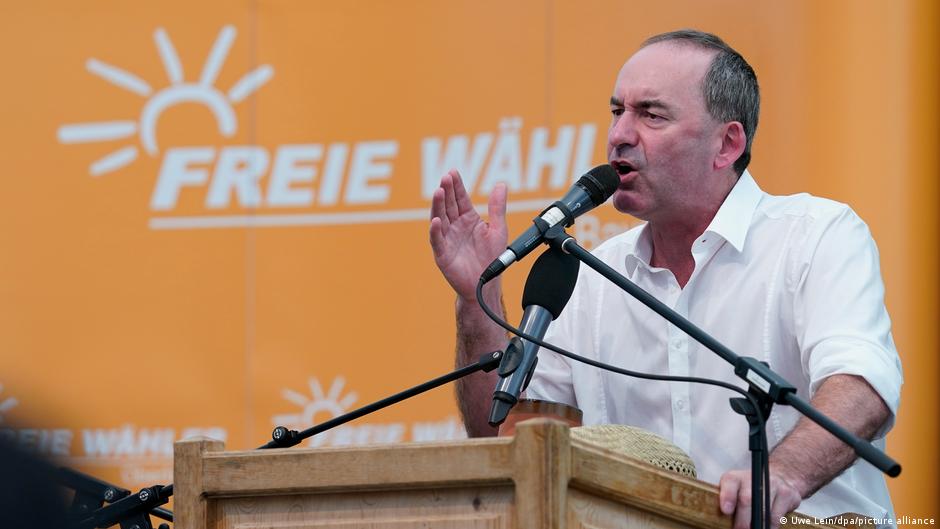
Hubert Aiwanger was found dead in a Berlin hotel on Wednesday evening. He was 55 years old — Bavaria’s deputy premier, economy minister, and the leading figure of the Free Voters party, a right-wing populist group that has shaped coalition politics in southern Germany for over a decade.
The circumstances remain murky. Police and prosecutors have launched an investigation. Their stated aim is to determine the specific cause of death and rule out foul play. What is known is fragmentary: Aiwanger had reportedly been feeling unwell on Wednesday. He was scheduled to give a speech at the opening of his party’s new Berlin office but canceled for health reasons. His body was discovered at the Neuer Fritz Hotel on Friedrichstrasse in Berlin-Mitte.
Markus Söder, Bavaria’s Christian Social Union premier and Aiwanger’s political partner, called the death an absolute tragedy. The two men governed together through a coalition that has defined Bavarian politics since 2018. Their alliance pulled the Free Voters into real power for the first time. Now it ends abruptly.
Sources close to the investigation indicate that Aiwanger’s private physician had been consulted in the days leading up to his trip to Berlin, though no public statement has confirmed whether medical concerns were discussed before his departure. Forensic authorities are expected to release preliminary findings within days, but the full toxicology report could take weeks.
A Polarizing Figure
Born in Lower Bavaria, Aiwanger entered the state parliament in 2008 and quickly became the Free Voters’ most recognizable face. He was combative by nature and often provocative in public. The party benefited materially from his style — media attention, donor interest, a base that felt represented by someone willing to say uncomfortable things.
But Aiwanger was never uncontroversial. In the weeks before Bavaria’s 2023 state elections, the Süddeutsche Zeitung reported that he had authored an antisemitic leaflet during high school in the 1980s. The document referenced Nazi-era atrocities, including Auschwitz. The scandal followed him into government. It did not dislodge him from his positions, but it cemented his reputation as a polarizing force — admired by supporters who saw him as unfiltered and dismissed by critics who viewed his past as disqualifying.
He leaves two children. He was not married but lived with Tanja Schweiger, a district administrator for the Free Voters.
Colleagues describe Aiwanger as politically ruthless but personally loyal, a combination that made him effective in coalition negotiations but isolating in moments of crisis. Former Free Voters MP Jürgen Klemann noted that Aiwanger “never forgave a betrayal, but he never forgot a favor either.” This duality defined both his political longevity and the fragility of the alliances he built.
What This Means for the Free Voters
The Free Voters have never won enough seats to enter the Bundestag at the federal level. Their influence has come almost entirely through state-level coalitions, most significantly in Bavaria. Aiwanger was the architect of that strategy. Without him, the party faces an existential question: can it maintain its coalition hold on Bavarian power without its chairman?
Söder’s Christian Social Union is the senior partner in the Bavarian government. The CSU survived Aiwanger’s controversies before and will likely absorb this loss without collapsing the coalition immediately. But the power dynamic has shifted. Aiwanger was not a figurehead. He was a decision-maker — economy minister, deputy premier, the voice that pushed the Free Voters’ agenda inside government. His absence creates a vacuum that no one in the party can automatically fill.
The party’s executive committee is expected to convene within 48 hours to discuss leadership succession. Three names have surfaced in Munich political circles: party treasurer Alexander Burkard, state parliamentary group leader Karl Freller, and former education minister Joachim Herrmann. None command Aiwanger’s media visibility or his willingness to court controversy. The Free Voters’ regional associations are already reporting nervous donors and declining membership inquiries — a pattern that typically follows the sudden loss of a party’s dominant personality.
The National Implications
Germany’s federal government is a traffic-light coalition led by the Social Democrats, with the Greens and the Free Democrats in charge. The Free Voters are not part of it. But their Bavarian partnership with the CSU influences national politics through the Bundesrat, the upper chamber where state governments wield voting power on federal legislation. Every coalition deal in Munich ripples upward.
Aiwanger’s death removes one of the more assertive voices from that system. The Free Voters in Bavaria will need to recalibrate. Their electoral base may contract without its most visible leader. Or the party could reposition itself — though that is never straightforward when the man who built the brand disappears overnight.
Federal Finance Minister Christian Lindner, whose Free Democratic Party shares some ideological ground with Aiwanger’s populism, issued a brief statement of condolence but declined to comment on policy implications. Analysts note that the current coalition negotiations on tax reform and energy subsidies could feel the downstream effects if Bavaria’s Bundesrat delegation grows less cohesive. The Free Voters’ votes on certain federal legislation have been decisive in the past; without Aiwanger’s hardline stance, those votes may tilt differently.
Why Europe Is Watching
Right-wing populism has been reshaping European politics for years. Germany is often treated as an exception — a country with institutional guardrails that supposedly contain extremist tendencies. Aiwanger was proof that those guardrails have gaps. A politician who wrote antisemitic material as a teenager can rise to become deputy premier of Germany’s largest state. That is a fact Europeans should not forget as populist movements gain traction across the continent.
His death does not resolve that contradiction. If anything, it raises a sharper one: what happens to a movement built around a single polarizing figure when that figure is gone? The Free Voters will need to answer that quickly. Coalitions do not wait.
European conservative outlets have already begun framing Aiwanger as a martyr to political correctness, while progressive commentators warn that his absence removes a brake on more extreme factions within the Bavarian right. Either narrative risks oversimplifying a party that was always more pragmatic than ideological. Aiwanger himself would likely have dismissed both readings.
The Road Ahead
The investigation into how Aiwanger died is still underway. Until prosecutors release their findings, speculation will dominate. But the political fallout is already beginning — in Bavaria, in Berlin, and in the wider debate about who gets to lead in Germany’s populist right.
Markus Söder has signaled that the CSU-Free Voters coalition will continue “with dignity and resolve,” a phrasing that suggests he intends to absorb the Free Voters’ portfolio responsibilities temporarily while the party sorts out its future. Whether that arrangement survives Bavaria’s next scheduled election in 2026 remains uncertain. Donor networks are already realigning. Local Free Voters chapters are demanding clarity on whether the party will contest future elections under Aiwanger’s name or rebrand entirely.
For Germany’s institutional observers, Aiwanger’s death raises a question that extends beyond Bavaria: can a populist movement survive the loss of its most effective provocateur, or does it fracture into extremism, irrelevance, or both? The answer will shape not just the Free Voters’ trajectory, but the posture of Germany’s right wing in an era when populism is no longer confined to its fringes.