AMA Just Declared War on AI Hype—and Sets a Playbook for Every Profession
The AMA is publicly challenging a paper claiming AI already outperforms doctors. What happens next won't just reshape medicine—it'll set the template for law, finance, and every knowledge work category.
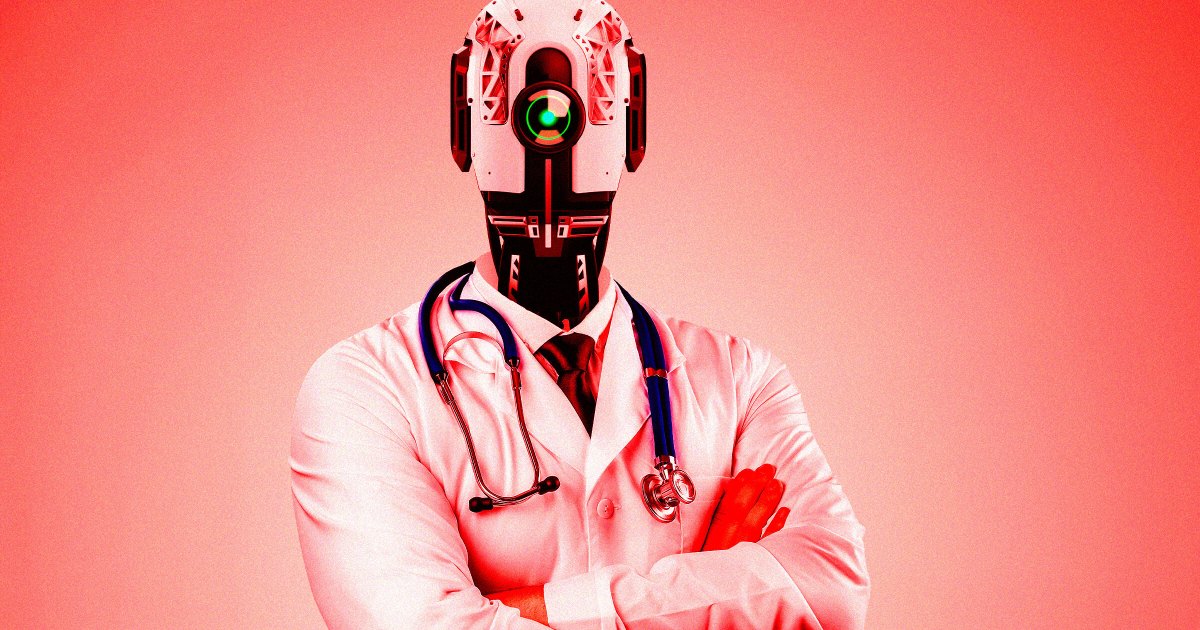
The AMA Just Drew a Line in the Sand
A paper published this month in the Journal of the American Medical Association made a sweeping claim: AI alone, without human physicians, will deliver better care than either doctors or doctor-AI hybrids within four years. The authors, bioethicist Ezekiel Emanuel and venture capitalist Vinod Khosla, argued that AI already surpasses doctors at five core tasks—eliciting patient information, diagnosing, conducting tests, and managing chronic disease.
Then American Medical Association CEO John Whyte fired back.
This isn’t a minor academic disagreement. It’s an institutional power move, and the winner will shape liability, regulation, and adoption timelines across every knowledge-heavy profession. What’s at stake isn’t just whether AI can read radiology scans—it’s who gets held responsible when it gets them wrong.
The Methodology Problem
Whyte’s counterargument, reported by Wired, targets the paper’s evidentiary foundation. He flagged that several studies cited were simulations rather than blinded, randomized experiments—the gold standard in clinical research. Simulations are useful for early-stage hypothesis generation, but they don’t survive real-world conditions where patients don’t follow scripts and edge cases multiply faster than models can handle them.
He also pointed to a February Nature article finding that most patients struggled to get useful expertise from AI chatbots, directly contradicting the JAMA paper’s assertion that AI has already mastered patient interaction. If the empirical record is this fragmented, the confidence interval on the paper’s boldest claims expands considerably.
That said, the deskilling concern Whyte dismisses may be more real than he lets on. Internal data from OpenEvidence, an AI chatbot built specifically for clinicians, shows roughly two-thirds of U.S. physicians are already using it. Senior doctors report med students increasingly outsourcing diagnostic reasoning to LLMs before they’ve developed the pattern-recognition skills that come from doing the work unassisted. This isn’t hypothetical—it’s happening in hospital wards right now.
The Hybrid Degradation Claim
The paper’s most provocative argument is that human-AI hybrids actually perform worse than AI alone. The logic goes like this: AI improves rapidly, humans don’t, and humans in the loop introduce error variance—so removing them should improve outcomes. It’s clean on paper. It’s also potentially dangerous as a policy prescription.
Robert Wachter, head of medicine at UCSF and a collaborator of Emanuel’s, acknowledged the direction of travel. “There will be times when humans will muck up the performance,” he told Wired. But he stopped short of endorsing the paper’s conclusion, pointing instead to what he called the “doorman fallacy”: the assumption that automatic doors would eliminate the need for doormen. They didn’t. Doormen evolved into concierges, adding hospitality and judgment that a swinging pane of glass can’t replicate.
Wachter’s analogy has limits—medicine isn’t hospitality—but the underlying point holds. High-skill professions tend to absorb automation into narrower, more valuable roles rather than disappear. The question is whether doctors become concierges or something else entirely.
Who Actually Wins If AI Runs the Ward
If the paper’s timeline holds and AI begins replacing physician functions over the next four years, the redistribution of economic value is stark.
Winners: AI developers and the hospitals that build proprietary models. Early movers who integrate AI-first workflows could cut staffing costs by 30 to 50 percent in high-volume diagnostic categories. Malpractice insurers face a fundamental recalibration—if an algorithm makes a misdiagnosis, who pays? The developer? The hospital? The regulatory body that approved the tool? These questions have no settled answer.
Losers: Junior physicians and medical trainees. If AI handles routine diagnostics, the apprenticeship pipeline that produces senior doctors collapses. Med students who never develop independent diagnostic intuition become dependent on tools they can’t audit or override. That’s the deskilling trap the paper both documents and accidentally accelerates.
The AMA’s resistance is partly self-interested—physician income and professional autonomy are on the line. But it’s also structurally rational. Medicine operates on a liability framework that assumes human accountability. Remove the human and the entire legal architecture fragments.
The Precedent Beyond Medicine
The Emanuel-Khosla paper landed in a field where the rules of engagement are still being written. That’s exactly why the AMA’s pushback matters beyond healthcare.
n
Every professional service—law, accounting, financial advisory, architecture—is watching to see how this dispute resolves. The template is simple: tech advocates publish bold claims about AI superiority, institutions push back on methodology and liability, regulators decide whether to codify the claims into practice. The speed and direction of that third step determines whether AI becomes a tool or a replacement.
The education sector already lived through a version of this. A heavily promoted study claiming ChatGPT produced “large positive impact on learning performance” was retracted by Springer Nature after reviewers found major discrepancies. The claim survived long enough to shape funding decisions and classroom policy. That trajectory—bold paper, institutional noise, partial normalization, eventual correction—is the likely pattern for medicine too.
What Happens Next
Four years is a narrow window in medicine. Clinical trials take longer. Regulatory approvals take longer. The paper’s timeline assumes a tech-development tempo that doesn’t map onto healthcare’s approval infrastructure. What’s more plausible is a gradual erosion: AI handles more triage, more documentation, more pattern-matching, while humans retain final sign-off until liability frameworks force a clearer boundary.
The AMA’s intervention signals that the profession won’t cede that boundary passively. Expect more institutional pushback, moreMethodology critiques, and eventually, regulatory proposals that codify human-in-the-loop requirements for high-stakes AI decisions.
The paper’s prediction—that AI alone will outperform doctors—may yet prove directionally correct. But the timeline, the liability questions, and the institutional resistance suggest the transition will be messier and slower than the authors imply. The AMA drew a line. The question now is how far AI advances before that line moves.