Amazon AI Veteran Reshapes Boston Dynamics After Leadership Vacuum
Rohit Prasad, the Amazon AI executive behind Alexa's rise, takes the helm at Boston Dynamics after eight long months without a CEO. The hiring signals a decisive pivot from showcase robotics to commercial physical AI.
The eight-month gap wasn’t idle
Boston Dynamics has been running without a CEO for roughly eight months, and that silence spoke volumes. The company built the most recognizable robots on Earth — Atlas doing parkour, Spot bounding across construction sites — but had no clear playbook for turning spectacle into revenue. The appointment of Rohit Prasad as the new chief executive closes that leadership vacuum with a move that is, on its face, almost too logical to be surprising.
Prasad spent eleven years at Raytheon BBN Technologies working on government-funded defense research in machine learning, natural language processing, and speech recognition. In 2013, Jeff Bezos brought him into Amazon as an early core hire on what would become Alexa. He didn’t just help build the product — he helped imagine it as a platform. Alexa now runs on over 500 million devices worldwide across roughly 100 million households. Prasad led an organization of more than 10,000 people spanning AI, software, services, customer experience, and data operations during Alexa’s fastest growth period. He reported directly into conversations with Bezos and Andy Jassy.
Now he is running a company whose robots can leap over fences but still struggle to earn their keep in a factory.
What changed: from engineering showcase to commercial push
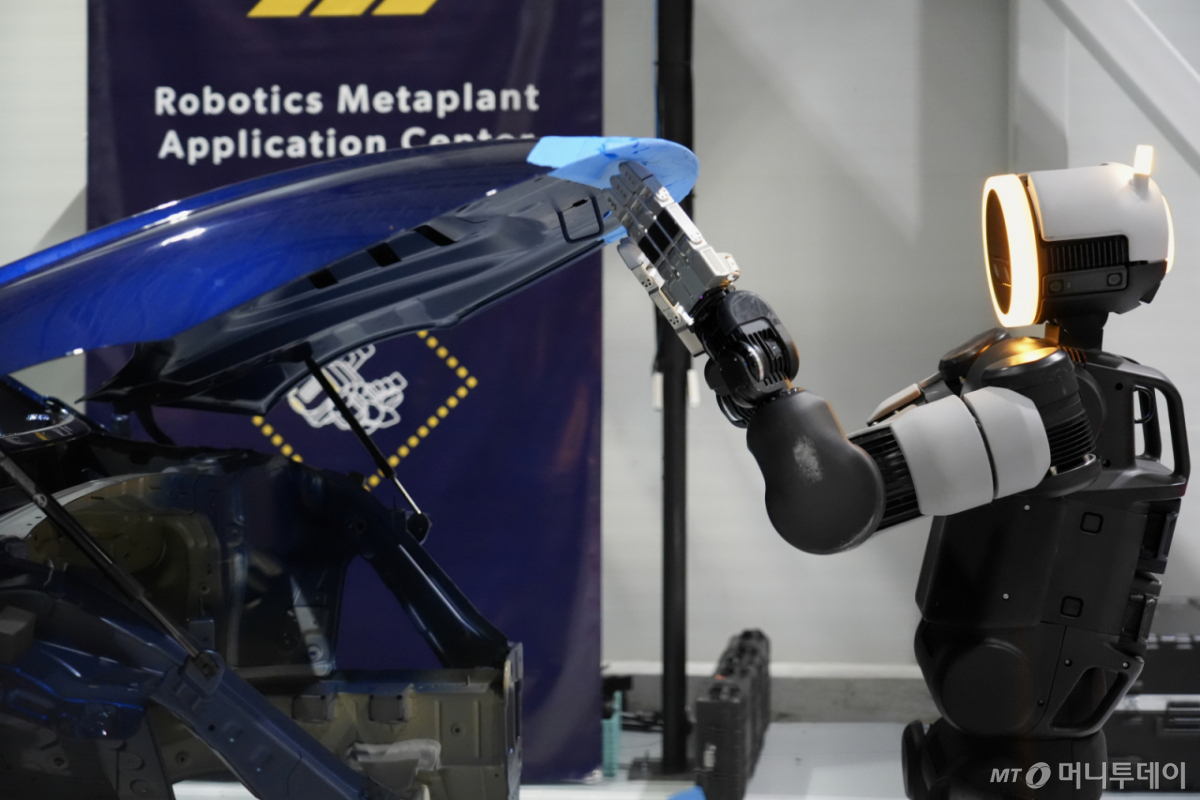
The timing of Prasad’s arrival is the story. Boston Dynamics announced this year that it plans to begin mass production of the Atlas humanoid robot in 2028, with initial deployments inside Hyundai Motor Group’s MetaPlant America in Georgia — the company’s $5.6 billion electric vehicle factory near Savannah. A dedicated testing facility, the Robotic MetaPlant Application Center, or RMAC, has already opened at the plant site to prepare Atlas for automotive manufacturing workflows before full-scale rollout.
This is not a company looking for more demo videos. It is looking for customers. And the first ones are already visible: Hyundai, with plans to expand sales to other global automakers after the initial deployment.
Prasad’s background maps directly onto that transition. He did not spend his career studying robotics. He spent it figuring out how to take cutting-edge AI research and turn it into something a billion people use every day — and then build an ecosystem around it. That is the exact gap Boston Dynamics has faced since Hyundai acquired it in 2021 for $3.3 billion.
The shift from demonstration to deployment requires a fundamentally different organizational muscle. Amazon learned this during Alexa’s early years, when engineering teams wanted to perfect voice recognition and the business side needed third-party developers building skills. Prasad was the person who mediated between those two forces, creating incentives, APIs, and a revenue share that turned a hardware device into a distributed platform. Boston Dynamics faces an analogous tension: its engineers have built remarkably capable machines, but the commercial model — pricing, integration, workforce training, liability coverage — remains underdeveloped.
Who wins, who loses
Hyundai wins most obviously. The investment in Boston Dynamics has sat quietly for years, producing technically impressive robots with limited commercial traction. Prasad’s appointment signals that Hyundai is no longer willing to wait for robotics breakthroughs to solve themselves. The 2028 production target is aggressive, and it requires someone who can manage the messy intersection of hardware engineering, software integration, supply chain, and enterprise sales simultaneously.
Amazon loses a rare talent, though Prasad was always an outlier even there. He turned down multiple startup opportunities and investment discussions before choosing Boston Dynamics, according to industry sources. Bezos himself reportedly expressed interest in investing rather than hiring him. That Prasad chose a robotics company over a wave of lucrative offers says something about where he sees the next frontier.
Atlas competitors lose by default. Figure AI, Agility Robotics, and Tesla’s Optimus program all share the same goal: putting humanoid robots into factories and warehouses by the end of the decade. Prasad’s track record of platform-building means Boston Dynamics will not compete on hardware alone. The company will likely push hard on the software and integration layer — the part that turns a capable robot into a deployable one. That is where most robotics companies stumble.
There is a second-order effect worth tracking. The humanoid robot space is still small enough that a single well-executed commercial rollout could shift venture capital and talent flows dramatically. If Boston Dynamics delivers reliable Atlas units to Hyundai’s Georgia plant and can replicate that deployment with other automakers, it may become the gravitational center of physical AI investment — pulling resources away from Figure and Agility before they prove their commercial viability.
The physical AI question
Industry observers have noted that Prasad has watched every major shift in AI — from speech recognition to conversational assistants, generative models, and now what some call AGI. The term “physical AI” has emerged to describe the convergence of large-scale AI models with embodied robots that interact with the real world. Boston Dynamics is positioning itself squarely in that space.
Whether Prasad’s expertise translates is unproven. Leading an Alexa-scale software organization is different from managing a company that builds multi-hundred-thousand-dollar humanoid robots capable of walking, climbing, and manipulating objects. Hardware is harder than software. Supply chains break. Factory floors are messier than apps. But Prasad’s history of moving from research prototype to mass-market product is exactly the pattern this moment demands.
One thing many analysts may be overlooking is how the Alexa playbook could reshape the business model. Instead of selling robots as standalone capital equipment — a model that requires massive upfront investment from buyers — Boston Dynamics could move toward subscription-based robotic labor, where factories pay per hour of robot deployment or per task completed. That model reduces the risk for early adopters and creates recurring revenue for Boston Dynamics. Amazon pioneered this approach with device sales coupled to service subscriptions, and it is precisely the kind of commercial innovation a hardware company needs right now.
What happens next
The critical window is 2026 through 2028. RMAC is already operational at Hyundai’s Georgia plant, giving Atlas real manufacturing exposure before full production begins. If the robot performs reliably in that environment — and the initial demonstrations suggest it can learn tasks like part handling and quality inspection — the 2028 mass-production target becomes credible rather than promotional.
Beyond Hyundai, the expansion to other automakers and eventually warehouse operators will determine whether Boston Dynamics becomes the industrial robotics standard or another impressive failure. Prasad’s experience building the Alexa developer ecosystem could prove decisive here: the company needs partners, integrators, and enterprises willing to bet on humanoid robots before the technology is perfect.
There is also a timing risk. The broader AI sector is moving faster than anyone expected. Models trained on simulated environments are now being transferred to physical robots at scale, and companies like Tesla are leveraging vertical integration to drive hardware costs down rapidly. Boston Dynamics cannot afford a three-year development cycle without intermittent commercial wins that demonstrate progress and generate cash flow. Prasad will need to balance the ambition of the 2028 target with shorter-term deployments that keep the company relevant in a market that rewards momentum.
The eight-month leadership gap is now over. What matters is what Boston Dynamics does with the time it has regained.