Amazon's price hikes reveal a brutal truth about the AI memory crunch
Amazon is raising prices on Echo, Fire TV, Kindle, and eero devices, signaling that the semiconductor memory shortage driven by AI demand has finally reached consumer electronics. The move marks a dramatic shift for a company built on cheap hardware.
The memory squeeze is no longer a data center problem.
Amazon has quietly raised prices across its first-party hardware line, and the move tells you everything you need to know about where the AI boom is headed next. It is no longer contained to hyperscaler balance sheets. It is landing on your mantelpiece.
The base Echo Dot jumped from $49.99 to $79.99. The Fire TV Stick 4K Max went from $59.99 to $84.99. The 16-gigabyte Kindle climbed from $109.99 to $149.99. The eero Pro 7, a mesh Wi-Fi system aimed at power users, rose from $699.99 to $799.99. Amazon did not raise prices on its Ring products. It did offer a reminder that promotions will continue throughout the year.
An Amazon spokeswoman said the company absorbed memory and storage cost increases for as long as it could. That phrase—“for as long as we could”—carries more weight than the press release lets on. It means the squeeze has been building for months. It means other companies felt it first.
The cascade is already visible.
Apple raised prices on Macs and iPads in June. Tim Cook called it a “100-year flood on memory pricing,” which sounds like hyperbole until you understand what the company was absorbing. Microsoft said it would hike Xbox console prices by $100 to $150 and drop its 2-terabyte configuration entirely. Dell, HP, Lenovo, and Asus have all reduced memory specs or raised prices.
What connects all of these moves is not coincidence but a shared bottleneck. AI training and inference require massive amounts of high-bandwidth memory. Data centers are bidding against consumer electronics manufacturers for the same chips. The result is a market where a company building smart speakers for $50 now competes with a company building AI clusters for $50 million—and the AI company wins every time.
Amazon’s hardware identity is cracking.
This is the part that matters most for consumers who have come to expect something unusual from Amazon: cheap hardware. For years, the company has sold Echo devices, Kindle readers, and Fire TV sticks at razor-thin margins, sometimes operating at a loss, to lock people into its ecosystem. The strategy worked. Amazon’s devices are everywhere. They are the default smart speaker in millions of homes. They generate content consumption that feeds AWS and advertising revenue.
Raising the Echo Dot from $50 to $80 is not a small adjustment. It is a 60 percent increase on a product that has maintained a stable price point for years. It risks making Amazon’s own hardware look expensive compared to alternatives. Google’s Nest Mini still sits at $49.99. Apple’s HomePod mini is $99. Amazon’s own brand, once a synonym for affordable smart home tech, now occupies the same pricing tier as competitors that never made a virtue of being cheap.
The Ring exemption is telling. Ring products likely use less memory-intensive components, or Amazon has found a way to absorb costs there. It suggests the price increases are not uniform across the entire hardware division but targeted at devices where memory costs have become unavoidable.
The capital expenditure signal is even more alarming.
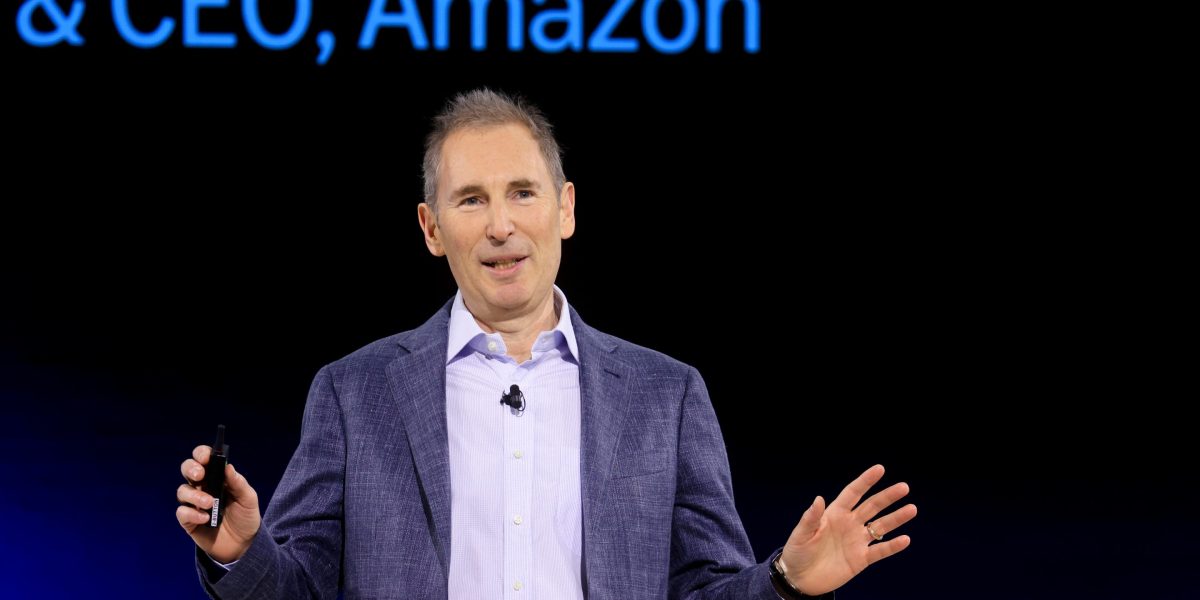
In late July, CEO Andy Jassy told investors that Amazon now expects to spend $220 billion on capital expenditures this year, up from a previous estimate of $200 billion. He attributed the increase directly to higher memory costs. More strikingly, Jassy said Amazon still will not have enough capacity to meet all demand in 2026, and that the same dynamic will hold in 2027.
That is a company admitting it cannot solve this problem with money alone. The constraint is not capital. It is supply. There is only so much high-bandwidth memory to go around, and the construction cycle for advanced memory fabrication takes years, not quarters.
AWS posted $42.2 billion in revenue in the second quarter, up 37 percent from a year ago. Jassy called it the fifth consecutive quarter of accelerated growth. The cloud business is booming, and it is hungry. Every new AI service launches, it consumes more memory. Every memory chip that goes into a data center is one fewer chip available for a smart speaker on a retail shelf.
Who wins and who loses.
Memory manufacturers win. Companies like Samsung, SK Hynix, and Micron that produce the chips powering both AI infrastructure and consumer electronics will see their margins expand as demand outstrips supply. Their investors will celebrate.
Amazon loses on hardware margins. The company will have to decide whether to keep prices high and risk losing customers to cheaper alternatives, or to cut margins further and invest less in the infrastructure it says it already cannot afford to build. Both paths are unappealing.
Consumers lose last. The people buying Echo Dots and Fire TV sticks are the ones feeling the impact of a resource battle they had nothing to do with. They are also the ones most likely to shop around when prices rise, which could accelerate a shift away from Amazon’s ecosystem toward competitors who are either less exposed to the memory crunch or willing to subsidize hardware longer.
What happens next.
Amazon is preparing a fall event to showcase new devices. Whether it announces new products at lower prices or simply doubles down on premium models with higher margins will signal how seriously the company intends to defend its hardware strategy going forward. Given Jassy’s comments about persistent capacity constraints through 2027, the likelihood is that prices stay elevated and that Amazon shifts its hardware mix toward higher-margin products rather than competing on price.
The broader implication is that the AI memory crunch will continue to propagate outward from data centers into the consumer economy. It started with servers. It moved to Macs and iPads. Now it is reaching smart speakers and e-readers. The next layer of consumer goods—perhaps wearables, perhaps automotive systems—will feel it too. The flood Cook described is not receding. It is spreading.