AMD's Sneaky NVIDIA Ray Reconstruction Hack Changes GPU Games
A modified mod lets AMD graphics cards run NVIDIA's Ray Reconstruction at 60 FPS in Cyberpunk 2077. Why this blurring of GPU ecosystems matters for every gamer watching the market compete.
The Mod That Shouldn’t Work
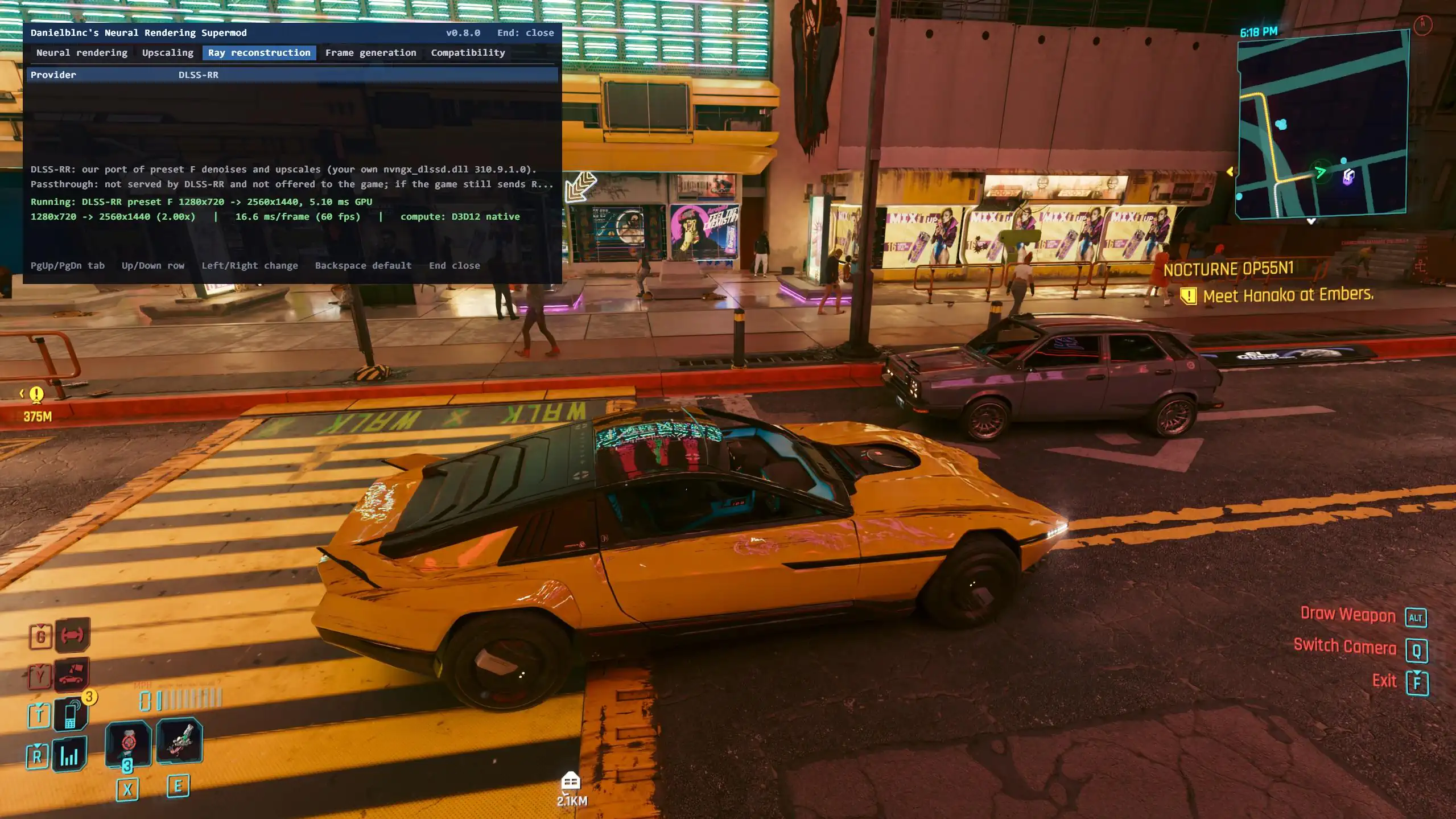
A modified Neural Rendering Supermod version 0.8.0 is letting AMD graphics cards run NVIDIA’s Ray Reconstruction at 60 FPS in Cyberpunk 2077. This is not a demo. This is not a theoretical possibility. People are actively using it, and the results are stable.
The test configuration is simple but telling. A Radeon RX 9070 XT paired with a Ryzen 7 9700X processor, running at 1440p resolution with maximum graphics settings and path tracing enabled. The built-in frame rate counter holds steady at 60 FPS. Performance degradation is minimal across most modern projects.
The mod achieves this by making the AMD card pretend to be NVIDIA hardware through Direct3D 12 hooks. Ray Reconstruction and DLSS algorithms — software features designed specifically for NVIDIA’s proprietary GPUs — now process through the same interface on AMD cards without requiring NVIDIA dedicated hardware.
Why This Matters Beyond the Demo
This story is about something deeper than a clever graphics trick. It signals what happens when proprietary GPU technologies become portable across hardware boundaries that vendors swore were permanent.
Ray Reconstruction was NVIDIA’s answer to the noisy, flickering mess that plagued ray-traced reflections. The algorithm removes the visual artifacts that made real-time path tracing look worse than older screen-space reflection techniques. It was supposed to be exclusive to NVIDIA’s RTX 40-series and later hardware. Now it runs on AMD cards through a mod that makes the GPU spoof its identity.
The mod’s interface shows that Ray Reconstruction presets process actively without NVIDIA-specific hardware. It uses the same noise removal algorithms alongside advanced software features like DLSS scaling and frame generation — all without requiring the original NVIDIA components they were designed for.
For the addon to work properly, the card must disguise itself as NVIDIA hardware and manually add native scaling libraries. The screenshots show improved sharpness. The characteristic blurriness that plagued vehicle hoods and roof reflections — a serious problem in existing ray-tracing-based noise reduction methods — has disappeared.
The Numbers Tell a Different Story
The community members behind this update report that the newer utility version works with almost all modern projects that use machine learning for upscaling. The previous build showed frame rate drops of approximately 25%. Version 0.8.0 minimizes these drops, showing only 0-10 FPS reductions depending on the project.
Only a few titles remain incompatible: Alan Wake 2, Resident Evil 9, and Pragmata. But the developer says additional compatibility patches are already in preparation, and Linux system support is planned.
The performance profile suggests that Ray Reconstruction technology has become somewhat standardized. The underlying algorithms appear accessible enough that they can be implemented on different hardware when the GPU vendors claimed the ecosystem walls were permanent.
What This Means for GPU Competition
GPU vendors have spent decades building walled gardens. NVIDIA’s CUDA, AMD’s ROCm, Intel’s oneAPI — each promises exclusive access to hardware-accelerated workloads. Ray Reconstruction represents the latest fortress in that strategy.
When that fortress becomes portable through a mod, it forces a conversation about whether those walls were ever really about technical necessity or just marketing positioning.
The blurring of GPU ecosystems benefits gamers directly. Features once locked to specific hardware become available across platforms. Ray tracing quality improves without requiring expensive GPU upgrades. The technology becomes more accessible to people who cannot afford NVIDIA’s premium cards.
For GPU vendors, the implication is uncomfortable. Proprietary features that drive upgrade cycles become portable. Ray Reconstruction’s migration from exclusive NVIDIA hardware to cross-platform implementation through a mod suggests that the underlying algorithms have become standardized enough to work on different silicon when the original claims of ecosystem lock were supposed to be permanent.
The Gaming Reality
Gamers with AMD cards can now access NVIDIA’s ray-tracing quality at the same visual fidelity without the price premium. The 60 FPS stable performance in Cyberpunk 2077 at 1440p with maximum graphics settings represents a genuine improvement in accessible ray tracing quality.
The mod demonstrates that ray tracing technology has crossed from proprietary exclusive features into standardized implementations. When NVIDIA’s proprietary Ray Reconstruction works on AMD cards, it suggests the underlying algorithms have become somewhat portable — enough that a mod can bridge the gap that GPU vendors swore was insurmountable.
This is not a perfect solution. Only certain titles work perfectly. Some projects remain incompatible. But the direction is clear: GPU ecosystems are becoming more permeable, and the walls that vendors built to protect upgrade cycles are developing cracks.
The Radeon RX 9070 XT running NVIDIA’s Ray Reconstruction at 60 FPS is a signal of what happens when proprietary GPU technologies lose their exclusivity. For gamers, this means better ray tracing without buying new hardware. For GPU vendors, it means the ecosystem wars may have reached a turning point where hardware boundaries become less permanent than the marketing suggested.
The Bottom Line
A modified mod lets AMD graphics cards run NVIDIA’s Ray Reconstruction at 60 FPS in Cyberpunk 2077. This represents a genuine shift in GPU competition — one where proprietary features become portable, ecosystem walls develop cracks, and gamers gain access to technology once locked behind hardware premiums. The question is no longer whether this mod exists, but how long it will take for GPU vendors to respond to a reality where their walled gardens are no longer as walled as they claimed.