Ancient Earth Was Covered in Poop — And That Sparked All Life
A new hypothesis published in Trends in Ecology & Evolution argues that the Cambrian explosion was fueled not by oxygen or temperature alone, but by a global recycling loop of ancient animal waste. The idea comes from Australian and German researchers, but its roots trace back to a growing conversation in Japanese science journalism about what we've been ignoring in the fossil record.
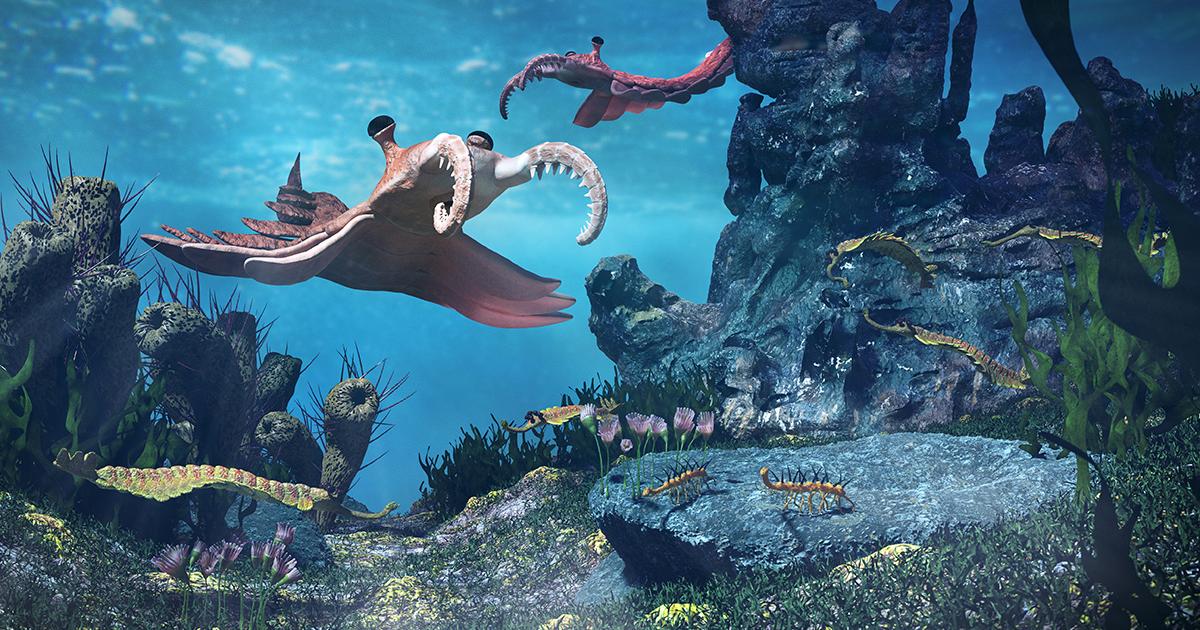
The Unsanitary Origin of Everything
The Cambrian explosion remains one of evolutionary biology’s most stubborn puzzles. Between roughly 539 million and 485 million years ago, nearly every major animal phylum appeared in the fossil record in what looks, retrospectively, like a geological blink of an eye. Oxygen levels rose. Climate shifted. Food webs diversified. Scientists have offered many explanations, and none have fully convinced.
A paper published this year in Trends in Ecology & Evolution adds an explanation that sounds deliberately absurd until you actually think about it: the ocean was fertilized by poop.
Not a little. An amount sufficient to reshape entire marine ecosystems.
The hypothesis comes from Russell Bicknell of Flinders University in Australia and Julien Kimming of the Karlsruhe Institute of Technology in Germany. They argue that the emergence of complex digestive tracts among early animals created a self-reinforcing loop. Animals ate. Animals excreted. The excrement distributed organic matter and nutrients through the water column. More nutrients supported more life. More life produced more waste. The loop accelerated.
“Compared to factors like rising oxygen levels, the importance of fecal matter in ancient ecosystems has been overlooked,” Bicknell said in a statement.
The quote is worth sitting with. We teach the Cambrian explosion as a drama of oxygen and innovation. We do not teach it as a drama of excretion.
The Coprolite Connection
The evidence is not speculative. It sits in rock.
Coprolites — fossilized feces — have been identified in approximately 36 Cambrian formations worldwide. Their abundance spikes at the very boundary where the fossil record begins to show a dramatic increase in animals with complex digestive systems, particularly early arthropods.
Before the Cambrian, simple organisms dominated. After it, you find increasingly sophisticated gut structures preserved alongside increasingly diverse coprolites. The correlation is temporal and structural. The researchers’ argument is that the two phenomena are causally linked, not merely coincident.
In modern oceans, fecal matter is a recognized component of the biological pump — the process by which organisms move carbon and nutrients through marine systems. Waste sinks, decomposes, releases nutrients, and feeds primary producers. The mechanism is well documented. Bicknell and Kimming’s claim is simply that this mechanism operated on a far grander scale in the Cambrian, precisely because the animals producing the waste were newly diversified and rapidly increasing in number.
The logic is elegant in its simplicity. The biological implication is significant.
Why This Matters Beyond the Fossil Bed
The hypothesis matters for reasons that extend past paleontology. It reframes a foundational event in the history of life as an ecological feedback loop rather than a unidirectional trigger. Oxygen did not simply rise and thereby cause complexity. Complexity arose, and then complexity modified its own environment in ways that sustained and amplified it.
This is not a new insight in ecology. Positive feedback loops are a standard concept. What is new here is applying it so directly to the single most important diversification event in animal history.
The researchers are careful to note that their hypothesis does not replace existing explanations. It complements them. Oxygen, climate, predation pressure, genetic toolkit availability — all of these likely contributed. The fecal loop is another gear in the machine, and until now, it has been largely invisible in the literature.
That invisibility is itself telling. Coprolites have historically been studied as curiosities — indirect evidence for reconstructing ancient diets, not as drivers of ecological change. The shift in perspective the paper proposes is subtle but real: treat waste not as a byproduct of life but as a structuring force.
The Japanese Angle
The source material for this hypothesis reached a wide audience through Gizmodo Japan, which ran the story with an unusually direct headline: Did Earth’s ancient oceans become filled with poop, triggering an explosion of life?
Japanese science journalism tends to privilege accessibility without sacrificing precision, and this story is a clean example. The headline is blunt. The reporting is careful. The framing invites a question most English-language outlets would phrase more conservatively: What if the thing we dismissed as waste was actually the engine?
That framing may seem minor, but it reflects a broader difference in how evolutionary narratives are told. Western paleontology often emphasizes innovation — novel structures, new genes, adaptive radiations driven by external pressures. The Japanese coverage here emphasizes process — the mundane, continuous, collectively produced mechanisms that make innovation possible in the first place. Poop is not an innovation. It is a routine metabolic function. The hypothesis says routine function built the world.
Who Wins, Who Loses
The winners under this framework are the unglamorous actors: the small, soft-bodied, poorly preserved animals whose digestive tracts first achieved complexity and whose waste first transformed the ocean chemistry. They are the ones the fossil record usually forgets.
The losers are the tidy single-cause explanations. The oxygen-only narrative does not die, but it loses its exclusivity. So does any account that treats the Cambrian explosion as a sudden event rather than a gradually intensifying loop.
What happens next depends on whether other paleontologists begin searching for the chemical signatures of fecal nutrient cycling in Cambrian strata. If they do, the hypothesis moves from elegant speculation to testable model. If they do not, it remains an intriguing lens — one that changes how we read the rocks without demanding we discard everything else we have learned.
Either way, the rocks themselves are unchanged. They have been recording this story all along. We just stopped looking at the wrong part of the specimen.