Anne Carson's Nobel Signals a Shift in World Literature
Anne Carson's Nobel Prize win marks a pivotal shift in the award's direction, reflecting the Swedish Academy's evolving definition of world literature and genre boundaries.
The Hidden Implications of Anne Carson’s Nobel Win
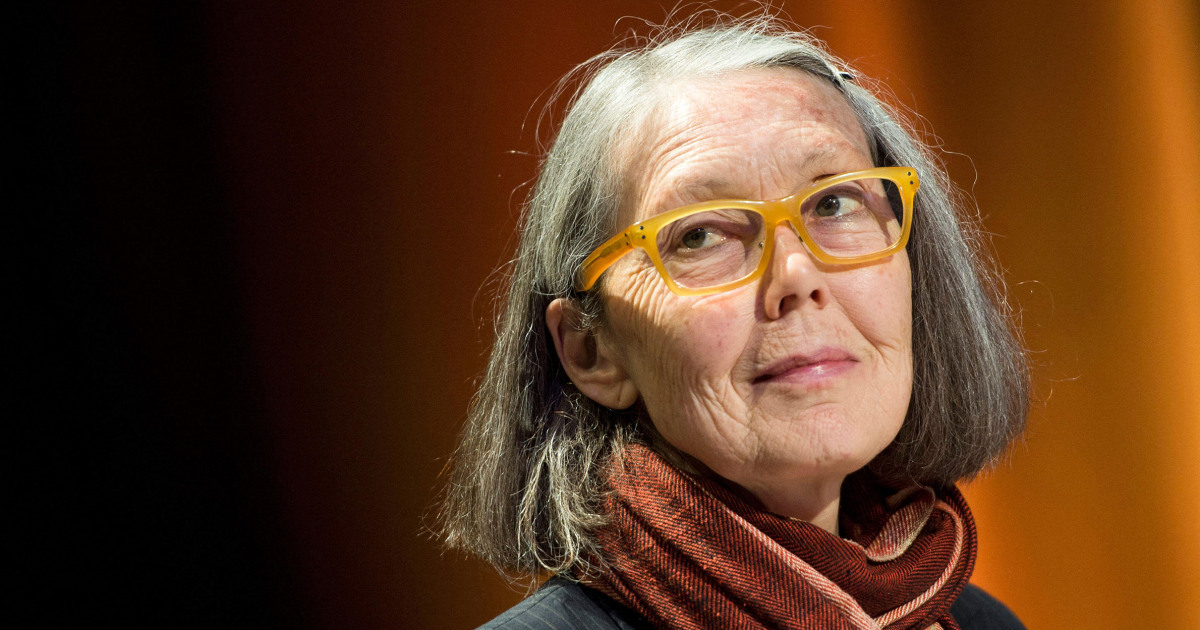
When Anne Carson, a 76-year-old Canadian poet and essayist, won the Nobel Prize in literature on Thursday, it sent shockwaves through the literary world. The announcement came as both surprise and vindication—a recognition that arrives not a moment too soon for a writer who has spent decades stretching the boundaries of what literature can contain, how it can sound, and which intellectual traditions it is allowed to honor.
But what does her win really mean for the future of literature and the way we define it? To understand the significance, one must look past the headline and examine the structural shifts Carson’s recognition represents within the Swedish Academy’s increasingly self-conscious recalibration of literary value.
A New Direction for the Nobel Prize
Carson’s win is significant because it highlights the Swedish Academy’s evolving sense of “world literature.” For years, the prize has been dominated by Anglophone writers—particularly American and British novelists—yet Carson’s victory signals a decisive move toward recognizing the complexities of non-Anglophone literary production and the scholars who keep those traditions alive through translation, commentary, and creative reinvention.
“Almost all her literary production has centered upon the intersection between the philologist’s obsession with words and the poet’s desire for new meaning,” said Anders Olsson, chair of the literature committee. This framing is telling. The Academy is not merely honoring a poet; it is honoring a mode of thinking that refuses to separate rigorous classical scholarship from imaginative reinvention. By elevating Carson, the prize legitimizes a tradition of writers who work in the interstices between disciplines—between ancient and modern, between analysis and lyric, between the archive and the page.
This represents a philosophical departure from earlier Nobel decisions that privileged narrative closure, national realism, or political testimony. Carson’s work offers none of those in conventional form. She is not writing novels about social reality; she is writing fragments, essays, translations, and prose poems that dissolve the boundary between criticism and creation. The Academy’s embrace of this sensibility suggests it is actively redefining the prize’s identity for the twenty-first century.
Why It Matters for Non-Anglophone Writers
Carson’s work often blends classical Greek and Roman literature with modern themes, creating a unique hybrid form that challenges conventional literary norms. Consider her landmark 1986 collection “Glass, Irony and God,” which interleaves original lyric fragments with translations of Sappho, fragments of ancient Greek drama, and prose meditations on the nature of desire and loss. Or her 1998 work “The Beauty of the Husband,” a novel-length poem structured as a series of formal variations on the sonnet, weaving references to Petrarch, Ovid, and film noir into a single sustained argument about love as a kind of epistemology.
Her ability to seamlessly weave ancient myths with contemporary issues resonates with a global audience, offering new perspectives on timeless themes. This is especially important for non-Anglophone writers who have historically been filtered through the Anglophone literary market’s narrow expectations. Carson demonstrates that a writer can engage deeply with classical traditions—Greek, Latin, Italian, German—without ever abandoning the immediacy and urgency of contemporary form. Her work suggests that translation is not a secondary activity but a primary creative mode, one that deserves the highest recognition a literary institution can confer.
Ingrid Carlberg, permanent secretary of the Swedish Academy, revealed that Carson was in Iceland “listening to the wind” when she learned of her win. This detail speaks to the profound connection between Carson’s personal experiences and her literary output. Iceland—long a site of Nordic literary pilgrimage, from Snorri Sturluson’s sagas to contemporary writers like Arnaldur Indriðason—serves as a fitting location for such a revelation. It echoes Carson’s own deep engagement with northern European literary traditions and reinforces the image of a writer whose imagination is constantly in dialogue with landscape, weather, and the oral remnants of ancient cultures.
What Happens Next?
Carson’s win is not just a personal achievement; it reflects broader trends in literature. As the literary world becomes increasingly interconnected, authors from diverse backgrounds and traditions are gaining recognition for their innovative approaches to storytelling. The rise of hybrid genres—creative nonfiction, autofiction, literary essay as poetic practice—has created an ecosystem in which writers like Carson are no longer outliers but pioneers whose methods are becoming mainstream.
With Carson’s win, we can expect to see more cross-cultural collaborations and a greater emphasis on the fluidity of genres. Publishers will likely accelerate their acquisition of works that refuse categorical neatness. Translation lists will expand beyond the traditional Anglophone center, and academic programs will find renewed justification for insisting on classical literacy as a foundation for contemporary creative practice.
Carson’s work invites readers to explore the depths of human experience through a multifaceted lens, challenging traditional categories and expanding our understanding of what literature can be. She has long argued, both in her essays and in her creative work, that fragmentation is not a failure of form but a faithful representation of how meaning actually operates—in shards, echoes, and partial recoveries. The Nobel Prize, by honoring her, effectively endorses that worldview.
A Wider Ripple Effect
The implications extend beyond Carson herself. Writers who work in hybrid forms—Claudia Rankine, Ocean Vuong, Valeria Luiselli, Olga Tokarczuk—may find their own critical infrastructure strengthened by the Academy’s gesture. Critics who have long argued that the Nobel privileges the novel over the essay, the narrative over the fragment, may now point to Carson as evidence that the institution is capable of course correction.
There is also a generational dimension worth noting. Carson was born in 1950 and has been publishing since the early 1980s. Her recognition at age 76 challenges the Academy’s occasional tendency to either honor elderly writers as a kind of lifetime achievement gesture or to anoint younger authors as prophetic voices. Carson sits uncomfortably in neither category: she is celebrated not for enduring but for expanding, not for accumulating a body of work but for demonstrating that the body of work itself can be remade, rewritten, and reimagined at every turn.
In conclusion, Anne Carson’s Nobel Prize win is a testament to the evolving landscape of world literature. It marks a shift toward inclusivity and innovation, celebrating the power of hybrid forms and the timeless relevance of classical engagement in contemporary writing. The prize has always been about more than an individual author; it is a statement about what a culture values, and Carson’s victory tells us that the Swedish Academy now values curiosity over coherence, translation over transcription, and the restless mind over the settled canon.