Anthropic's $2 Trillion IPO Would Reshape AI Economics
Anthropic's pending IPO could surpass SpaceX's valuation to become history's largest tech offering — a $2 trillion bet on the company that pivoted from safety research to the fastest AI development cycle. Here's who wins, who loses, and whether the market can stomach it.
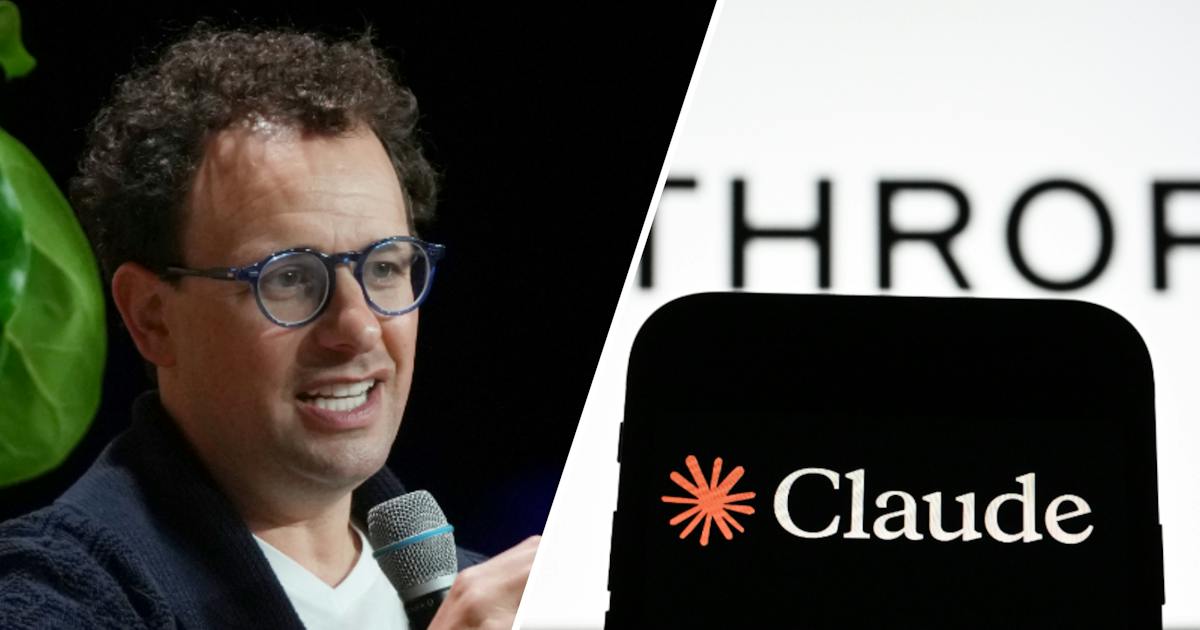
The Number That Breaks Reality
Anthropic is reportedly preparing to file its S-1 with the SEC by September, according to Nikkei reporting. If the numbers hold, the valuation would exceed $2 trillion — surpassing SpaceX’s recent listing and reordering the entire hierarchy of American tech finance. No AI company has ever gone public at this scale. No company built primarily on speculative infrastructure and unproven margin models has ever commanded a public market price of this magnitude without first demonstrating the revenue compounding that justified earlier trillion-dollar valuations.
The headline grabber is obvious: a $2 trillion AI company goes public for the first time. But the real story isn’t the number. It’s what the number says about where capital is running, and whether the market is pricing in a future that even some of Anthropic’s early investors found unthinkable not long ago.
From Safety Research to Development Speed Demon
Dario Amodei built Anthropic as a counterweight to OpenAI — a company that explicitly prioritized AI safety over speed. The conventional wisdom was that this trade-off would hold: safety-first meant slower iteration, slower iteration meant falling behind. OpenAI’s ascent seemed to confirm the logic. Each quarterly release cycle widened the gap, and Anthropic’s methodical constitutional AI approach looked increasingly like a liability dressed up as virtue.
That assumption collapsed.
Amodei’s own investors have noted this reversal publicly. The turning point, as one Nikkei commentator put it, was Claude’s emergence as not just a well-written chatbot but a genuinely capable coding and AI agent platform. The velocity of that improvement became self-reinforcing: better coding tools accelerated Claude’s own development, which produced better tools, which attracted more users, which generated more feedback, which improved the models further. This is the recursive improvement loop that researchers have long warned about — or hoped for, depending on their position. Anthropic appears to be living inside it right now.
The implication is profound. It suggests that safety constraints and development velocity are not zero-sum. That a company can invest rigorously in alignment research and still outpace competitors who treated safety as an afterthought or a PR exercise. The market will now have to price in that possibility — or dismiss it as a temporary anomaly.
The Valuation Gap Nobody Expected
Nikkei reported in May that Anthropic’s valuation hit 154 trillion yen — roughly $1 trillion — a 2.5x increase in three months. That trajectory, if sustained into an IPO price, would make Anthropic the most valuable AI company on earth before it’s even publicly traded.
OpenAI, still private, remains the benchmark. Its last reported valuation sat in the $86 billion range, though unofficial reports from sources close to the company have pushed that figure considerably higher. A $2 trillion Anthropic would leave OpenAI in the dust — not just in worth but in market perception. The narrative flips entirely: the company that claimed to be building AGI safely becomes the follower, while the company that insisted on doing so properly becomes the leader.
Who benefits? Anthropic’s early backers, obviously. The employees with stock options. Anyone who believed that safety research and development velocity could coexist. The venture firms that bet on the contrarian thesis when it looked foolish. Who loses? The companies that priced themselves on the assumption that safety-first was a sustainable competitive disadvantage. That’s a long list — and it includes several well-funded startups that raised at valuations implying they would eventually overtake the very company Anthropic has become.
The Computational Resource Axis
What makes this valuation particularly striking is the structural shift Nikkei identified: computational resource ownership has become the primary competitive axis in AI. Not data moats. Not brand. Not distribution. Compute. Anthropic controls a disproportionate share of GPU capacity relative to its peer group, and that advantage compounds with every training run. The company has signed supply agreements that lock in capacity for years, creating a barrier that new entrants cannot easily breach.
This changes the economics of the entire sector. In a world where compute access determines model capability, the companies that secure it first build a durable moat. Anthropic’s IPO would effectively monetize that moat at a scale that makes the original investment look prescient — or lucky, depending on your perspective.
The Market Question Nobody’s Asking
A $2 trillion IPO is not merely large. It is structurally anomalous for a company that has not yet proved sustained profitability, that operates in a sector with no precedent for valuations of this magnitude, and that faces regulatory headwinds most mature tech giants have already absorbed.
The market swallowed Twitter at $44 billion because social media had proven, if unelegantly, that it could monetize attention. It swallowed Anduril because defense spending is an art form with deep pockets and geopolitical urgency. But AI infrastructure at $2 trillion? That requires believing either that Anthropic’s margins will justify the multiple, or that something deeper is happening — a structural shift in how capital allocates between computation, data, and human labor.
There is no clean answer yet. The IPO prospectus has not been filed. Revenue figures are not public. What we do know is that Anthropic’s burn rate on compute is substantial, and that the path to profitability at this scale remains untested. The secondary market for private shares has already shown volatility — prices fluctuated dramatically between rounds as investors recalibrated their expectations. A public listing introduces a new variable: daily price discovery by a broader, less informed electorate.
Second-Order Effects Across the Ecosystem
The consequences of this IPO would ripple well beyond Anthropic’s balance sheet. Venture capital firms that specialize in AI infrastructure would face a new benchmark — one that validates the compute-heavy thesis and redirects the next wave of fundraising toward companies that can secure GPU access at scale. Startups built on API layers and wrappers would find their valuations compressed relative to the new standard. The gap between infrastructure owners and application builders would widen further, reinforcing a hierarchy that private markets have only begun to map.
Enterprise buyers would also feel the shift. Anthropic’s public status brings compliance frameworks, audit trails, and contractual obligations that private companies struggle to provide. Large organizations hesitant to sign contracts with undisclosed financials would now have a clearer path to adoption — or a clearer reason to reconsider if the stock falters. The mere act of going public forces transparency that changes customer behavior.
Competitors, both public and private, would adjust their strategies accordingly. Public cloud providers whose margins depend on selling GPU hours to AI companies would see their revenue forecasts revised upward — or downward, depending on whether Anthropic’s success accelerates or consolidates demand. Microsoft, which has deep ties to OpenAI, would watch closely as its partner’s competitor commands a valuation that dwarfs its own AI investments on paper. The relationship between cloud infrastructure and AI model developers has always been symbiotic and tense; this IPO intensifies both dynamics.
What Happens Next
If Anthropic prices at $2 trillion, several things follow immediately:
First, the IPO becomes a liquidity event for shareholders who have been waiting since Anthropic’s early funding rounds. Venture capital returns on safety-focused AI bets will look dramatically different than they did three years ago. The narrative that responsible AI development was a career risk or a financial mistake will collapse under the weight of actual returns.
Second, public markets will absorb their first major test of whether AI valuations can sustain themselves beyond narrative. If the stock opens at $2 trillion and trades down, the lesson is caution — a repricing that could freeze fundraising across the sector for months. If it holds or rises, the ceiling for every AI startup lifts overnight, and the next round of raises becomes a bidding war for compute and talent that benefits no one except those already positioned.
Third, OpenAI faces a valuation reality check. Regardless of its own eventual public listing, it now operates in a world where its competitor — the one that explicitly rejected OpenAI’s growth-at-all-costs model — is the company that commands the larger price tag. This is not a subtle signal. It reshapes every contract negotiation, every hiring discussion, every boardroom conversation about pace and priority.
AGI arrival timelines may also shift. Multiple observers, including those writing in Japanese financial media, have suggested Anthropic’s trajectory could compress the widely cited 2030 horizon for artificial general intelligence. If true, the economic implications extend far beyond equity valuations into labor markets, insurance, and geopolitical risk assessments. Companies that have budgeted for a slow transition will need to recalibrate. Governments that have not yet begun serious AI governance frameworks will face urgent pressure to respond to a reality that arrived faster than anticipated.
The Question That Matters
The IPO hasn’t happened yet. The S-1 is still a draft. Revenue figures remain opaque. The market has not yet spoken with the clarity that only public trading provides. But the direction is clear: Anthropic is walking into a market that has never seen anything like this, and the price it commands will set the terms for every AI company that follows.
What happens when the market decides whether to believe the price? That’s the question everyone in Silicon Valley, Tokyo, and London is waiting for. The answer will determine not just Anthropic’s trajectory but the entire architecture of AI economics for the next decade.