Anthropic's IPO Will Test Whether AI Safety Pays Off
Anthropic files for a $1.2 trillion Nasdaq listing with a governance structure that shields founders from shareholder pressure — and a $518 billion infrastructure bet that could make or break its margins.
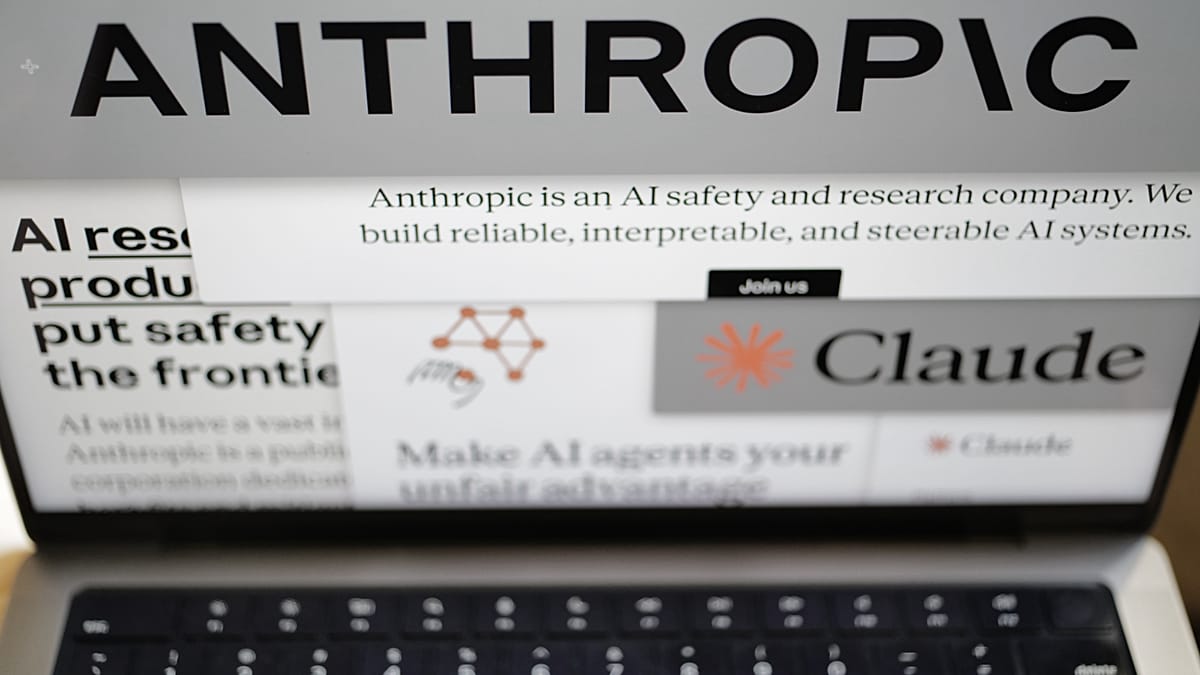
The governance gamble no one is talking about
Anthropic’s IPO prospectus reads like a declaration of war against conventional corporate governance. The company is pricing shares between $70 and $78, landing at roughly $1.2 trillion at the midpoint — a figure that would rank among the largest public listings in history.
But the real story sits in Section 4 of the filing, buried beneath paragraphs about revenue projections and risk factors. Seven companies, including Nvidia, Google and Microsoft, have agreed to buy $26 billion worth of stock in a private placement attached to the offering. Those shares carry no voting rights.
Outside investors get exposure to Anthropic’s upside. They do not get a seat at the table.
Founders Dario and Daniela Amodei retain 50.1 percent of voting control. An independent body called the Long-Term Benefit Trust appoints four of seven board members. That trust includes former Federal Reserve chair Ben Bernanke and two other trustees who hold no financial stake in the company. The structure is designed to insulate Anthropic from activist pressure, short sellers and quarterly earnings scrutiny — precisely the forces that have already forced OpenAI’s leadership into public chaos.
Josh Zinner of the Interfaith Center on Corporate Responsibility put it bluntly: Anthropic has built a governance cage that leaves outside shareholders voiceless while decisions made inside the firm affect everyone on earth. New York City’s chief fiscal officer Mark Levine echoed the concern, noting that the company has not answered fundamental questions about how it plans to manage the existential risks it warns about in its own filings.
This is not standard concern about insider control. It is a signal that Anthropic’s leaders intend to treat AI alignment as a long-term mission rather than a quarterly deliverable. That choice has real consequences for how Wall Street prices the stock.
The $518 billion bet on compute
Anthropic has committed to spend at least $518 billion with six infrastructure suppliers over roughly a decade. About 80 percent of that amount is non-cancelable. The company must pay whether it uses the capacity or not.
For context, that single commitment exceeds the annual capital expenditure of most Fortune 50 companies. It is closer to the scale of a national defense budget.
The math is simple but brutal. Anthropic is betting that demand for frontier AI models will keep outpacing available computing capacity for years. If that holds, its investment in chips, data centers and electricity becomes a moat. If demand stalls or Chinese open-source models capture more market share, those contracts become a liability.
Microsoft and Google — which also appear on Anthropic’s customer list — supply much of that computing power. The filing discloses they cannot provide all the capacity Anthropic requested. That dependency cuts both ways. It gives Anthropic leverage as a major buyer, but it also means its biggest partners could prioritize their own model development over Anthropic’s needs.
Nearly half of Anthropic’s 2025 revenue came through Amazon and Google cloud platforms. The same companies are its primary infrastructure suppliers. This convergence of customer and supplier is unusual even for a company this size and raises questions about margin sustainability once the cloud giants feel less need to subsidize a rival model chain.
The OpenAI shadow
OpenAI remains the frame of reference for everything Anthropic does. The Amodeis left OpenAI in December 2020 after disagreements over safety priorities. Dario Amodei had led OpenAI’s scaling laws research — the empirical work showing how model capability tracks with compute and data scale. His sister Daniela headed safety and policy. Their exit was not procedural. It was ideological.
OpenAI’s recent valuation hit about $1.25 trillion in a private round last year. That figure is close to Anthropic’s IPO target and comes from unaudited books. The two companies count partner revenue differently — Anthropic reports revenue flowing through cloud platforms, while OpenAI’s figures may be reported by Microsoft. The gap is probably smaller than it looks.
OpenAI has pushed its own public listing to 2027 at the earliest. When it finally goes public, the comparison will be immediate and unfavorable to whoever arrives second. Investors will ask whether Anthropic’s safety-first positioning translated into faster progress or slower progress — and whether the market rewards caution or punishes it.
That question matters beyond these two companies. It determines whether AI safety becomes a premium feature that commands higher prices or a cost center that erodes margins relative to competitors who ship faster.
The political temperature shift
The relationship between Anthropic and the current U.S. administration deteriorated sharply in early 2026. In January, the Department of Defense asked for unrestricted access to Claude. Anthropic refused two uses: mass surveillance of Americans and fully autonomous lethal weapons. By February, Trump ordered federal agencies to stop using Anthropic’s technology. Defense Secretary Pete Hegseth labeled the company a supply-chain risk — a designation typically reserved for foreign adversaries.
The episode reveals how AI governance choices now carry geopolitical consequences. Anthropic drew a line that some within the national security establishment viewed as obstruction. The company viewed it as core to its reason for existing.
No company going public today should assume its values will remain uncontested. Political winds shift. Client lists change. The governance structure Anthropic built to protect its mission from shareholders may also protect it from the consequences of refusing government contracts. That is a trade-off worth watching.
The Chinese price pressure
Chinese open models represent a quieter but potentially more structural threat than any U.S. competitor. DeepSeek, Alibaba’s Qwen, Moonshot’s Kimi and Z.ai’s GLM are all free to download and significantly cheaper to run than frontier proprietary models. By early 2026, Chinese open models accounted for roughly 30 percent of usage on OpenRouter, a marketplace that aggregates API traffic across dozens of providers.
Anthropic has accused several Chinese labs of using tens of thousands of fake accounts to copy Claude responses and train their own models. Whether those claims prove true or not, the underlying dynamic is clear: open models compress pricing power across the industry.
Analysts see the main danger not as Chinese models overtaking Anthropic at the top end but as cheaper alternatives forcing Anthropic to cut prices and accept thinner margins. That scenario would punish the very infrastructure bet that defines Anthropic’s strategy — a company that committed $518 billion in non-cancelable spend expecting sustained premium demand.
What happens next
The IPO price settles Wednesday. Trading begins Thursday under the symbol ANT. The first earnings call will arrive in roughly three months, and with it the first test of whether Anthropic’s safety positioning translates into revenue that justifies its infrastructure spend.
Three variables will determine whether this listing succeeds or becomes a cautionary tale.
First, whether Anthropic’s customers stay locked in despite cheaper alternatives. Cloud platform revenue depends on switching costs and integration depth. If those prove shallow, the revenue base thins quickly.
Second, whether the $518 billion infrastructure commitment yields enough usable capacity to meet demand without forcing additional spending. Supply chain bottlenecks in advanced chip production remain unresolved.
Third, whether the governance structure holds when institutional investors begin pressuring the board for changes. Activist funds do not respect public benefit corporation charters if the math stops working.
Anthropic is asking Wall Street to believe that safety is a product feature, not just a marketing message. The market will decide whether to pay a premium for that belief or discount the stock for the constraints it imposes.