Anthropic's 40% Valuation Cut Signals AI IPO Discipline
Japan's Nikkei broke news of Anthropic slashing its IPO valuation target by 40 percent — a signal Western markets are only now absorbing. What the cut reveals about the AI funding cycle matters far beyond one company's balance sheet.
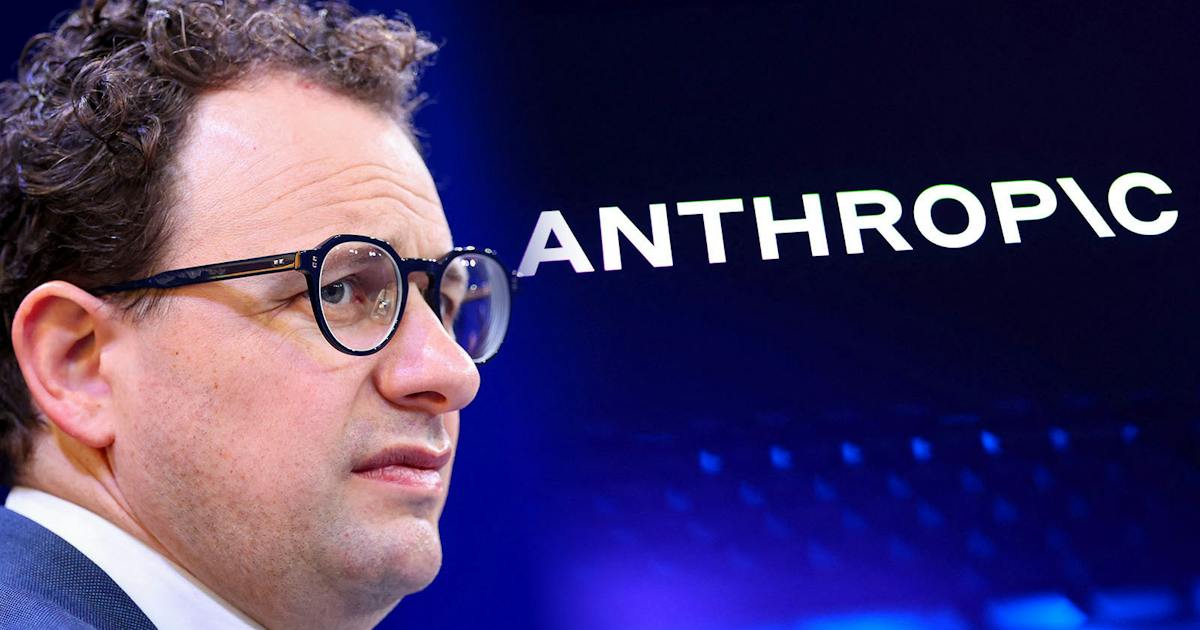
The number nobody in Silicon Valley is talking about yet
On November 10, Japan’s Nikkei published a behind-paywall filing that quietly reframes everything investors thought they understood about the AI funding cycle.
Anthropic came out and said its IPO would value the company at between $1.26 trillion and $1.4 trillion, raising $81 to $88 billion in proceeds. The offering price sits at $70 to $78 per share. A roadshow began that same day to gauge investor appetite, with listing expected within days.
The detail that should unsettle everyone watching the sector: those numbers represent roughly a 40% cut from the company’s earlier internal target of $2 trillion. Not a rounding error. Not a tactical reshuffle. A structural downgrade.
Most U.S. outlets will carry this story within days. The Nikkei broke it first because the data lives in American regulatory filings but arrives through Tokyo-first readership routes that Western desks often monitor secondhand.
This timing gap matters more than it appears.
Why a 40% haircut is not normal course correction
A startup cutting its valuation guidance before pricing its IPO is common. Cutting it by 40% — after years of building narrative momentum around being the responsible alternative to OpenAI, after securing massive compute commitments from Amazon and Google, after positioning itself as the enterprise-grade voice of cautious alignment — is different.
It signals something about where capital sits today versus six months ago.
Mark Spiegel, former head of AI strategy at NVIDIA, recently noted in a public interview that investors who chased AI companies at peak valuations could face sharp corrections — specifically calling out valuations inflated during the DeepSeek hype spike. His warning landed in a market already jittery about data center overcapacity, regulatory friction following the U.S. midterm elections, and the sheer velocity at which trillion-dollar companies appear to form.
Anthropic’s revision is the first major post-hype recalibration to hit print.
The company also disclosed roughly $131.7 billion in cash and equivalents on hand — over $20 trillion in yen terms. That war chest explains why the IPO still feels important rather than desperate. Anthropic is not raising money to survive. It is raising money at a lower valuation because the market simply does not agree with its previous price tag.
There is a meaningful distinction.
Who wins, who loses — and who gets squeezed next
Let us map the players.
Winners: Institutional investors who wait. The $70-to-$78 price band leaves room between the implied floor and whatever emerges from the roadshow feedback. Secondary-market buyers will benefit if demand runs cooler than management hopes. And anyone holding shares in publicly traded AI infrastructure plays — NVIDIA, AMD, Equinix — gains from reduced fear of a concentrated dump once Anthropic lists.
Losers: Employees and early investors priced in at the $2 trillion level. Those option grants and secondary stakes just lost nearly half their paper value before the ticker even starts trading. The founders may not feel it personally — they have time horizons measured in decades, not quarters — but every employee who joined during the frenzy period carrying hope-laden strike prices is now sitting underwater on day one.
Squeezed next: Everyone Anthropic was competing against for late-stage private capital and IPO attention. OpenAI’s own listing timeline gets harder to justify when your rival is repricing aggressively. xAI, which has been circling similarly ambitious targets, now faces a market that clearly prefers evidence over narrative. Any AI-native company that priced rounds at double-digit billions through mid-2026 will answer to the same question: what did you do with all that cash if growth does not keep pace?
The cascading effect is where the real story lives.
The data center overhang nobody dismisses anymore
Commentators inside the Nikkei ecosystem, including contributor Ken Erahara, framed the revision pragmatically — noting that the old $2 trillion assumption predated visible concerns about data center overinvestment and likely regulatory tightening after the midterm elections. In hindsight, it reads less like ambition and more like optimism running ahead of infrastructure reality.
That phrase — data center overinvestment concerns — deserves weight here. Major hyperscalers have committed hundreds of billions toward physical AI buildout. Power grids, semiconductor supply chains, cooling systems, land permits: none of it scales linearly with model capability. If utilization curves flatten even modestly, the revenue backing these valuations evaporates faster than most pricing models account for.
Anthropic knows this. So do its investors. The 40% cut is partly acknowledgment that the ground beneath AI economics shifted between the last funding round and today.
What happens next — practically and strategically
Expect listing by mid-November. The roadshow has begun, the price band is narrow, and the cash position removes any urgency to walk away. This deal closes; it just closes at a lower multiple than the company initially told the world it would accept.
Once trading begins, watch two things simultaneously.
First: secondary market behavior in the first 90 days. Heavy insider selling at list would validate the skepticism baked into the valuation cut. Minimal selling would suggest insiders still believe in a higher trajectory — and that today’s repricing reflects macro caution, not company-specific deterioration.
Second: how the OpenAI camp responds. Their own IPO preparations — widely believed to be underway though never confirmed — now sit in a market that just demonstrated willingness to slash mega-cap AI valuations by nearly half before a single share changes hands. Every projection OpenAI’s team builds off will need stricter assumptions. Every boardroom conversation about timing will carry more gravity.
The broader implication extends past both companies.
The discipline phase has arrived
The AI funding mania of 2023 through early 2026 operated on a simple logic: build fast, raise big, price confidently, repeat until someone else pays more. Growth narratives outran balance sheets. Market caps expanded faster than utility could justify.
Anthropic’s IPO revision marks the moment that arithmetic stopped working cleanly.
It is not a crash. It is not even a correction in the traditional sense — no stocks have plummeted, no lenders have called in margin, no bankruptcies have ripened.
It is something subtler and arguably more consequential: the beginning of a discipline phase. Capital is learning to price risk again. Companies that built empires on conviction alone must now produce evidence alongside it. Investors who assumed infinite scaling would reward infinite spending are recalibrating without fanfare.
The Nikkei reported the numbers. The subtext arrived separately, and it reads like this.
The era of unconditional AI optimism just lost its strongest recent exemplar.
What comes next depends on whether the rest of the market treats Anthropic’s repricing as a one-off adjustment or a precedent.