Apple's AI Glasses War Is About the Ecosystem, Not the Hardware
Apple is preparing to enter the AI glasses market with a launch planned for 2027. The real battleground isn't the device itself — it's who locks in developers and usage habits before the category matures.
The play beneath the product
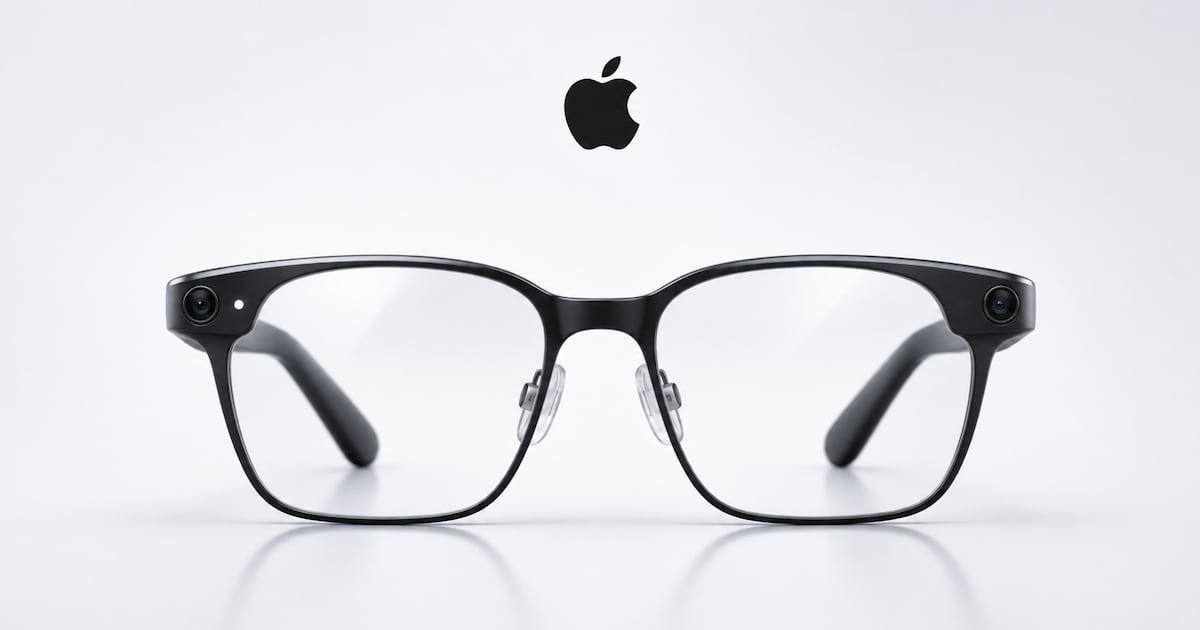
Apple is reportedly targeting a June 2027 reveal for its first AI glasses, followed by shipments later that year. What will make headlines — if those reports hold — is far less important than what won’t. There will be no augmented-reality display. No heads-up overlay of directions or notifications hovering in your peripheral vision.
What you will get is a pair of cameras, an always-on voice assistant called Siri, and a processor derived from the Apple Watch silicon. The prototype, internally dubbed N50, features frames slightly thinner than Meta’s second-generation Ray-Ban AI glasses, with a non-protruding camera built into the temple and a status light on the front. It charges wirelessly via a three-pin magnetic contact that works even while the glasses are on your face.
On paper, that sounds like an accessory. In practice, it could be one of the most consequential bets of the decade.
Why this matters beyond Apple’s lineup
The reason Apple’s entry commands attention has nothing to do with the hardware specs, which remain opaque. It’s about timing and territory. We are in the early innings of a new form factor — AI-powered glasses that act as a continuous ambient interface between you and the digital world. Whoever establishes habit and developer momentum now will define how that interface evolves over the next five years.
Meta already owns that window. According to Omdia, the company captured 81.3 percent of global AI glasses shipments in the first half of 2026. Its third-generation Ray-Ban Meta glasses support 12-megapixel cameras, 3K video recording, and up to nine hours of battery life. They have been adopted by millions of users who now reach for them as a default way to capture moments, ask questions, or hands-free summon a car or order food.
Samsung is closing the gap fast. Its intelligent eyewear, developed jointly with Google and powered by the Gemini model, launches in South Korea and the United States on November 10. The domestic version, co-branded with Gentle Monster, retails for 650,000 to 700,000 won. Like Apple’s prototype, it foregoes a display in favor of camera-based recognition and voice interaction.
This is not a three-way race on equal footing. It is a race to prevent any single platform from locking in the categories of apps, developer commitments, and user expectations that will shape the next era of personal computing.
The ecosystem lock-in nobody talks about
Here is what most coverage of the AI glasses space misses: the hardware is easy to copy. The harder thing to replicate is the software moat.
Meta has spent two full generations refining the Ray-Ban experience, building a creator economy around its camera-first design, and embedding social features that turn every pair of glasses into a distributed content pipeline. Creators post directly from their temples. Shoppers tag products they see in real time. Social feeds become live-streamed personal perspectives rather than curated highlights. This isn’t theory — it’s happening now, and it builds network effects that compound with each new user.
Samsung brings Google’s conversational AI engine and an Android ecosystem that already connects billions of devices. Its partnership with Gentle Monster signals something significant: fashion credibility matters as much as technical capability when convincing people to wear technology on their faces all day. The co-branding strategy mirrors Apple’s own playbook from the iWatch days, where Hermès proved that premium materials and designer partnerships could lift a functional device into luxury territory.
Apple brings Siri, the iPhone — still the dominant smartphone in many markets — and a track record of turning niche wearables into mainstream products once they cross a quality threshold. But there is a catch. Bloomberg reports that Siri development delays could push Apple’s launch back further. If that happens, Meta and Samsung will have another full generation of users, developers, and partnerships ahead of them. Every month without an Apple competitor means more app developers build specifically for the Meta or Google wearables stack.
That is the real risk for Apple: not losing on specs, but losing relevance before it even enters the room.
Second-order effects ripple outward
The implications extend well beyond three tech giants competing for eyeballs. Insurance companies are already monitoring how AR-capable glasses might affect actuarial models for driving and workplace safety. Privacy advocates warn that camera-equipped glasses worn by millions represent the most pervasive surveillance infrastructure ever deployed voluntarily. Several U.S. states have introduced legislation requiring visible indicators when recording is active — a regulatory posture that could slow adoption or force design changes across all players.
Retail is taking notice too. Companies like Walmart and Target have quietly piloted AI glasses for inventory management and customer assistance. If Apple enters the consumer market with credible privacy safeguards, it could legitimize the form factor for enterprise use in ways neither Meta nor Samsung currently achieve. That dual-track strategy — consumer trust enabling corporate adoption — is precisely how Apple turned the AirPods from a novelty into a $15 billion annual business.
Meanwhile, the semiconductor supply chain is shifting. Taiwan Semiconductor Manufacturing Company is expected to increase capacity for advanced nod chips used in these devices, benefiting both Apple and Samsung equally. The competitive edge, therefore, will not come from manufacturing alone but from how efficiently each company integrates silicon, sensors, batteries, and software into a package people actually want to wear.
Who wins, who loses, what comes next
If Apple ships on time at WWDC 2027, the immediate winner is the consumer. Three major players competing forces faster iteration, better battery life, sharper cameras, and lower prices — the classic dynamic that benefits everyone except incumbents protecting their position.
Meta loses some pricing power and prestige. It can no longer claim to be the only game in town for premium AI glasses. Samsung gains credibility alongside Apple rather than trailing behind it. Developer ecosystems in both camps expand.
The biggest question mark is whether Apple’s glasses can solve the one problem that has plagued every previous attempt at mainstream wearable tech: why should I wear this all day? Current models work well as occasional companions — a camera you can talk to, a hands-free translator, a quick itinerary check. But none have proven durable enough to justify replacing a phone or earbuds in daily life.
Apple may crack that by integrating glasses deeper into existing routines through Siri and the iPhone, turning ambient awareness into something useful across dozens of small interactions per day. Features like real-time translation during conversations, contextual reminder nudges triggered by what you’re looking at, and seamless handoff to AirPods or the Apple Watch could create dependency loops that keep the glasses on your face rather than in your pocket.
If it succeeds, the glasses become the first true always-on computer you wear. If it fails, they remain a novelty — expensive sunglasses with a camera that gathers dust beside your bed.
Either way, 2027 will be the year the AI glasses war stops being speculative and starts producing answers. The hardware wars of the past decade — smartphones, smartwatches, earbuds — were won not by the best specs but by the deepest ecosystems. Apple has survived that battle before. The question is whether it can repeat the feat on your face, where the margins for failure are thinner and the stakes are higher than ever.