Apple's Foldable Bet Faces a Moved Goalpost
Apple enters the foldable market seven years late, up against a Samsung already riding record-breaking demand for its book-style Fold8. What US coverage misses is how the terrain has shifted underneath both companies.
The Latecomer Arrives to a New Game
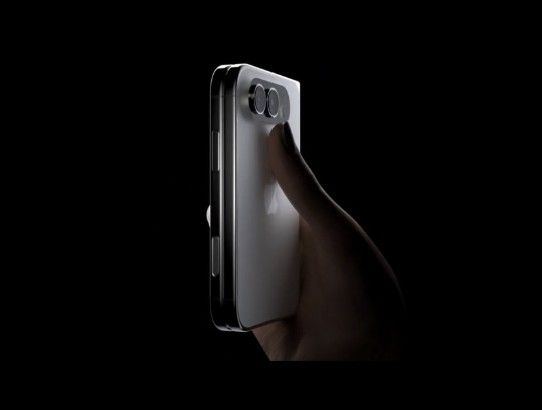
Apple’s first foldable iPhone is expected to arrive September 9, wrapped in the cryptic tagline “Surprise and shine.” Seven years after Samsung introduced the original Galaxy Fold, Apple is finally entering a market that has moved on without it. The device will likely be a book-style clamper with a 5.5-inch cover screen and a 7.8-inch unfolded display, priced above $2,000. But the real story isn’t the spec sheet. It’s what happens when a product designed in silence collides with a category that has been publicly reshaped by a rival’s runaway success.
Samsung’s Galaxy Z Fold8, launched last month, has already rewritten the rules of foldable adoption — and not in the way most American observers expected.
The Book Wins Over the Flip
In South Korea, the Fold8’s pre-orders from August 28 to September 3 hit 1.44 million units, the highest ever for a Samsung smartphone launch. Roughly seven in ten of those buyers chose the book-style Fold8 over the clamshell Flip8. That flips a long-standing pattern. For years, the compact flip form factor drove the volume in foldable sales because it felt safer — cheaper, more familiar, less fragile. This time, the larger screen won.
The shift was global too. worldwide pre-orders for the Z8 series climbed more than 30 percent over the previous generation. In Europe, Fold8 pre-orders surged 70 percent, with the single Fold8 model accounting for 40 percent of all Z8 pre-orders in the region. Consumers are not just tolerating the book format now. They are choosing it.
Apple’s leaked display proportions — 4:3 when unfolded — match Samsung’s approach almost exactly. That coincidence is not accidental. It confirms that Apple’s engineering team studied the same market conclusion Samsung arrived at: the book form factor is where the premium foldable audience lives. But reaching the same conclusion later is a different experience than setting it.
The Real Test: A CEO’s First Act
The September 9 event carries a weight that extends beyond product launch. John Ternus becomes Apple’s CEO on September 1, succeeding Tim Cook, who moves to chairman. The foldable reveal arrives just eight days into his tenure — his first major hardware moment as the public face of the company.
Ternus is not a marketing executive. He joined Apple’s design team in 2001 and rose to senior vice president of Hardware Engineering in 2021, overseeing the iPhone, iPad, Mac, and Apple Watch. The foldable program itself was developed during Cook’s leadership, so this is not technically his project. But the product will carry his name by association, and the question hanging over Cupertino is whether a hardware engineer-turned-CEO can deliver a first impression that matters.
Apple’s first foldable faces a different challenge than Samsung’s did in 2019. Back then, Apple’s rivals were still proving that foldable phones could work at all. Creases were obvious. Hinges broke. Screens cracked. Apple watched from the sidelines and let Samsung take the reputational risk. That luxury is gone.
What Samsung Built — and What Apple Must Match
Samsung has spent seven years refining the very problems that defined early foldables. The Fold8 weighs just 201 grams and measures 4.5 millimeters thin when unfolded — the lightest and thinnest Galaxy Z Fold yet. Apple’s expected device will need to match or exceed that threshold on day one. The crease, once the foldable’s signature flaw, will be the first thing every reviewer measures.
Beyond hardware, Samsung has spent years building software habits around multitasking on large unfolded screens. Apple’s advantage lies elsewhere: the ecosystem. iPhone users already own Macs, iPads, and AirPods. A foldable that bridges the gap between phone and tablet experiences in a single device — something Apple has long positioned its product lines to accomplish separately — could feel like a logical evolution rather than a novelty.
That ecosystem pitch is also Apple’s strategic opening. Samsung owns the foldable hardware conversation. Apple gets to redefine what the foldable is for.
The Numbers That Matter
nCounterpoint Research projects Apple will capture 25 percent of the global foldable market in its first year, while Samsung holds 32 percent. Those figures suggest Apple’s debut product alone could create a duopoly in a segment that previously had only one dominant player. The overall foldable market is expected to grow 21 percent this year, reaching record shipment volumes.
The implication is subtle but significant. Apple’s entry may not steal Samsung’s crown — but it does change who controls the narrative about what foldables are worth. At over $2,000, Apple’s foldable will sit at the very top of the premium smartphone stack, competing directly with Samsung’s own ultra-tier models rather than the broader market.
Who Wins, Who Loses, What Happens Next
Samsung wins if the Fold8’s momentum continues unchecked and Apple’s first attempt is treated as a cautious imitation. Samsung loses if the foldable category expands fast enough that the market accommodates two premium players — which is exactly what the current data suggests is happening.
Apple wins if the device feels like an iPhone that happens to fold, rather than a Samsung that learned to fold later. The hinge engineering, the software integration, the absence of the crease that still haunts early adopters — these are the thresholds. Miss any one, and the “surprise and shine” promise fades into “oh, another foldable.”
The September 9 event is more than a product launch. It is a market reconfiguration. Samsung proved that foldables could be desirable. Apple is about to prove they can be inevitable. Whether that second claim holds will determine whether the premium smartphone category splits into two distinct ecosystems — or whether Samsung’s seven-year head start was always the bigger advantage.