Apple's Foldable iPhone Changes Everything
Apple entered the foldable phone market with the iPhone Duo at $1,999, ending a seven-year Samsung monopoly on premium folding devices and sending shockwaves through the entire smartphone industry.
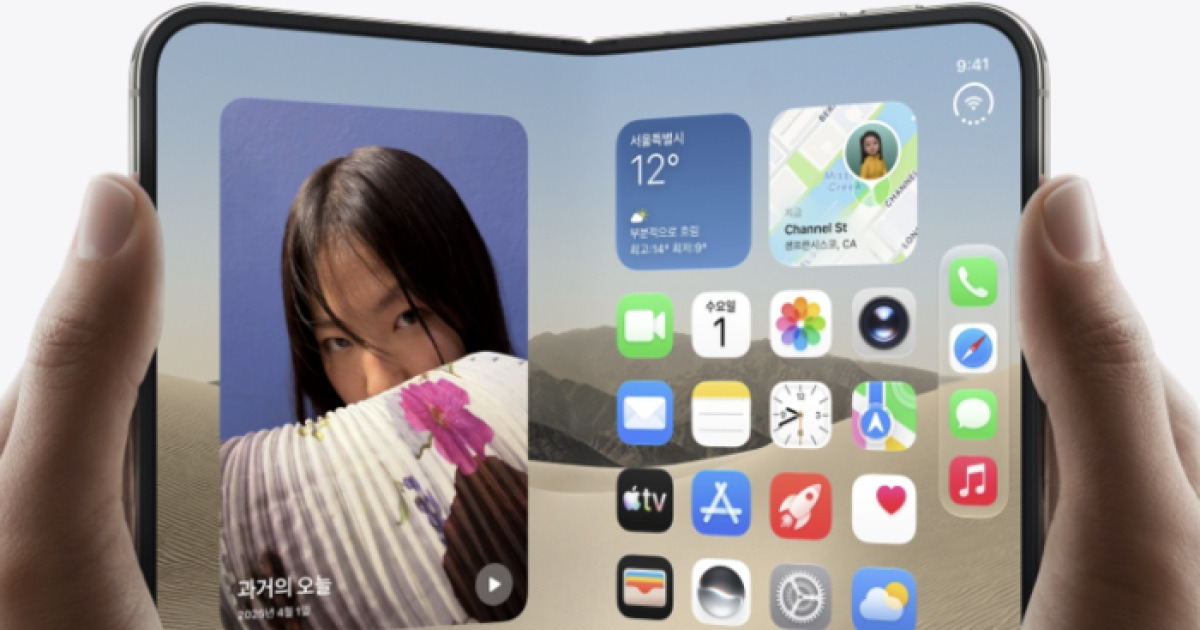
Apple’s Foldable iPhone Changes Everything
Seven years after Samsung launched the world’s first commercially viable foldable phone, Apple finally entered the fray — and it didn’t come cheap.
The iPhone Duo, announced at Apple’s “Surprise and Shine” event in Cupertino on September 9, is Apple’s first foldable smartphone since the original iPhone in 2007. It folds from a compact 5.4-inch display to a tablet-like 7.6-inch screen, and it starts at $1,999 for the 256GB model. Pre-orders open September 16. It ships September 23.
That price point is significant. It puts the iPhone Duo squarely in the same bracket as Samsung’s most expensive Galaxy Z Fold devices and above most Chinese competitors’ foldable offerings. Apple isn’t trying to win the foldable volume game — it’s trying to redefine what a foldable phone should be.
The Samsung Shadow
Samsung introduced the Galaxy Fold in 2019. Since then, it has dominated the foldable segment with its Z Fold and Z Flip series, racking up roughly 70% market share in the category globally. Chinese makers like Huawei and Xiaomi have been closing the gap, offering thinner, cheaper alternatives — but Samsung still owns the premium foldable conversation.
Apple’s delay wasn’t indecision. It was strategy. By 2026, foldable hinge technology and screen durability had matured enough for Apple to feel confident entering the market without damaging its reputation for build quality. The company spent those seven years in near-total silence, watching and waiting.
Sources familiar with Apple’s foldable development say the project, internally code-named T607, involved over 1,200 engineers working across three continents. Apple reportedly scrapped at least two prototype designs before settling on the hinge mechanism used in the Duo. One earlier version reportedly failed when subjected to 100,000 fold cycles — a benchmark Apple sets well above industry standards. The final design reportedly uses a custom waterdrop hinge paired with a micro-layer glass construction that Apple claims eliminates the visible crease entirely under normal viewing angles.
The payoff is a device that doesn’t feel like an experiment. The iPhone Duo supports split-screen multitasking across both halves of the unfolded display — a feature Samsung has offered but never fully refined. Apple’s focus on hardware-software-AI integration suggests it will push this capability further than any competitor so far. Early demo footage shows the Duo running iPadOS-adjacent apps natively in a split configuration, with Siri context-awareness bridging tasks across the two screens in ways that feel more organic than Samsung’s DeX mode or One UI multitasking layers.
Who Wins and Who Loses
Samsung loses first-mover advantage in the most consequential way. Apple’s brand loyalty and ecosystem lock-in mean that even a small fraction of iPhone users switching to the Duo would represent millions of devices — a volume Samsung simply can’t ignore. The Korean company’s foldable market share could drop sharply in 2027 and beyond.
Analysts at Counterpoint Research estimate that Apple’s entry could erode Samsung’s foldable share from 70% to somewhere between 45% and 55% within two years, depending on how quickly Samsung can iterate. Samsung responded to the launch with a statement affirming its leadership in innovation and confirming that its own next-generation foldable — rumored to be the Galaxy Z Fold 9 — is already in final engineering review. Insiders say Samsung is targeting a dual-hinge design that allows the phone to fold into a compact triangle, a form factor Apple has not yet pursued.
Chinese manufacturers face a different threat. Huawei and Xiaomi compete on price and spec sheets, not on ecosystem trust. Apple’s $1,999 price tag places it firmly in the ultra-premium tier where brand perception matters more than raw hardware comparisons. The Duo undercuts the argument that foldables require sacrificing reliability for novelty.
But Chinese makers still hold the volume line. Huawei’s Mate XT and Xiaomi’s Mix Fold series target buyers who want a foldable without paying iPhone-level premiums. The Duo’s entrance may force these companies to sharpen their differentiation strategies — perhaps pushing deeper into AI-first interfaces or developing genuinely novel form factors rather than iterating on the book-style fold.
Consumers win. The entrance of a second major player into a category long dominated by one manufacturer creates pressure on pricing, feature development, and build quality. Samsung will accelerate its next-generation foldables. Chinese makers will compete harder on thinness and camera performance. The foldable market, which was stagnating in growth rate through 2025, will heat up again.
Market research firm IDC projected foldable shipments to grow 18% year-over-year in 2026. With Apple now in the category, that forecast could be revised upward to 25% or higher for 2027. The sheer weight of Apple’s distribution network — its retail stores, carrier relationships, and global supply chain leverage — means the Duo will reach markets and demographics that Samsung’s foldables have rarely penetrated.
The Bigger Picture
This isn’t just about a new phone form factor. It’s about Apple asserting control over the next decade of mobile computing. The iPhone Duo represents a bridge between the smartphone and tablet categories — a convergence Samsung began but hasn’t fully realized. Apple’s approach suggests the company sees folding screens not as a gimmick but as the natural evolution of the handheld computer.
The simultaneous launch of the iPhone 18 Pro ($1,199) and 18 Pro Max ($1,299) alongside the Duo indicates Apple is expanding its premium lineup rather than cannibalizing it. All three models represent a $100 price increase over their predecessors — a signal that Apple believes consumers will pay more for incremental improvements in AI capability and display quality.
New CEO Jon Turners made his first public appearance at this event, emphasizing Apple’s commitment to “products that change how people live.” The iPhone Duo is his first major product announcement, and it’s a bold one. Whether it’s the right one will become clear within six months of availability.
Turners, who succeeded Tim Cook earlier in 2026 after a brief interim leadership period, has spent his tenure pushing Apple toward more ambitious hardware categories. His background in industrial design — he previously led the Apple Park campus architecture program — is evident in the Duo’s restrained aesthetic. Unlike Samsung’s visibly hinged devices, the iPhone Duo closes with a satisfying magnetic snap and appears as a seamless slab when folded. The design language mirrors Apple’s recent focus on subtlety over spectacle.
There are also supply chain implications worth noting. Apple’s decision to co-develop the Duo’s display with Samsung Display — the same company it is competing against in the finished device — creates an interesting dynamic. Samsung supplies the flexible OLED panels, but Apple controls the integration, firmware tuning, and user experience layer. That split gives Apple meaningful leverage: Samsung cannot easily replicate the Duo’s software-hardware synchronization without access to the same proprietary stack.
What Happens Next
Samsung will respond. Expect the Galaxy Z Fold series to push thinner hinges, better creaseless displays, and more aggressive pricing in its next iteration. Huawei and Xiaomi will target the mid-premium segment Apple isn’t touching, filling the gap between $600 and $1,200.
But the most interesting second-order effect may play out in the carrier market. Apple’s history shows that when the company partners with carriers on launch timing and subsidies, prices effectively drop for consumers in upgrade-friendly regions. In the United States, where Apple has deep carrier relationships, the Duo could see promotional pricing that brings the effective cost closer to $1,500 — a number that makes it competitive with Samsung’s own subsidized Z Fold deals.
App developers will also face a reckoning. The Duo’s unique aspect ratios and split-screen capabilities require thoughtful UI adaptation. Apple has not mandated a specific layout, which means the app ecosystem will fragment across implementation quality. Developers who optimize for the Duo early will gain a differentiation advantage; those that treat it as an afterthought will expose the format’s weak points to skeptical buyers.
The broader implication: foldable phones are no longer a niche. They’re becoming the new frontier for premium smartphone differentiation — and Apple just arrived at the finish line first among those who had the most to lose by staying late. The next twelve months will determine whether the Duo is a one-time announcement or the beginning of a sustainable foldable product line from Apple. Given the scale of resources behind it, that seems like the more likely outcome — and a reality that every competitor in the space will have to plan for.