Apple's Foldable Bet Isn't About Beating Samsung — It's About Redefining the Category
Apple's first foldable phone, the iPhone Duo, arrives seven years after Samsung pioneered the segment—and with a price that signals a very different target audience. Here's what the Korean launch pricing and product strategy reveal about Apple's global ambitions.
The Seven-Year Delay Was the Point
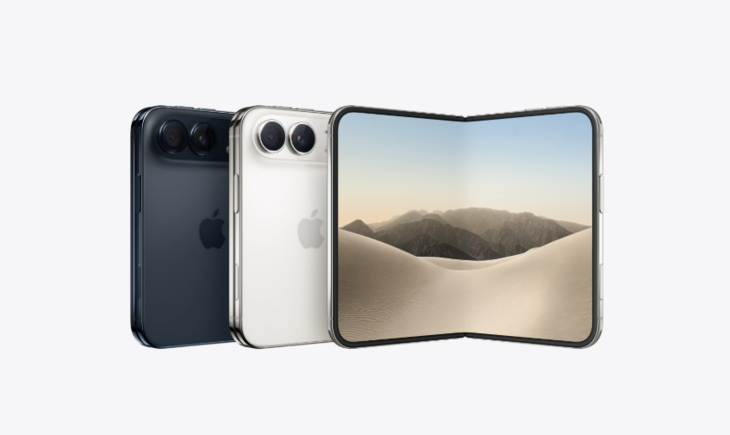
Apple entered the foldable smartphone market on September 9, seven years after Samsung showed the world that a bending phone could be more than a gimmick. The iPhone Duo isn’t late because Apple couldn’t figure out the mechanics. It’s late because Apple spent those seven years deciding the category was wrong and needed to be rebuilt.
The Korean pricing tells you everything: 3.29 million won for the 256GB model, roughly $1,999. That is the most expensive iPhone ever made, and it deliberately targets the upper tier of Samsung’s Galaxy Z Fold8 buyers—not the value-seekers who drove early foldable adoption. Apple is not chasing volume in this segment. It is chasing credibility.
How the Duo Actually Differs From a Folded Galaxy
On paper, the iPhone Duo looks like a Samsung clone. Left-right hinge, 5.4-inch screen when folded, 7.6 inches when open, split-screen multitasking. But the differences are where the strategy lives.
Apple dropped Face ID in favor of a capacitive touch-lock mechanism for the folded state. Why? Because facial recognition fails when the device is half-closed—a real friction point Samsung and Google have never fully solved. The Duo also introduces a stylus, a feature previously reserved for tablets, and a vapor chamber cooling system designed to throttle the heat that foldable screens generate during intensive tasks. Maximum storage climbs to 2TB.
These are not incremental updates. They are arguments that the current foldable form factor, as implemented by Samsung, has unresolved usability problems—and that Apple knows which ones matter to its customers.
The New CEO Is Testing His Authority
September 9 marked the first major hardware keynote under John Thermus, Apple’s new CEO who succeeded Tim Cook on September 1. The event was billed “Surprise and Shine,” a title that suggests Thermus wants to break from Cook’s predictable annual release cadence and reposition Apple as a company willing to disrupt its own product line.
Thermus did not mince words about existing foldables. He called them “two phones awkwardly stapled together” and criticized how vertically oriented content wastes screen real estate when unfolded. His framing is deliberate: Apple is not entering the foldable market to compete on Samsung’s terms. It is entering to declare that Samsung’s terms are the problem.
That is a high-risk rhetorical stance. If the Duo underperforms, Apple looks arrogant. If it succeeds, the narrative shifts from “Apple copied Samsung” to “Samsung finally caught up to Apple.”
The iPhone 18 Pro Line: A Quiet Price War Win
While the Duo grabbed headlines, the iPhone 18 Pro and Pro Max quietly landed on 2-nanometer A20 Pro chips—20 percent faster CPU, 40 percent faster GPU, a variable aperture with six ultra-thin blades, and video playback stretching to 36 and 45 hours respectively. Prices rose only $100 over the previous generation, a remarkably restrained increase given memory cost inflation that has squeezed margins across the industry.
That restraint is strategic. Apple is using the Pro line to lock in upgrade cycles while the Duo establishes the foldable category. The two products reinforce each other: Pro buyers get a familiar device with meaningful upgrades, and Duo buyers get a product that justifies the premium through genuinely new interaction models.
The AI Play Is Different by Design
Apple devoted significant stage time to AI, and the positioning is distinct from every competitor. Thermus framed Apple Intelligence as a device-first system: processing happens on the phone whenever possible, routing to Apple’s private cloud compute only when necessary. The argument is not about capability but control—data that stays on-device cannot be mined, sold, or leaked.
The redesigned Siri is the centerpiece. It understands what you are looking at on screen, accesses your messages and photos for context, performs actions inside apps, and will integrate with 300,000 apps at launch according to AI product head Lillian Lincon. Conversation history syncs privately across devices. There is no separate app to download—Siri is now the interface layer between you and everything else on the phone.
This matters for the foldable specifically. A larger screen gives Siri more visual context to work with. A stylus lets you annotate directly. The Duo is arguably the best device Apple has built for an AI-first workflow, even if Apple will not say so outright.
What This Means for Samsung
Samsung launched the first commercially successful foldable in 2019. It has since moved millions of units and established category ownership. The Galaxy Z Fold8 arrived in July with marginal improvements over the Fold7—incremental by design, since Samsung’s foldable roadmap prioritizes reliability refinement over radical rethinking.
Apple’s arrival changes the calculus. The iPhone Duo is not trying to outsell the Fold series in year one. It is trying to make the Fold series look like an unfinished prototype by comparison. Every feature Apple added—the stylus, the touch-lock, the vapor chamber, the AI integration—is a subtle indictment of choices Samsung made seven years ago and has never revisited.
The real threat to Samsung is not sales volume. It is narrative. If Apple convinces the market that foldables were always supposed to work the way the Duo does, Samsung’s seven-year head start becomes a liability: the company that pioneered the category is now playing catch-up on the category’s definition.
The Missing Information
Apple did not announce which countries will receive the iPhone Duo at launch. Given the Korean price disclosure and the September 23 retail start, a North America and select Asian launch is likely, but European availability remains uncertain. The budget iPhone 18 was also absent from the event, suggesting a September split strategy that leaves a gap in the mid-range until a later announcement.
Pre-orders begin September 16. The first wave of reviews will determine whether Apple’s seven-year delay was patience or hesitation—and whether the Duo can justify a price that places it firmly above every Android foldable on the market.
The foldable war is no longer about who can bend a screen first. It is about who gets to decide what a folded phone should actually do. Apple just raised the stakes.