Apple's Foldable iPhone Is Real — And Samsung Just Lost Its First-Mover Edge
Apple's first foldable phone, reportedly called the iPhone Duo, is coming in October with a starting price around $2,000. The question isn't whether Apple will enter the foldable market — it's what happens to Samsung's premium lead when the world's most valuable company shows up.
The Foldable Phone Market Was Waiting for Apple
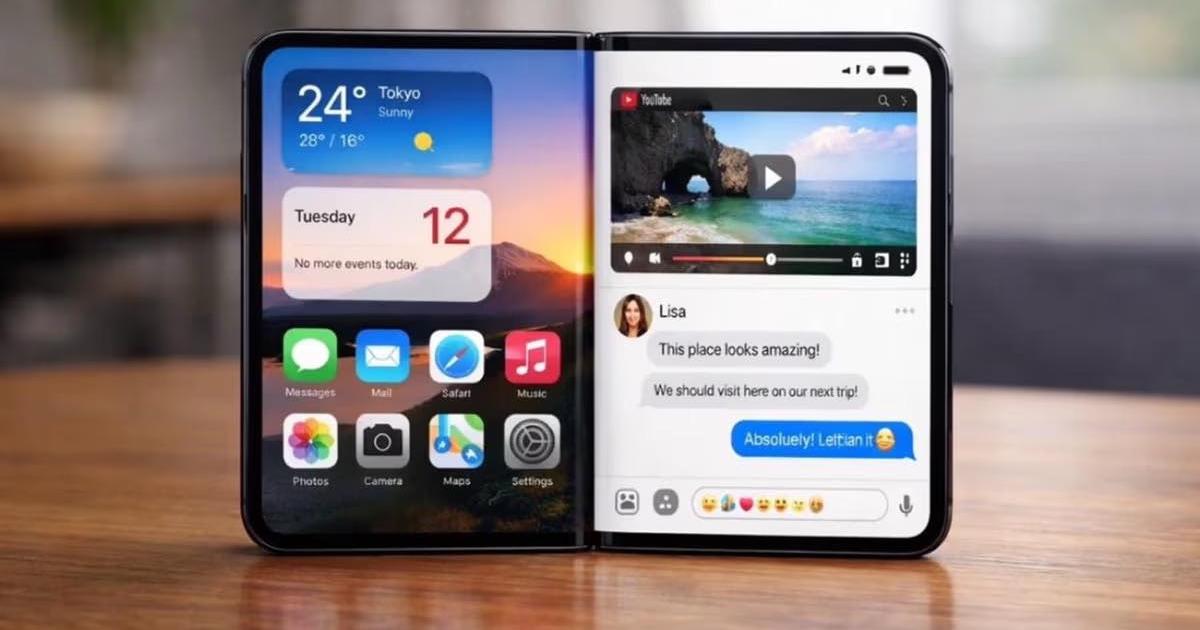
Mark Gurman has been the most reliable source on Apple product leaks for nearly a decade, and his latest post carries the weight that comes with that track record. He says Apple has landed on the name “iPhone Duo” for its first foldable phone, a starting price of $2,000, an October launch, and Apple Pencil support. The colors are dark blue and white. Storage goes up to 2 terabytes.
The name itself tells a small story. Earlier reports suggested “iPhone Ultra” — a name that would have positioned the device as the ultimate, most feature-rich iPhone. “iPhone Duo” is different. It’s descriptive, almost humble. It says: this is a phone that does something you couldn’t do before, not the phone that does everything everything.
Japanese outlets like Gizmodo Japan are already running with the details, quoting Gurman’s post and breaking down the yen equivalent — roughly ¥340,000 to ¥500,000 depending on configuration. The fact that these publications are treating this as near-certain, rather than speculative rumor, signals that supply chain information has been flowing for weeks.
The Price Is the Weapon
$2,000 starting price is the part that matters most. It’s not just a number — it’s a strategic statement.
Samsung’s current flagship foldable, the Galaxy Z Fold series, starts around $1,800 when fully configured and climbs significantly with higher storage tiers. Apple’s approach of including generous base storage at $2,000 and offering a 2TB model at roughly $3,000 mirrors how the company already handles iPhone Pro Max pricing. You don’t pay extra for more RAM or storage on an iPhone. You just pay more for the bigger bucket.
This is a deliberate move to eat Samsung’s lunch on the upgrade path. Samsung charges premium prices for its higher-storage foldables. Apple will undercut that pain point by baking capacity into the base price. The message to consumers is simple: why pay more for more phone when the base model already gives you enough?
Apple Pencil Changes the Category
Gurman’s mention of Apple Pencil support is significant beyond mere feature checklist. It positions the iPhone Duo as a productivity device, not just a larger-screen phone. This is the same argument Apple makes with the iPad Pro and Apple Pencil combination — that the line between tablet and phone is thinner than you think.
For Android, the competitive response is immediate but uncomfortable. Samsung has its S Pen built into the Galaxy Note line, which it then folded into the Z Fold series. But Samsung’s stylus has never carried the same software ecosystem weight as Apple Pencil. Third-party app support, professional creative tools, and annotation workflows all favor Apple’s implementation. If the iPhone Duo brings even a fraction of that ecosystem to a foldable form factor, the productivity use case shifts from Samsung’s territory to Apple’s.
October Launch: The Timing Signal
An October release is notable. Apple typically announces new iPhone models in September and ships them shortly after. A foldable entering the lineup in October suggests it would be announced alongside the standard iPhone lineup — not as a separate event, but as part of the same product cycle. This is how Apple signals confidence: it doesn’t give the product its own stage. It drops it into the existing lineup and lets the market react.
The earlier reports about yield issues — that Apple was struggling to produce the hinge mechanism at scale — may explain the October timing rather than a September launch. If Gurman is correct that the date is now set, those production concerns appear to have been resolved or at least managed to a comfortable level.
Who Loses If Apple Wins Here
Samsung is the obvious answer, but the damage extends beyond South Korea.
Huawei’s foldable push in China faces the same threat. Huawei has been competing directly with Samsung on foldable form factors for years, offering competitive hardware at slightly lower prices. Apple entering this segment removes the pricing advantage Huawei has enjoyed and forces a quality comparison on a global stage where Apple’s brand power dwarfs Huawei’s remaining international presence.
Chinese manufacturers like Xiaomi, Oppo, and Vivo have all launched foldables, but none have crossed the threshold of premium consumer mindshare that Apple commands. When Apple arrives, these devices become alternatives rather than leaders. That’s a demotion no amount of hardware innovation easily reverses.
The Real Question: Can Apple’s First Foldable Beat Its Own Hype?
Apple has a history of entering categories late and winning — the smartwatch, the wireless earbuds, the tablet computer. But each of those categories had simpler competitive dynamics. The foldable phone is different because it’s not a new category for anyone. Samsung has been iterating on this form factor since 2019. The hinge, the crease, the software adaptations for large screens — Samsung has accumulated years of engineering data and user feedback that Apple is starting from zero.
A first-generation foldable iPhone will likely be good. It may even be great. But it will also have a crease, a hinge that raises questions after six months, and software that hasn’t yet been fully optimized for a dual-screen experience. Apple can compensate for many of these issues with industrial design, brand loyalty, and ecosystem lock-in. But it cannot entirely erase the reality that it is learning this category in public.
The iPhone Duo’s success won’t be measured by whether it beats the best Samsung foldable on day one. It will be measured by whether it makes foldables feel like a natural extension of the iPhone rather than a niche experiment. If Apple can make the form factor feel inevitable rather thannovel, the market shifts. If not, Samsung retains its foothold and the foldable category remains where it is now: premium, cautious, and growing slowly.
The answer comes in October.