Apple's Foldable iPhone Is Late, but Its Strategy Changes Everything
Apple's first foldable, the iPhone Duo, enters a market Samsung has owned for years — but its hinge engineering, split-screen multitasking, and Apple Pencil support signal a different play than anyone expected.
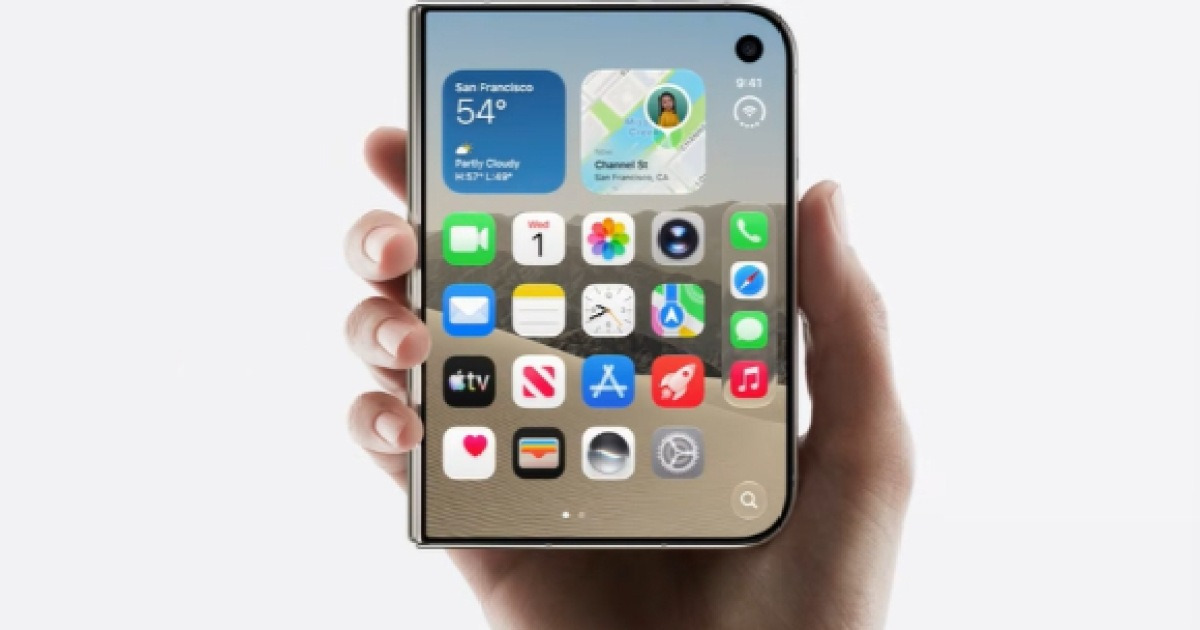
The Latecomer’s Advantage
Apple arrived at the foldable party years after Samsung, Huawei, and a dozen Chinese brands had already established the category. By the time Apple announced the iPhone Duo on September 9, foldable phones had gone through three generations of refinement — and three generations of consumer skepticism. Creases still showed. Hinges still failed. Prices kept climbing without a proportional improvement in daily usefulness.
That timing should not be read as weakness. It is the point.
The iPhone Duo, starting at $1,999, is not Apple’s attempt to win the foldable volume game. It is an attempt to reframe what a foldable phone should be — and to do it with the kind of engineering rigor that makes competitors nervous about the long run.
The Hinge Is the Story
The spec sheet will obsess over the 7.6-inch unfolded Super Retina XDR display and the 5.4-inch cover screen. But the real Apple investment sits in the hinge. Apple describes it as containing more than 100 precision parts — a number that sounds excessive until you consider how foldables have historically failed. Hinges are where creases form. They are where dust invades. They are where the first wave of foldable regret lives.
Apple’s approach uses magnets to lock the device closed and a structural framework that actively supports the center of the display when open. The screen itself uses multiple layered materials that shift incrementally, like pages in a book, rather than bending at a single sharp point. Apple says the crease is less visible and smoother to the touch. Whether that claim holds under two years of real-world use remains to be seen — no foldable has ever aged gracefully in independent testing.
What matters right now is that Apple is treating the hinge as a proprietary advantage rather than a commodity. Samsung’s hinge has been openly reverse-engineered by every major Chinese manufacturer. Apple’s 100-part design, built around a Grade 5 titanium frame, gives Apple a moat that is harder to replicate overnight.
Two Screens, One Operating System
Samsung’s Android-based foldable software has improved. But it still treats the large internal screen as a stretched phone interface rather than a genuinely different form factor. Apple’s approach is sharper: apps launched on the cover screen flow seamlessly to the inner display when unfolded. Two apps sit side by side on the 7.6-inch screen, with customizable layouts that can be saved for one-tap recall.
The half-fold position — what Samsung calls Flex Mode — is handled with more intention here. iOS detects the angle automatically and repositions controls and content accordingly. A video player fills the upper portion while a messaging app occupies the lower half. No manual adjustment needed. This is the kind of small detail that separates a gimmick from a habit.
For developers, Apple is releasing APIs specifically for the dual-screen experience. Video call apps can show shared documents and participant grids simultaneously. Slack and Netflix have already built Duo-specific features. That head start on developer adaptation matters more than any single hardware spec.
The Apple Pencil Changes the Category
Perhaps the most consequential addition is not the folding mechanism at all, but the fact that the iPhone Duo now supports the Apple Pencil — the first time Apple has allowed its stylus on an iPhone. The USB-C connected pencil works on both screens. Note-taking, drawing, document annotation: all of this was previously confined to the iPad line.
This is a strategic move that pulls a high-value use case away from Samsung’s Galaxy Z Fold series and into Apple’s walled garden. The Fold has never had a credible stylus ecosystem. The Duo now does. For professionals who already own an Apple Pencil and an iPad, the iPhone Duo becomes a legitimate replacement for carrying both devices.
The side-mounted Touch ID sensor replaces Face ID for unlocking — another departure that signals Apple is willing to redesign the iPhone experience from the ground up when the form factor demands it.
Who Wins, Who Loses
Samsung wins the early-mover narrative but faces its steepest challenge yet. The Galaxy Z Fold series has held the premium foldable crown since 2019. The iPhone Duo threatens that position not on price — $1,999 is not cheap — but on integration. Apple’s ecosystem lock-in is deeper than any Android manufacturer’s. Users who already own AirPods, an Apple Watch, and a Mac have a powerful incentive to adopt the Duo even at a premium.
Huawei and the Chinese manufacturers lose relative to Apple in the premium segment. They may still capture volume at lower price points, but Apple’s entry into the $2,000 foldable space raises the ceiling for what consumers expect from the category. That pressure will force Samsung to differentiate harder — likely through more aggressive pricing or features Apple does not yet offer.
Microsoft and Google face an indirect threat. The Duo’s half-fold media consumption mode, combined with Apple Intelligence integration, positions the device as a serious productivity tool rather than a novelty. If the Duo drives even a fraction of iPad sales toward a single-device workflow, tablet form factors face longer-term questions.
The Price Is the Signal
$1,999 is a deliberate price. It is not competitive with Samsung’s mid-range foldable strategies. It is positioned to compete with — and potentially exceed — what wealthy early adopters already pay for a Fold Ultra plus an iPad. Apple is not chasing market share percentage points here. It is capturing margin from users who would otherwise buy two devices.
The 256GB-to-2TB storage range and the October 16 pre-order date suggest Apple expects demand to outstrip supply in the initial months, as it has with every major iPhone launch. That is not a sign of weakness in a new category — it is Apple’s standard playbook.
What Comes Next
The iPhone Duo was announced as the final product of Apple’s special event, following the iPhone 18 series and the launch of Apple Intelligence features. That ordering is symbolic: the foldable is not the headline — it is the crescendo. Apple is framing the Duo not as a experiment but as the next logical step in the iPhone’s evolution since the original 2007 device.
Whether that framing sticks depends on durability. The first generation of any new form factor carries risk. Early hinge failures, display degradation, and software bugs will dominate the conversations in six months. Apple’s engineering depth gives it a better chance than Samsung did with its first foldable, but no company has ever launched a foldable with zero growing pains.
The real test arrives in 2028, when the second-generation Duo appears. If Apple maintains its cadence, the question will shift from whether foldables work to whether anything else makes sense. That is the latecomer’s advantage — arriving when the category is proven, then raising the bar so high that followers spend years trying to catch up.