Apple's Foldable Bet and Variable Aperture Signal a Market Shift
Apple enters the foldable market with the iPhone Duo while adding variable aperture to the iPhone 18 Pro — a dual hardware pivot that forces Samsung and Chinese rivals to respond to Apple's slow-but-determined playbook.
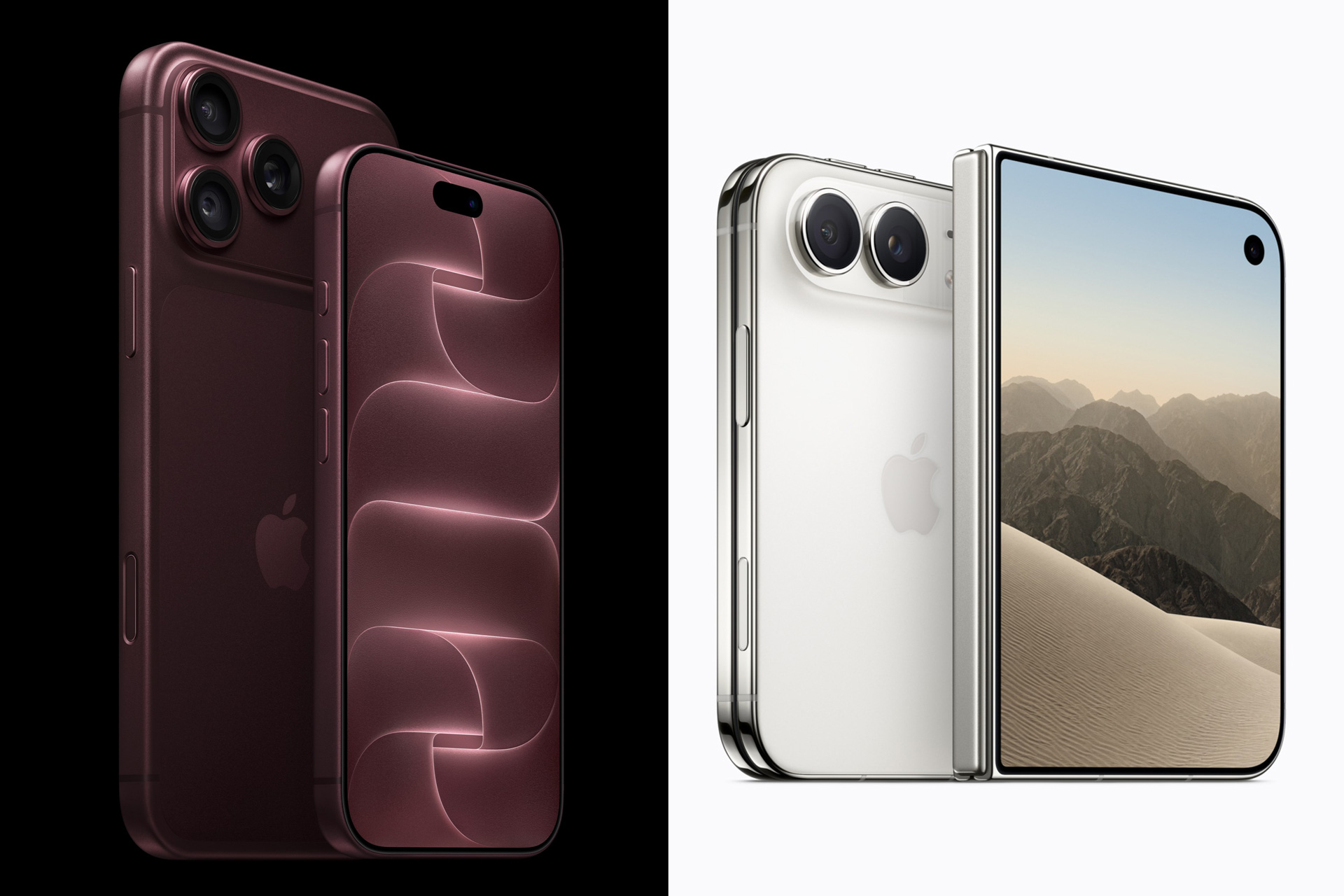
Apple Arrives Late — But With Two Weapons at Once
Apple’s September 10 event was the company’s first multi-product smartphone announcement since the foldable era began shaping expectations. The iPhone 18 Pro brings variable aperture to the main camera for the first time. The iPhone Duo, launching in October, is Apple’s first foldable phone. Done separately, either would have been notable. Together, they signal that Apple is treating the premium smartphone market not as a place to coast on brand loyalty but as one that requires structural hardware responses.
Both devices run the new A20 Pro chip, which doubles the Neural Engine to 32 cores and uses a packaging architecture borrowed from Apple’s M-series Mac chips for better thermal management. That matters more than the usual spec-sheet gloss — it means Apple is investing in sustained AI workloads on device, not just one-off photo edits.
The Variable Aperture Changes How Photography Works
The iPhone 18 Pro’s main camera — a 48-megapixel Fusion lens — now varies between F1.48 and F4.0 with a six-blade diaphragm. Apple is marketing F1.8 as the balanced default, F1.48 for maximum light gathering, F2.8 for deeper depth of field, and F4.0 specifically to produce starburst flares from point light sources. The pro camera app gives explicit control over aperture, shutter speed, and white balance. Video shooters can slow the shutter for motion blur.
This is not incremental. Current flagship phones from Samsung and Chinese makers rely on computational depth simulation to fake bokeh. Apple is giving photographers a physical control over light intake and depth of field. The gap between phone photography and dedicated cameras narrows in a way that is visible, not algorithmic.
The starburst effect deserves attention. It is the kind of thing that turns an ordinary night scene on Instagram into something that looks intentionally crafted — exactly the social-proof loop Apple’s hardware strategy has always chased.
The iPhone Duo Is a Different Kind of Leap
The Duo opens to a 7.6-inch inner display and folds to a 5.4-inch outer panel. It launches October 23 at 36,480 yen for the base model, with configurations reaching 57,480 yen. It arrives eight months after the iPhone 18 Pro line, a stagger Apple is likely using to absorb production risk on a hinge mechanism that has no Apple precedent.
The form factor is not Samsung’s book-style fold. In the closed position, the outer display is asymmetric — two panels meeting off-center. Locking the phone uses a side-mounted Touch ID button positioned for thumb reach. Apple says the phone can stand upright in both portrait and landscape orientations thanks to the folding structure, which simplifies tripod-free group shots and time-lapse work.
An under-display FaceTime camera lives inside the 7.6-inch screen, so the front-facing experience is entirely bezel-free when open. A 12-megapixel center-frame selfie camera serves as the front lens. Apple is also bringing Apple Pencil (USB-C) support by the end of 2026, turning the Duo into a tablet competitor in its own right when unfolded.
The Duo’s cameras lack variable aperture — the 48-megapixel main lens is fixed at F1.6, and the ultrawide sits at F2.2 — but Apple introduced Duo-specific framing tools: a live viewfinder on the outer screen for the person being photographed, and a Kids Cue mode that displays animations on the outer display to keep children looking at the camera during group shots.
Apple Reference Images: A Statement on Authenticity
Every photo taken with the iPhone 18 Pro’s main camera generates a signed reference image containing sensor-level metadata. Users can compare the edited photo against this reference directly in iOS, iPadOS, and macOS 27, and Apple is opening an API so third-party apps can do the same.
Apple described the reference image as a “digital negative.” In a landscape where AI-generated imagery is flooding social media and news feeds, the ability to prove a photo came from a specific sensor at a specific moment is not a niche feature — it is a credibility infrastructure play. Newsrooms, courts, and content platforms will care about this. Whether consumers will notice depends on how aggressively Apple markets the claim.
Who Wins, Who Loses
Samsung holds the foldable lead by a wide margin — the Galaxy Z Fold series has been shipping since 2019 and dominates Chinese market share outside the ultra-premium tier. But the Duo changes the calculus in two ways. First, it targets the 7.6-inch unfolded sweet spot where tablets and phones overlap — a segment Samsung’s current foldables do not own cleanly. Second, Apple’s ecosystem lock-in gives the Duo a conversion path that no Samsung foldable has: billions of users already synced to iCloud, iMessage, and the App Store.
Chinese manufacturers — Huawei, Xiaomi, Oppo — are racing foldables at lower price points. They win on volume. Apple wins on margin. The Duo’s 36,480-yen starting price positions it firmly in the luxury bracket, where Apple’s brand premium remains untouchable by competitors who are still building global service ecosystems.
The variable aperture directly challenges Samsung’s computational photography strategy and Huawei’s Leica-tuned cameras. Both rely heavily on AI post-processing. Apple is moving the control knob to the hardware level, which is a philosophically different approach to imaging — and one that rewards photographers who want deliberate choices rather than algorithmic defaults.
What Happens Next
Apple’s announcement reshapes the premium upgrade cycle. The iPhone 18 Pro, priced from 21,980 yen, is the first iPhone with a physically variable aperture — a feature that will drive upgrades among photography-forward users who have been waiting for real optical control. The Duo pulls in tablet owners and early foldable adopters who were not previously in Apple’s upgrade funnel.
The A20 Pro’s larger Neural Engine and Mac-derived cooling suggest Apple expects sustained on-device AI workloads — the Cleanup, Smart Focus Tracking, and Spatial Reframing features introduced at the event are previews of a larger push. Samsung and Chinese rivals will need to match not just the hardware but the software stack around it.
Battery capacity is described as the largest in iPhone history, with wired charging reaching 50 percent in roughly 15 minutes. In a market where battery anxiety is the single biggest upgrade deterrent, this matters more than any single camera feature.
Apple is no longer the market’s innovator by default — but it is returning to the arena with two distinct hardware bets at once. That kind of simultaneous move is rare for a company that typically ships one major hardware revolution per cycle. The question now is whether the Duo can convince foldable skeptics that a late entrant with superior software and a familiar brand is worth the risk, and whether the variable aperture is enough to pull Samsung and Chinese users back toward Apple’s premium tier.