Apple's iOS 27 Siri Rollout Reveals Its AI Priority Map
Apple's decision to bundle Korean, Japanese, Portuguese, and Spanish into its October Siri AI launch — while excluding Chinese — tells a clear story about where Apple sees its AI future. A look at what the rollout sequence reveals about Apple's regional strategy.
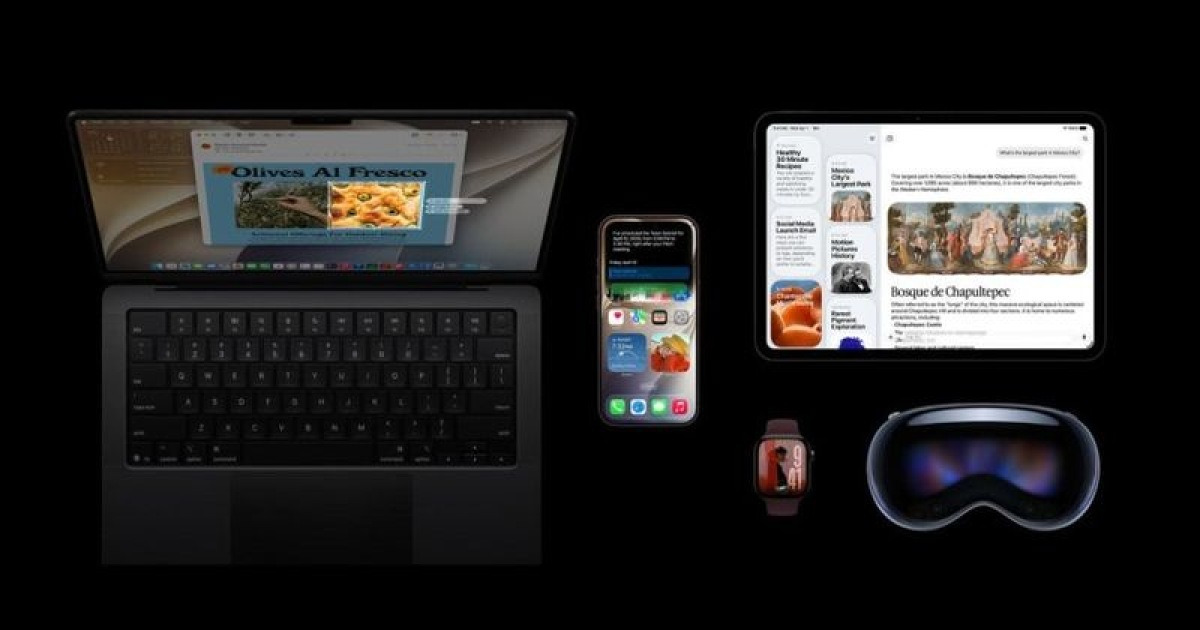
The languages Apple chose tell you everything
Apple launched iOS 27 on September 15 with a dramatically rewritten Siri — one that reads your messages, scans your photos, watches your screen, and speaks in plain prose instead of the choppy command-response rhythms of the past. The English beta arrived immediately. The rest followed a carefully sequenced calendar.
Korean, Japanese, Portuguese, and Spanish are scheduled for October. Chinese is nowhere on that list.
This sequencing is not arbitrary. It is Apple’s AI priority map, drawn in language — and reading it reveals as much about competitive pressure and regulatory calculation as it does about market size.
Why Korea and Japan land together
The simultaneous October arrival of Korean and Japanese support is the detail worth paying attention to. These are two of the world’s most important smartphone markets by revenue per user. Japan consistently ranks among Apple’s top five markets by iPhone revenue despite having only about 40 million active iPhone users. Korea is smaller still in absolute numbers but generates disproportionately high ARPU, and it is the one market where Samsung’s home-court advantage in AI features poses the most direct threat to Apple’s positioning.
Both markets share a structural similarity that matters for AI rollout: strong domestic tech ecosystems that pull users toward local alternatives. In Korea, Samsung’s Galaxy AI has been a genuine competitor since its mid-2024 launch, with features like Live Translate for calls and Circle to Search embedded deeply into the user experience. Japanese users rely on Line’s AI integrations and Sony’s ecosystem tools, which are tuned to the nuances of keigo, honorifics, and the highly contextual communication styles that define business and social interaction in Japanese.
Apple cannot afford to ship an AI feature that works beautifully in English and then sits inert for months in Korean or Japanese. The October date suggests Apple calculated that the cost of waiting — lost relevance in markets where users already have viable AI assistants they use daily — outweighed the risk of shipping before every nuance was polished. That is a different posture than the one Apple struck with features like Apple Pay or even Siri’s initial launch, where global rollouts were gradual and deliberate. The AI arms race has compressed that timeline, and Apple is clearly operating under the new tempo.
There is also a second-order effect worth noting: bundling Korean and Japanese together signals that Apple sees these markets as part of a single strategic calculus around Asian premium competition. Samsung’s AI momentum is real, and Google’s Pixel AI features have already penetrated Japan through carrier partnerships. Apple’s decision to treat both markets as同等 October priorities suggests internal pressure from the Asia-Pacific region, where iPhone market share has been slowly eroding against local competitors who embed AI deeper into the OS experience.
The Portuguese and Spanish inclusion is about volume, not prestige
Portuguese and Spanish are the world’s second and fourth most spoken languages. Including them in the October wave is a demographic calculation: Brazil alone has over 200 million iPhone users and represents one of Apple’s fastest-growing markets by unit volume. Latin America as a whole is now responsible for a meaningful share of Apple’s quarterly revenue growth, and the holiday shopping season — which drives a disproportionate chunk of annual iPhone sales — begins before these markets have ever seen Apple Intelligence at all.
This is not about testing Apple Intelligence in complex grammatical environments. Spanish and Portuguese present genuine localization challenges — false friends between the languages, divergent verb conjugations, region-specific idioms — but Apple’s decision to include them alongside Korean and Japanese in the same wave suggests the company prioritized breadth of access over proving its AI could handle linguistic complexity. The message to investors and to regional carriers is clear: Apple Intelligence will be available in the markets that matter for volume before any single competitor can build a narrative about Apple being slow to serve emerging economies.
The Chinese absence is the loudest signal
Chinese not appearing in the October rollout is significant, and the silence around it is itself a strategic statement. Mainland China remains one of Apple’s largest markets by revenue, and the iPhone carries deep cultural resonance as both a status symbol and a business essential. A competitive AI assistant in Mandarin would be strategically important — but so is navigating the regulatory environment around AI in China, where data sovereignty laws and domestic AI competition from Baidu’s Ernie Bot, Alibaba’s Tongyi, and ByteDance’s Doubao create a far more complex deployment landscape than in Korea or Japan.
Apple has historically treated Chinese-language features with caution. The company’s AI infrastructure is largely US-based, and the prospect of hosting Chinese-language AI processing within China’s regulatory framework introduces dependencies Apple has been reluctant to accept. Reports suggest Apple has been in ongoing discussions with Chinese regulators about whether a localized AI stack — potentially trained on domestic data and hosted on servers operated by a local partner — could meet China’s requirements without compromising the company’s broader privacy positioning. Those talks are clearly not yet resolved enough to commit to a release date.
The omission from the October list is likely strategic silence, not an afterthought. Every quarter that passes without Chinese-language Siri AI in mainland China gives domestic competitors more time to deepen their integration into the devices and services Chinese consumers already rely on. But Apple appears to be weighing that risk against the danger of a rushed or compromised launch that could damage the brand’s reputation for privacy and reliability in its second-largest market.
What the features themselves reveal
The new Siri in iOS 27 does something the old version never could: it understands the screen. You can point your iPhone camera at a restaurant menu and ask Siri for the spice level of a dish. You can show it a concert poster and ask when the event is. This visual intelligence — combined with the ability to search across messages, emails, and photos — represents a fundamental shift from command-based interaction to context-aware assistance.
For a market like Korea, where messaging app usage is extraordinarily high and the boundary between WeChat-like platforms and email is thin, this cross-app context awareness is the kind of feature that actually changes daily behavior. It is also the kind of feature that requires cultural and linguistic calibration — something Apple clearly prioritized by bundling Korean into the October wave rather than pushing it to a later date. The ability to understand screenshots, read receipts in KakaoTalk, and navigate the app-switching patterns that Korean users employ is not a trivial localization task. It required native speakers on the team, not just translators.
Performance numbers that matter
Apple claims iOS 27 delivers 30 percent faster app launches, 70 percent faster photo loading, and 80 percent faster AirDrop transfers compared to the previous generation. External USB drive read and write speeds on iPad have reportedly improved fivefold. These are not marketing embellishments — they reflect genuine architectural changes in how the operating system handles media and peripheral I/O, and they are as important to power users in any market as the AI features are to casual ones.
What is less discussed is how these performance gains intersect with the AI rollout. Faster photo loading means the visual context features in Siri can scan and index images more quickly, reducing the latency between a user showing their phone to Siri and receiving a useful response. Faster app launches mean the on-device AI components can wake and initialize more seamlessly. These are the invisible improvements that determine whether Apple Intelligence feels magical or merely incremental, and they apply equally to users in Seoul, São Paulo, and São Francisco.
What happens next
The October Korean launch will be Apple’s first major test of whether AI-native Siri can compete with Samsung’s Galaxy AI in the one market where voice assistant rivalry is already visible. If adoption is strong, expect Chinese-language support to follow in a subsequent update — likely early 2027, assuming regulatory negotiations with Chinese authorities reach a workable framework. If Korean adoption lags, Apple will face a tougher question: whether the gap between its AI capabilities and Samsung’s is structural or temporary, and whether the company’s deliberate sequencing strategy has underestimated the speed at which Asian competitors can iterate.
The October rollout is the beginning of the answer, not the end. But the language choices Apple made in announcing it are already telling us what comes next — and more importantly, what Apple is choosing to wait for.