Apple's iPad mini 8 Leak Signals an OLED Supply Bet
An accidental French regulatory listing confirms Apple is pushing an OLED iPad mini 8 to market. The move reveals how aggressively Apple is betting on OLED supply for its smaller, historically lower-margin hardware.
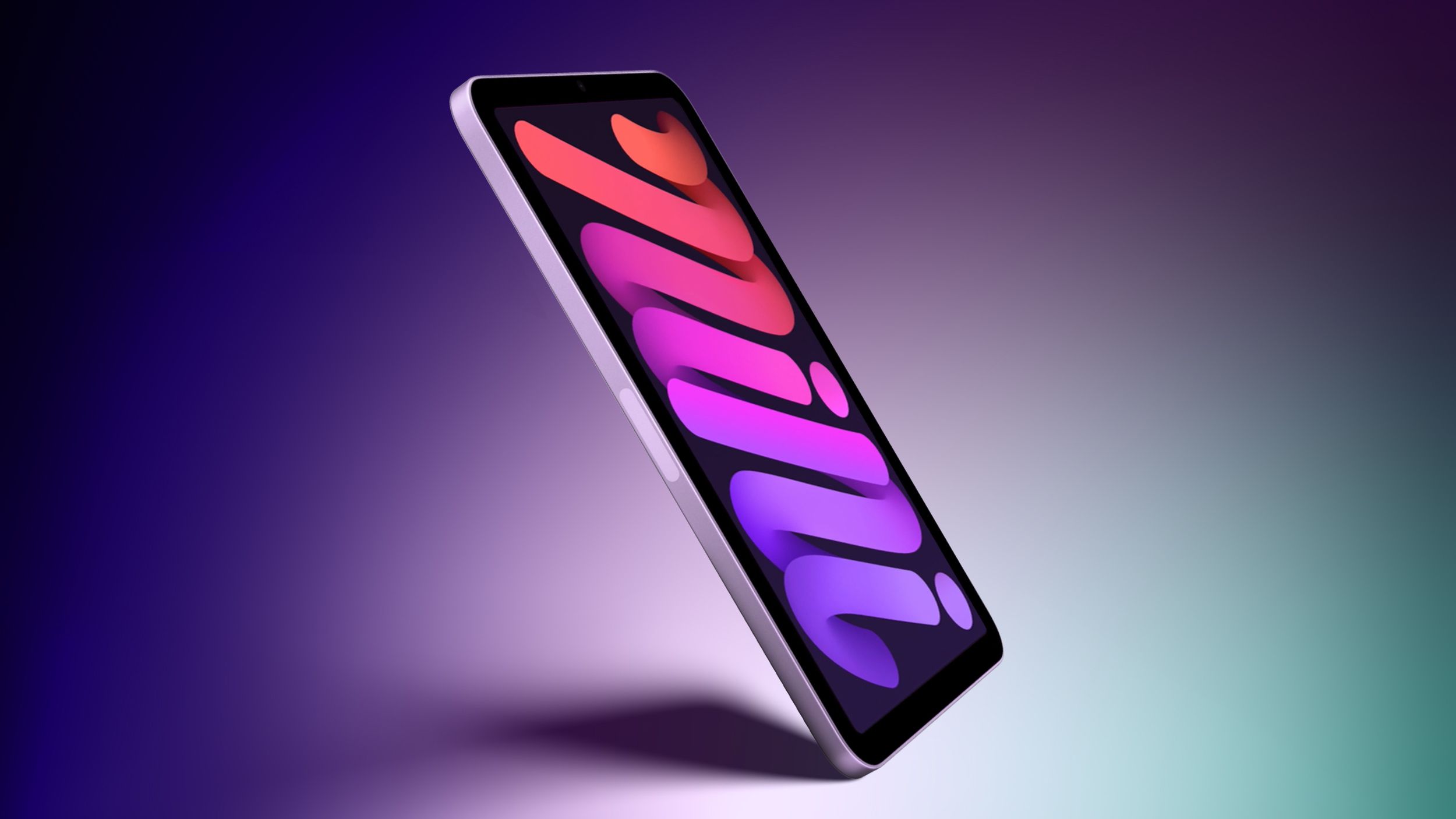
The Listing That Wasn’t Supposed to Exist
Apple is infamous about keeping product pipelines under wraps — yet a French regulatory page quietly betrayed one of its biggest releases this year. An unreleased Smart Folio bearing the model number A3632 appeared alongside iPhone 18 Pro accessories earlier this month. Current iPad mini cases do not carry that identifier. The mismatch is not a rounding error. It signals a device with new dimensions, a new connector layout, or both.
The implication is clear: Apple intends to ship an iPad mini 8, and it will not share a form factor with its predecessor. The case listing arrived alongside an October 13 product event that introduced a revamped HomePod mini, an updated Apple TV 4K, and a new smart home hub. Bloomberg reported that Apple planned to unveil an OLED touchscreen MacBook Pro and an OLED iPad mini on or around October 27, joined by an M6 14-inch MacBook Pro and an M6 iMac. Apple has not confirmed the date publicly, but the regulatory trail makes the timeline far more plausible than most analysts admitted before Friday.
What makes the French listing particularly striking is the specificity of the timing. French telecom regulator ARCEP requires accessory listings to match production-ready SKUs. These pages are not draft placeholders. The A3632 identifier was not scrubbed from the database after the event, which suggests Apple’s supply chain had already crossed the threshold where component shipments were being pulled into final packaging queues. When a case model number appears in a live regulatory filing without being withdrawn within days, it usually means Apple has moved past prototype validation and into early mass production staging.
What the Case Reveals About Design
A new Smart Folio is rarely an accessory story. It is almost always a geometry story. When Apple publishes a case model that does not align with existing SKUs, two things have typically changed: the button layout and the camera housing. The leaked code spotted by MacRumors contributor Aaron Perris already suggested the iPad mini 8 carries an A20 Pro chip, a rearranged front-facing camera, and a new speaker system. Adding water resistance to a device this small requires rethinking the enclosure seal and the placement of internal components. Both of those changes would render last-generation cases unusable.
That design departure matters because the iPad mini has spent years as Apple’s least dramatic refresh cycle. The line moved from 7.9 inches to 8.3 inches once, in 2021, and the chassis has barely changed since. The A3632 case proves Apple is breaking that comfort zone. If the display shifts from LCD to OLED and the camera relocates, Apple is effectively treating the mini as a fresh product category rather than a generational tweak. Consumers who expect the same case compatibility should adjust their calendars accordingly.
The relocation of the front-facing camera is especially significant. Previous iPad mini generations placed the camera on the landscape-facing short edge. A shift to portrait orientation — suggested by the A20 Pro leak — would represent the first top-down camera repositioning in the entire tablet line’s history. This is not a cosmetic change. It requires redesigning the flex cables that route from the logic board to the display assembly, reengineering the display bracket, and potentially shifting the hinge mechanism on any compatible keyboard folios. Third-party accessory manufacturers who have built their product roadmap around the mini’s established geometry will need to revise their tooling almost from scratch.
The OLED Supply Constraint Nobody Is Discussing
The real story here is not the mini. It is the display. Apple has already committed OLED screens to MacBook Pro this year and now plans to extend the technology to the iPad mini. Each panel represents a line in a supply contract with Samsung Display and LG Display. Both suppliers are simultaneously scaling production for Apple Watch, iPhone, and Mac. The mini occupies a fraction of the total display demand, but fractional demand becomes costly when panel output is already strained.
Samsung Display’s G.OLED lines are primarily oriented toward large-format TV panels and smartphone modules. Repurposing a fraction of that capacity for 8.3-inch tablet panels introduces a yield penalty that is disproportionate to the volume. Tablet OLED panels require different color calibration profiles, different thermal management characteristics, and different flex routing than phone panels — even when the physical footprint is similar. LG Display faces its own constraints, operating a separate production line that was only recently qualified for Apple’s iPhone OLED program. Splitting attention across three distinct product categories — watches, phones, and now tablets — compresses the time available for each line to stabilize at commercial yield rates.
The A20 Pro chip and landscape camera orientation suggest Apple may be consolidating multiple camera modules into a single housing to free up internal volume for battery and thermal management. Those are not minor rearrangements. They require new testing cycles, new tooling for the enclosure, and new validation for water resistance ratings. Every week lost to validation is a week closer to the October 27 target with fewer units on the line. If the display yield dips even slightly, Apple will feel the squeeze before the iPhone 18 Pro cycle reaches its own peak production.
This is the second-order consequence that most coverage misses. The mini is small. The supply commitment is not. Apple is allocating OLED panels to a device that historically moves fewer units than the iPad Air. That allocation sends a signal: Apple believes the mini segment can finally justify a premium price, and it is willing to risk panel scarcity to make the bet.
There is a further implication for Apple’s broader display strategy. If the iPad mini 8 ships successfully with OLED, it validates the technology for other form factors that currently sit on the LCD side of the divide. The iPad Air line, which occupies the middle tier between the standard iPad and the iPad Pro, becomes the next logical candidate. An OLED iPad Air would command a meaningful price premium over the current LTPS LCD variant and would directly compete with Samsung’s Galaxy Tab S series on display quality. The mini is not an isolated experiment. It is a proof of concept for the entire mid-range tablet segment.
Why the Mini Segment Might Actually Matter Again
For years, the iPad mini operated as a niche product with a devoted readership. It never outsold the standard iPad, and it never carried the same margin weight as the Pro lines. The OLED upgrade changes that calculus. An OLED mini commands a higher per-unit price, attracts a different buyer profile, and opens the door to Apple Intelligence features that benefit from greater processing headroom — hence the A20 Pro. If the mini can sustain an OLED price point without crushing demand, Apple will have repositioned a line that had been drifting toward irrelevance.
The demographic shift is worth tracking. The current iPad mini skews toward readers, commuters, and professionals who value portability over screen real estate. An OLED version adds an audience that prioritizes media consumption — streaming, gaming, and digital art — who have previously bypassed the mini in favor of the 11-inch iPad Pro or Samsung’s larger tablets. That audience overlap with the MacBook Pro OLED launch window is deliberate. Apple appears to be bundling a narrative: the same display technology that defines the new Pro laptops now extends down into a pocketable form factor. It is a pricing strategy as much as a technology statement.
The October 27 launch window, if accurate, gives Apple roughly two weeks to convert rumor into confirmed revenue. The French listing provides the first public proof point. The case number is the fingerprint. What happens next depends on whether Apple can ship enough OLED-equipped units before the holiday quarter compresses its production schedule.
Who Is Left Holding the Bag
If the mini succeeds, Apple’s display suppliers win proportionally to their qualification status. Samsung Display, having already supplied OLED panels for the MacBook Pro line, likely holds the primary manufacturing slot for the mini. LG Display may receive a secondary allocation, which would split margin but reduce single-source risk. Both companies benefit from longer-term contracts that Apple tends to lock in when introducing a new display category. But the upside is tempered by the volume reality: the mini will move in the low millions annually, not the tens of millions that drive iPhone display margins. The contract economics favor Apple, not the suppliers.
If the mini struggles — and there is a real risk that an OLED price premium depresses demand in a segment that has always competed on value — the supply chain absorbs the adjustment. Display lines cannot be switched off and back on without requalification. Samsung and LG would carry idle capacity against committed output. Apple would cut orders and renegotiate terms. The mini becomes an expensive lesson in supply overextension rather than a successful product expansion.
The smarter play, from a competitive standpoint, belongs to whichever company launches the next OLED tablet from the Android side. Samsung’s Galaxy Tab S series already uses OLED panels and has a loyal enthusiast base. A faster refresh cycle, a sharper display, or a more aggressive price point could recapture the segment that Apple is gambling on. Google’s Pixel Tablet strategy remains mired in software updates, and Microsoft’s Surface Pro line is structurally anchored to Windows licensing costs. The iPad mini 8’s OLED bet is as much about locking out competitors as it is about winning over existing buyers.
The A3632 case proves Apple is investing real supply and real time in a device that previously received little beyond incremental chip bumps. The mini segment is no longer an afterthought. It is a test case for how far Apple will push OLED into its lowest-volume products — and whether the margin math still works when the screen gets that big of an upgrade. Two weeks from now, the answer stops being a regulatory mystery and becomes a sales figure.