Apple's iPhone 18 Pro Is a Camera Revolution — and a Warning Shot to Samsung
Apple's variable aperture on the iPhone 18 Pro marks the biggest shift in smartphone photography in years. With a 2nm A20 Pro chip and AI-powered image authentication, Cupertino is widening the gap between itself and every other Android flagship.
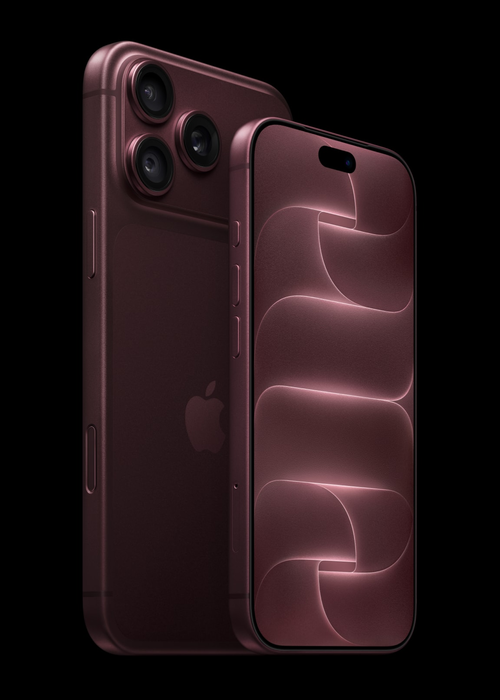
Apple Is Redefining What a Premium Phone Camera Means
The iPhone 18 Pro has arrived, and the headline feature isn’t faster processing or a shinier display. It’s a mechanical iris.
For the first time in an iPhone, Apple has embedded a variable aperture into the 48-megapixel Fusion main camera. That means the lens can physically open or close depending on lighting conditions and creative intent — a capability that until now existed almost exclusively in interchangeable-lens cameras and was absent from every competing smartphone, including Samsung’s latest flagships.
Greg Joswiak, Apple’s senior vice president of worldwide marketing, framed it as an empowerment story: photographers get precision, creators get flexibility, and everyone else gets better photos without thinking about it. But beneath the PR sheen, this is a strategic pivot. Apple is no longer competing on megapixels or zoom range alone. It is shifting the battleground to optical control — and image authenticity.
The Aperture Move Changes the Camera Debate
Variable aperture is not a trivial upgrade. In traditional photography, the aperture controls depth of field and light intake simultaneously. Smartphone cameras have long simulated bokeh and low-light performance through computational photography — software tricks that often produce inconsistent results, especially in challenging lighting or with moving subjects.
By giving the sensor a physical aperture ring, Apple is merging optical quality with computational flexibility. The phone can now capture a genuinely shallow depth of field at f/1.78 and contract it for landscape sharpness at f/3.5, something no current Android flagship can replicate natively. Samsung’s Galaxy S series, Google’s Pixel lineup, and even Huawei’s periscope-equipped phones all rely on fixed apertures and computational masking.
The implication is stark: Apple is creating a feature gap that is nearly impossible to close with software updates alone. Any competitor responding to this will need to redesign camera hardware from scratch — a costly and time-consuming undertaking that gives Apple a window of exclusivity.
AI and Image Authentication
Perhaps equally significant is the introduction of Apple Reference Image, a feature that digitally signs photos at the sensor level and stores an immutable record in a private cloud. As generative AI tools make it trivial to alter or fabricate images, the ability to verify whether a photo is authentic is becoming a utility — and a differentiator.
This is particularly relevant for professional photographers, journalists, and legal users who need to prove an image has not been manipulated. No Android manufacturer currently offers anything comparable at the sensor level. Google has experimented with content credentials, but those are software-level attestations, not hardware-rooted signatures.
Combined with the A20 Pro chip — built on a 2-nanometer process with a 7-core GPU, 6-core CPU, and dual 16-core Neural Engines — the iPhone 18 Pro can process these computational workflows faster and more efficiently than any previous Apple device. Apple claims a 40 percent improvement in GPU performance and a doubling of AI processing speed over the A19 Pro. Those numbers matter for real-time cinematic effects applied to 60fps video and the on-device AI that powers the new Siri.
The Cooling Upgrade Is Underrated
The vapor chamber surrounding the A20 Pro has been enlarged threefold compared to the iPhone 17 Pro, and it is now directly coupled to the chip rather than relying on indirect thermal pathways. Apple says this sustains peak performance for up to 40 percent longer during demanding tasks like gaming and video editing. That is not incremental — it is the difference between a phone that throttles after twelve minutes of recording and one that holds steady for an hour.
For content creators, this reliability matters more than any single benchmark. The ability to shoot 4K Dolby Vision HDR timelapses or export heavy ProRes files without the phone choking on heat is a practical advantage that accumulates over time.
Battery Life That Actually Matters
Battery figures for the iPhone 18 Pro are 36 hours of video playback on the standard model and 45 hours on the Pro Max, both measured under eSIM-only conditions. The N1 wireless networking chip and the new C2 modem — which uses AI to optimize cellular signal quality and stability — should also improve real-world connectivity in areas with weak coverage. Wi-Fi 7, Bluetooth 6, and Thread support round out the connectivity picture.
These are not headline-grabbing specs, but they are the kind of background improvements that separate flagships that last all day from ones that don’t.
What This Means for Samsung
The timing is notable. Samsung has spent the past several years building its competitive moat around foldable displays — a category Apple has so far refused to enter. The South Korean media outlet Electronic News (전자신문), which broke the iPhone 18 Pro announcement, has already begun framing Apple’s moves as evidence of “symbiosis with the enemy” — a reference to Samsung’s role as both supplier and rival to Apple.
But symbiosis cuts both ways. Every time Apple introduces a camera feature that raises the bar, Samsung must respond. And responding to a variable aperture means more than a firmware update — it means retooling camera hardware across an entire product line.
Samsung’s foldable strategy remains a legitimate differentiator, but foldables address form factor, not imaging quality. As smartphone photography becomes the primary selling point for premium devices — and as AI-driven image verification becomes a trust infrastructure — Apple is positioning itself to lead on the features that matter most to the largest segment of upgrade buyers: people who want better photos and the assurance that those photos are real.
What Comes Next
The iPhone 18 Pro starts at 1.99 million won in South Korea, with the Pro Max at 2.19 million won. Pre-orders begin September 12, with general availability on the 18th. The four color options — Burgundy, Glacier, Silver, and Black — and storage tiers up to 2 terabytes mirror Apple’s usual premium pricing ladder.
iOS 27 brings a new Siri AI that understands personal context across messages, emails, and photos, and begins recognizing objects through the camera to surface relevant information. Korean language support for Apple Intelligence launches in October, a sign that Apple is prioritizing the South Korean market even as it competes with Samsung on home ground.
The variable aperture is not just a camera upgrade. It is Apple’s statement that the next era of smartphone competition will be decided at the intersection of optics, AI, and trust — and that the company intends to set the terms.