Apple's iPhone Duo Changes Everything About Foldables
Apple's first foldable gives up nothing — a 7.6-inch crease-minimized canvas with Apple Pencil support, a 2nm chip that actually sustains performance, and eSIM-only design. Android flagships now face a productivity floor they didn't see coming.
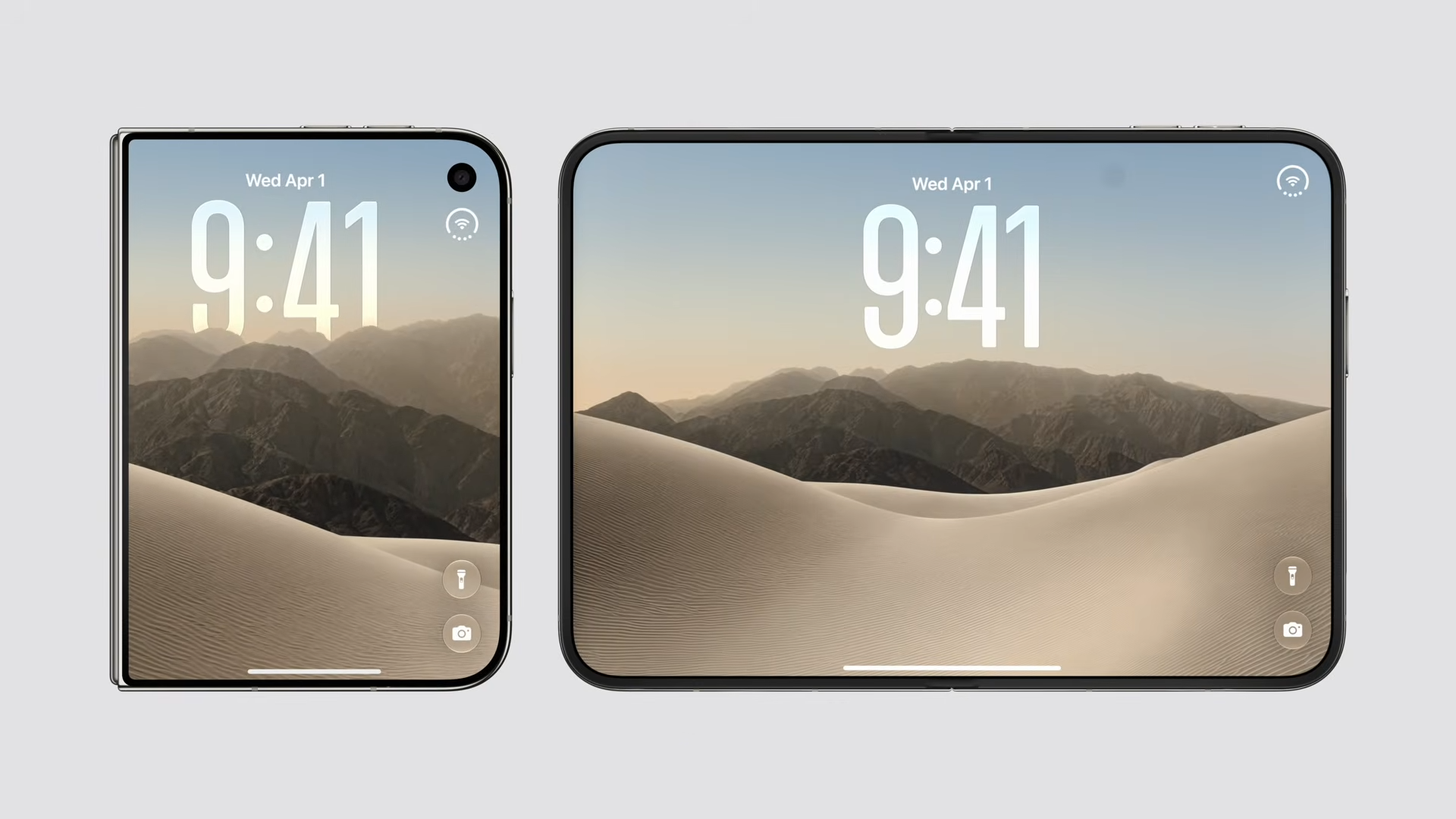
Apple’s Foldable Is Not a Foldable — It’s a Statement
Apple’s iPhone Duo, revealed September 9, arrives at a moment when the foldable market has been quietly admitting defeat. Samsung’s Galaxy Z Fold series has shipped over 30 million units since 2019, yet foldables still represent less than 2% of global smartphone shipments. The category has been defined by compromise — thick hinges, fragile screens, mediocre batteries — and most consumers have simply decided to wait.
Apple chose to wait longer. What it produced was not a compromise device dressed in Apple polish. It is a device that assumes the crease will be invisible, that the hinge will feel like nothing at all, and that the user’s primary question will not be “why would I buy this?” but rather “what can I finally do with it?”
The most consequential detail is not the 7.6-inch inner display or the under-display FaceTime camera or even the titanium frame. It is the announcement that the iPhone Duo will support Apple Pencil — specifically the USB-C–based model shipping later this year.
No Android foldable has pursued stylus input seriously. Samsung stopped taking Wacom stylus development seriously years ago. Google’s Pixel Fold ships with no stylus ecosystem at all. Huawei’s Mate series supports a stylus, but the AppGallery and productivity pipeline remain a fraction of what Apple offers.
This changes the calculus for anyone who writes, draws, or annotates on a phone-sized device. It also changes the calculus for Apple’s hardware competitors, who now face a product category they cannot enter without matching a feature set that took Apple two decades to build around a single point-of-contact input tool.
The Display That Solves the Foldable Problem
The iPhone Duo opens to a 7.6-inch Super Retina XDR display that Apple says is 50% larger than the iPhone 18 Pro Max screen. When closed, it presents a 5.4-inch outer display — large enough to be genuinely useful, not merely a status-panel gimmick.
Both panels share the same aspect ratio and reach 3,000 nits peak brightness outdoors. ProMotion and always-on are standard. The inner display carries a Nano-texture finish designed to reduce reflections and minimize crease visibility — a detail that matters more than Apple admits, because crease perception is the single biggest factor in whether a foldable feels like a phone or a prototype.
What Western early reports have mostly missed is how deliberately Apple unified the two displays. On most competitors, opening a foldable means re-rendering apps at a different aspect ratio, losing status bar real estate, or awkwardly stretching content across the seam. Apple’s approach — unified aspect ratio, seamless handoff between inner and outer panels — is the difference between a gadget and a computer.
The under-display FaceTime camera is equally significant. It eliminates the punch-hole that dominates every competitor’s inner screen and allows truly edge-to-edge content. The 12-megapixel outer camera is centered in the bezel, not offset to one side — a small detail that signals Apple’s attention to symmetry, which matters enormously in a device that opens and closes.
The Hinge Is Where the Engineering Is
Apple describes a hinge built from over 100 precision components, using 3D-printed titanium covers and ceramic-fiber antenna分割 sections. The result: a closed profile of 11.3mm and an open thickness of just 5.2mm. Weight lands at 254g — roughly the same as an iPhone 15 Pro Max, which is remarkable given that Apple packed two displays and a dual-battery system into the same mass budget.
The Ceramic Shield 2 on the outer display is rated three times more scratch-resistant than the previous generation. IP68 water, dust, and splash resistance applies to the folded state as well as the open state. These are not marketing flourishes. They are the kind of specifications that determine whether a foldable survives a year in a pocket full of keys and coins.
Performance That Actually Sustains
The A20 Pro, built on a 2nm process, features a 6-core CPU, 7-core GPU, and a dual 16-core Neural Engine with doubled compute capacity. A custom vapor chamber cooling system delivers up to 35% better sustained performance compared with the iPhone 17 Pro.
This matters because foldable processors have historically throttled hard — the thicker chassis traps heat, and the displays draw significant power. Apple’s dual-battery architecture (cells on both sides of the hinge) addresses this directly, delivering up to 31 hours of video playback on the inner display and 44 hours on the outer display.
Charging is fast: 50% in approximately 20 minutes via USB-C, 30 minutes via MagSafe or Qi2 wireless. The elimination of the physical SIM slot in favor of eSIM-only is a bold regulatory move — it will simplify the hardware but create friction in markets where carriers still insist on physical SIMs, particularly parts of Southeast Asia and Africa.
iOS 27 and the Split-Screen Question
iOS 27, shipping with the device, introduces Split View — Apple’s first support for running two apps side by side on a phone. The dock and controls have been relocated to the screen edges to maximize vertical content area. This is not a minor UI tweak. It is the moment Apple concedes that a foldable phone is a tablet in disguise, and it designed the operating system accordingly.
Apple Intelligence, arriving September 14 as a beta, will understand personal context, recognize on-screen content, and act across apps. Siri AI adds similar capabilities. Both will initially support only American English, with Japanese and French additions planned for October.
There is a notable restriction: Apple Intelligence will not be available in EU markets at launch. This is almost certainly a regulatory issue related to the Digital Markets Act and Apple’s data processing agreements, but it creates an immediate two-tier experience that will attract scrutiny.
Pricing and Positioning
The iPhone Duo starts at ¥364,800 (approximately $2,400 at current rates) for the 256GB model. The 2TB top-end reaches ¥574,800. Accessories include a Folio stand case at ¥24,800 and a dual-sided protective case at ¥14,800.
Pre-orders begin October 16, with availability starting October 23 across more than 70 countries. Colors are Night Sky and Star White.
At this price point, the iPhone Duo is not competing with the Galaxy Z Fold or the Pixel Fold. It is competing with the iPad mini and the upper tier of laptop ultrabooks. That is the real story: Apple is positioning the foldable not as a phone variant but as a new device class that happens to fold.
What This Means for Android
Samsung must now decide whether to add stylus support to the next Galaxy Z Fold — a move that would require hardware changes, software rework, and a partnership with a stylus manufacturer it previously dismissed. Google has no analog to the Pencil at all. Huawei could theoretically respond with its own stylus ecosystem, but the app gap remains.
The deeper implication is that Apple has raised the floor for what a premium foldable must offer. Crease minimization. Unified displays. Stylus support. Sustained performance. These are now table stakes for anyone wanting to compete at the $2,000+ end of the market.
The iPhone Duo does not prove that foldables have arrived. It proves that Apple thinks they have — and that the company is willing to spend the engineering time to make the category respectable.
That is a harder bar for everyone else to clear.