Why Apple's Foldable iPhone Duo Matters for the Whole Market
Apple's first foldable phone isn't just another premium gadget — it's a statement about what foldables should actually be. Here's why it changes everything.
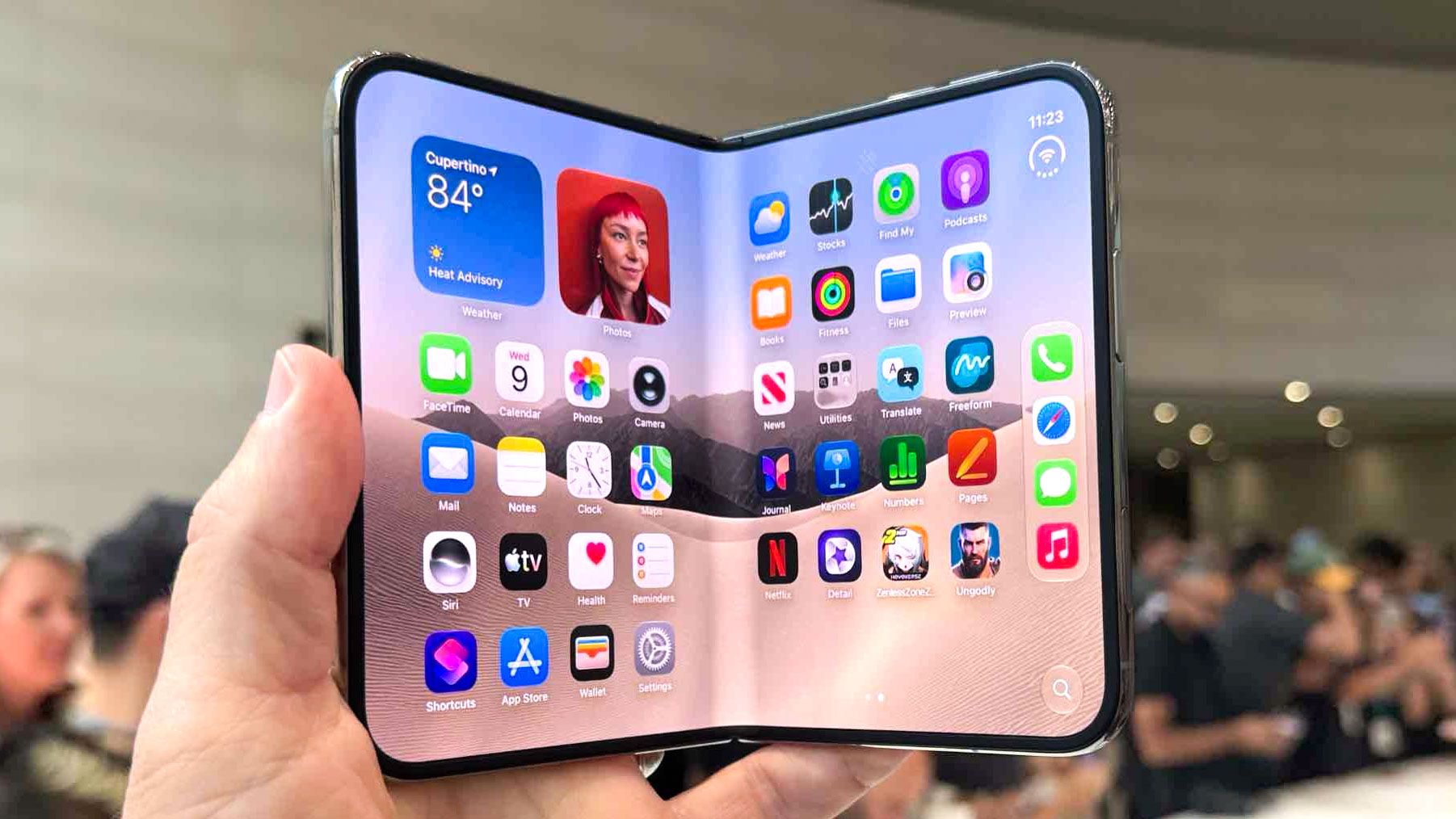
Apple didn’t enter the foldable market to sell more phones. It entered to redefine what one should be.
Pre-orders for the iPhone Duo start October 16. At $2,000, it won’t move mass numbers. But its very existence signals something larger: Apple spent years watching Android’s foldable experiment stumble, and it has now built a phone that addresses nearly every failure point — then priced it where it belongs.
The question isn’t whether the iPhone Duo will sell well. It’s whether its approach makes the entire foldable category sustainable, or further entrenches the segment as a niche of last resort.
What Android Got Wrong — And What Apple Learned
Samsung launched the first commercially viable foldable in 2019. Seven years later, the Galaxy Z Fold 8 remains barely more popular than it was at launch. The reasons are well-documented: fragile hinges, visible creases, software that never adapted to the form factor, and a durability gap that made buyers nervous.
Android foldables solved some problems. The crease is less obvious now. Hinges feel sturdier. But the fundamental issue remained: foldable phones were engineered as hardware projects, not experience projects. Apps were stretched, not redesigned. Software added foldable support as an afterthought. Durability claims relied on water resistance alone — the iPhone Duo is IP68 rated, meaning dust and water resistance, while Samsung’s latest foldables cover only water.
Apple’s approach is different because it started from zero. No legacy to protect. No existing foldable user base to alienate. iOS 27 wasn’t retrofitted for a folding screen — it was rebuilt around one. The Dock, navigation, status bar, and app layout all shift to accommodate the form factor. The result is software that feels native rather than adapted.
The App Problem — Solved Differently
This is where the iPhone Duo matters most to the broader market.
Slack on Android foldables looks like a blown-up phone app. Slack on the iPhone Duo uses a dual-pane layout. Zoom, Netflix, and other Apple-optimized apps launch with fold-aware interfaces from day one. Apple spent years working with developers behind the scenes — a strategy that mirrors what it did with the iPad, where the hardware arrived but the software ecosystem took time to catch up.
The split-view multitasking Apple ships with the Duo is overdue on iPhone but straightforward to use. Swipe an app icon up and drop it beside another. Drag and drop content between windows. Run two instances of Safari. Samsung’s Fold 8 can run three apps plus floating windows — raw capability that still means little if third-party developers haven’t designed for it.
Apple’s playbook is patience over speed. Samsung shipped first and is still chasing developer buy-in. Apple ships second and may end up with better software.
The Durability Argument
The iPhone Duo’s Grade 5 titanium frame and hinge cover, scratch-resistant inner display coating, and Ceramic Shield on both sides represent Apple’s most aggressive durability positioning yet. The nano-texture layer on the main display is custom polymer rated 40% stiffer than materials used on competing foldables.
Whether that translates to real-world longevity remains unproven — no independent review exists yet. But the marketing signal is clear: Apple is telling consumers that foldables don’t have to be fragile. That message alone could shift buyer behavior more than any spec sheet.
The A20 Pro Factor
The A20 Pro is the fastest phone chip tested, and the iPhone Duo includes a vapor chamber for cooling — a feature absent from the Galaxy Z Fold 8 and Fold 8 Ultra. Sustained performance under load matters more on a foldable than a slab phone, because the form factor invites heavier multitasking and media consumption. This is a quiet but significant advantage.
What This Means for the Market
Apple’s entry into foldables at $2,000 serves two purposes. First, it validates the category — if Apple thinks foldables are ready for prime time, consumers will believe it too. Second, it raises the bar for everyone else.
Samsung now faces a credibility challenge. Its foldable line has had seven years to refine the formula. Apple arrived with one polished product that addresses the weaknesses Samsung never fully solved. The competitive dynamic has shifted from “who can fold first” to “who can fold best.”
Other Android manufacturers — Xiaomi, Oppo, Huawei — occupy an even more precarious position. Their foldable strategies were built on the assumption that Samsung would dominate the category long enough to establish consumer acceptance. Apple’s arrival changes that equation overnight.
Who Wins, Who Loses
Apple wins by entering a high-margin segment with a product that reflects its core strengths: integrated hardware and software, design discipline, and ecosystem lock-in. The iPhone Duo won’t outsell the iPhone 18 line, but it commands a price point that generates substantial profit per unit.
Samsung loses ground in the premium foldable narrative. The Galaxy Z Fold 8 was already struggling against mixed reviews about durability and software optimization. Apple’s entry reframes those criticisms as industry-wide problems — not Samsung-specific ones — while simultaneously offering a cleaner solution.
Consumers win if Apple’s approach proves durable over time. The $2,000 price tag is punishing, but the combination of IP68 rating, titanium construction, and software that actually adapts to the form factor represents genuine progress. The question is whether the iPhone Duo ages as well as a traditional slab phone — or whether the hinge becomes the next failure point Apple hasn’t yet proven it can solve.
Android foldable makers lose the most. Without Apple’s validation, the category risks being perceived as a Samsung experiment rather than a legitimate product category. With Apple’s validation, the bar rises to a level many competitors cannot clear.
The Real Test Ahead
October 16 begins pre-orders. Full reviews will follow within weeks. The iPhone Duo’s nano-texture display trade-off — reduced glossiness for less glare and a less visible crease — will determine whether the visual compromise is worth it for most buyers.
But the larger test is timing. Apple’s delay allowed it to learn from seven years of Android foldable iterations. Whether that translates into a product that endures beyond the novelty phase is the question that will define whether 2026 becomes the year foldables finally went mainstream — or the year Apple proved they still don’t need to.
The iPhone Duo won’t sell millions. It will sell enough to matter.