Apple's M6 Mac mini proves silicon strategy has hit critical mass
Apple's new Mac mini ships with M6 chips featuring 2nm process and built-in GPU neural accelerators, delivering 4.8x AI inference gains over M4. The real question isn't the spec sheet — it's what this means for Apple's chip strategy and the competitive landscape.
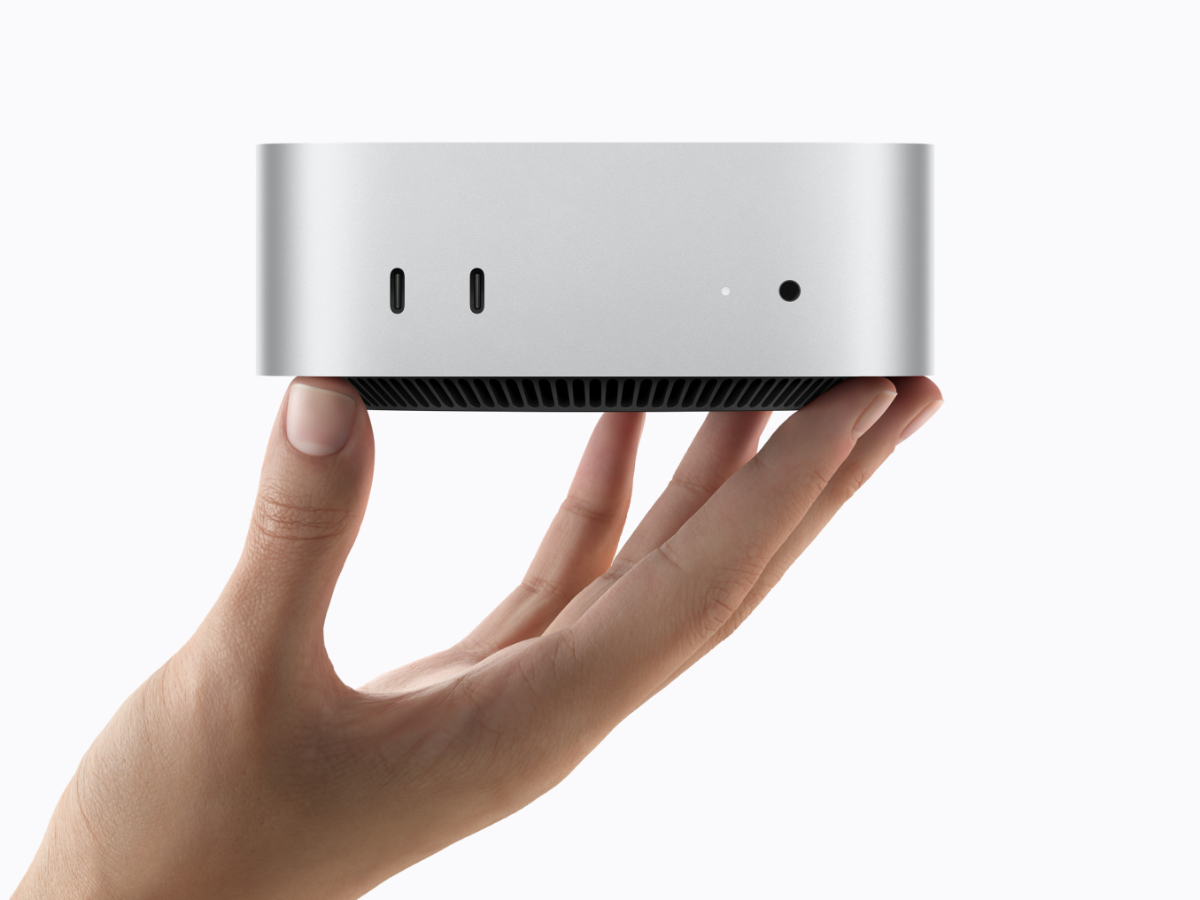
The numbers most people missed
Apple shipped a Mac mini on September 22 running an M6 processor — its first chip built on a 2nm process. The headline figure from the Japanese market is 4.8x faster local LLM inference compared to the previous M4 generation, measured in LM Studio benchmarks. That gap is enormous by Apple’s own historical standards. In previous generational leaps, AI performance improvements typically ranged from 1.5x to 2.5x. A jump to nearly 5x suggests something structural changed inside the silicon.
The change is in the GPU architecture. The M6 integrates Neural Accelerators directly into the graphics core. Previous Apple Silicon chips routed AI workloads through a separate Neural Engine block. This new design collapses that separation, moving acceleration logic physically closer to the matrix multiplication units that handle transformer inference. The result is less data traveling across the die, lower latency, and higher throughput per watt.
Why the 2nm transition matters right now
Samsung was supposed to lead with 2nm. TSMC was expected to follow. Apple chose Samsung for this first generation, and the choice signals something about pricing and capacity negotiations that Apple’s supply chain team handled behind closed doors. The 2nm node gives roughly 30 percent better performance-per-watt over 3nm — but only if you can actually manufacture it at volume without yield problems. Getting a shipping product on day one with this process is a supply chain win that most analysts underrate.
The M6 Mac mini starts at 149,800 yen, which places it squarely in the entry-pro segment. This isn’t a Pro product. This is Apple telling the market that 2nm and AI acceleration are coming to the cheapest Mac first. That’s a strategic signal, not a pricing accident.
The M5 Pro variant tells a different story
The M5 Pro configuration in the same chassis reveals Apple’s two-track approach. Eighteen CPU cores, twenty GPU cores, up to 64GB unified memory, Thunderbolt 5 ports, and storage expanding to 8TB. The AI boost is 4x over the M4 Pro baseline. Blender ray-traced rendering improves 1.4x, Affinity image processing 1.5x.
Notice the memory ceiling. Sixty-four gigabytes of unified memory at this price point is aggressive for a compact form factor. It means Apple expects developers to run larger local models on this machine — models that previously required dedicated GPUs or cloud instances. The thermal envelope is small, the chassis is identical to the base M6 model, and the company is still claiming sustained performance gains across professional workloads. That requires either dramatically better thermal materials or a fundamentally more efficient die design.
Who wins, who loses
Mac users who run local AI models win immediately. The M6’s neural accelerator integration means a 14-inch MacBook that cost $799 in the last cycle can now handle workloads that previously required a $2,500 Pro machine or an external GPU enclosure. The boundary between consumer and pro Macs is dissolving faster than most observers anticipated.
Intel and AMD face a tighter competitive window. Both companies have struggled to match Apple’s performance-per-watt trajectory in the compact desktop segment. Intel’s Core Ultra series and AMD’s Ryzen AI chips target similar workflows, but neither has delivered the unified memory architecture that lets Apple move data at 170GB/s with a single controller. That bandwidth advantage compounds under AI workloads. It’s not just faster chips — it’s a system architecture that moves data smarter.
NVIDIA’s desktop GPU business takes indirect pressure. Some of the machine learning and local inference workloads that previously required an RTX 40-series card are now viable on a $400 Mac mini. Not all workloads. CUDA compatibility remains a hard wall. But for developers and power users who simply need to run open-source LLMs locally without managing cloud costs, the Mac mini becomes a legitimate alternative. That’s a new customer segment Apple is capturing.
What happens next
Apple’s Mac lineup now has three distinct silicon tiers — M6 at the base, M5 Pro in the middle, and likely an M6 Pro or M6 Max heading toward the high end. Each tier carries different memory configurations and I/O versions. Thunderbolt 5 appears only on the Pro model, which means Apple is deliberately creating feature gates within the same chassis. That’s a classic upselling strategy, but it also creates a fragmentation problem for developers building for both tiers.
The 2nm process itself will ripple outward. The next iPhone generation will almost certainly use it as well. The MacBook Air and MacBook Pro lines will follow within a year. Every Apple device benefits from the same Neural Accelerator architecture — the training data from these Mac implementations feeds directly into the next generation of iPhone chips.
Apple’s biggest bet with the M6 is that the AI acceleration narrative holds long enough to justify replacing the entire installed base. The current Mac fleet contains millions of devices running M1 through M4 chips. Those machines can’t leverage the new GPU-integrated neural accelerators. Apple needs this Mac mini to convince users that upgrading isn’t just about speed — it’s about enabling entirely new categories of local AI workflows that were impossible on previous hardware.
The 4.8x number is the hook. The architecture underneath it is the actual product. Whether Apple can sustain that gap as competitors catch up to 2nm remains the open question. The Mac mini ships today. The answer comes in the next generation.