Apple’s Quiet Mac Play: What the Apple Park AI Demo Reveals About the iPhone’s Future
Apple demonstrated four connected Mac Studios running AI workloads at a Tokyo briefing—not an iPhone. The decision says everything about how the company plans to keep the smartphone relevant when the heaviest AI lifting moves to the desk.
The Venue That Spoke Louder Than Any Announcement
Apple didn’t hold this briefing at a stage. It moved the press from the usual Keynote Theater to a space called the “Content & Briefing Hub”—a new office inside Apple Park that opened its doors only recently. The decision to host a product briefing there, rather than the main stage, wasn’t logistical convenience. It was a signal.
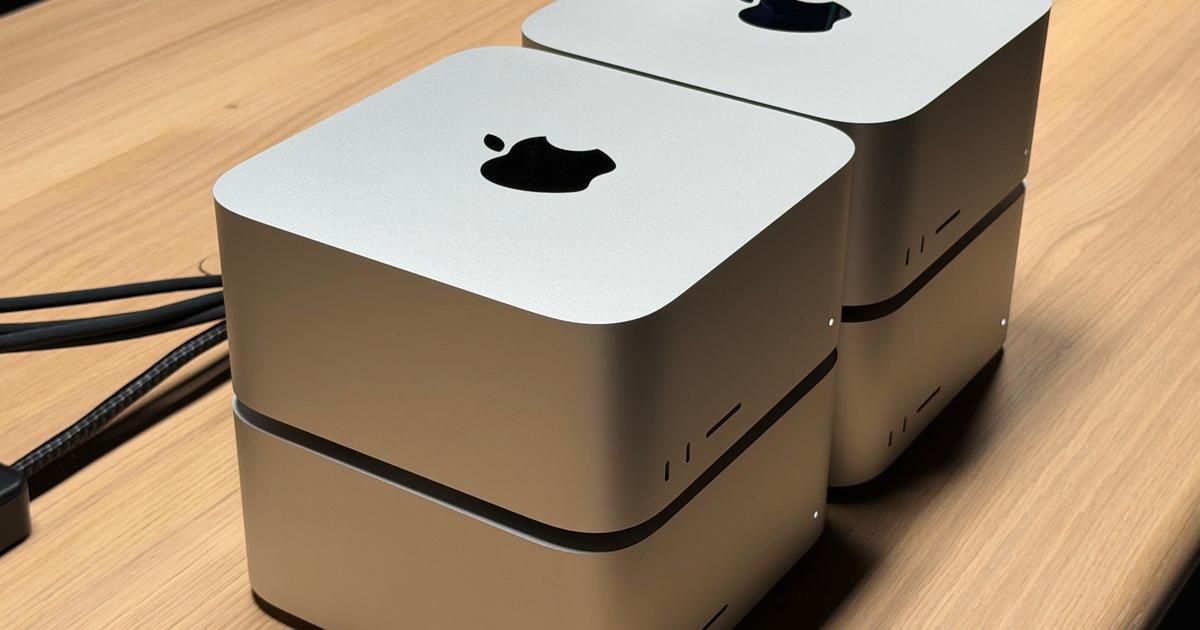
Four Mac Studio units sat stacked in a corner of the room. M5 Ultra models. Each costs roughly 950,000 yen, which puts the stack at about 4 million yen—roughly $25,000 in US dollars. The number four wasn’t arbitrary. Apple’s official documentation specifically cites the four-machine configuration as the reference example.
This was not a phone event. This was a Mac event. And in an industry where every company is currently obsessed with the smartphone as the centerpiece of the AI revolution, Apple’s choice of venue and hardware tells you exactly where it believes the heavy lifting belongs.
The Content & Briefing Hub itself is worth noting. It’s positioned as a working space—a place where creators and developers are expected to spend actual time, not just show up for a keynote and leave. By staging the demo there, Apple framed the Mac Studio not as a showcase piece but as a daily tool. The environment reinforced the product’s positioning: this is hardware you live with, not hardware you admire from a distance.
Four Machines, One System, a Different Strategy
Apple connected the four Mac Studios via Thunderbolt 5 so they operated as a single system. The result: over 1TB of unified memory, 4.8TB/second of memory bandwidth, and the ability to run models with approximately one trillion parameters locally. In practice, the demo showed an AI coding assistant inside Xcode analyzing and fixing a graphics bug in real time.
The speed gains are what matter here. Apple claims connecting four units delivers up to three times faster AI processing compared to a single machine. When asked to generate code, the first token returned in what Apple says is up to four times less time than on an M3 Ultra. Build times that previously took days now finish in five to ten minutes.
This is not cloud AI. This is local AI running on hardware that costs a combined $25,000. The implication is that Apple’s entire AI strategy rests on a premise most competitors have abandoned: the most capable AI experience doesn’t require sending your data to a server farm. It requires putting serious compute on the desk, right next to the user’s hands.
The technical architecture behind this is equally significant. Unified memory means all four machines share a single memory pool, eliminating the bottlenecks that typically arise when distributing workloads across separate systems. Thunderbolt 5 provides the bandwidth to make that sharing seamless. For developers, this changes the calculus on what’s feasible to run locally. Models that previously required cloud infrastructure or specialized GPU clusters can now execute on Apple silicon alone.
What This Means for the iPhone
The natural question is: if the Mac is where the heavy AI work happens, what role does the iPhone play? The answer lies in the demo itself. At one point, the presenter invoked Siri AI through a Spotlight shortcut, and the response was instantaneous. Local execution. No network latency. No privacy compromise.
Apple’s strategy appears to be this: the iPhone becomes the always-present interface to an AI ecosystem that runs most of its computations elsewhere—on the Mac, perhaps on the new iPad Pro, potentially on future stationary devices Apple hasn’t announced yet. The phone isn’t becoming less important. It’s becoming the hub of a distributed system.
This is a deliberate rejection of the current industry trend, where every phone manufacturer is trying to cram increasingly larger language models directly onto mobile silicon. Qualcomm, Google, and Samsung are all racing to put AI compute on the phone itself. Apple is building the opposite architecture: the phone handles what it can, delegates what it can’t, and keeps the entire stack under the user’s control.
The second-order effect is substantial. If Apple’s approach gains traction, it shifts the competitive battleground away from megawatt-hours and toward integration. The phone that matters most is the one that orchestrates the best experience across all your devices, not the one that runs the biggest model in isolation. That favors Apple’s ecosystem play and disadvantages companies whose strength is a standalone chip.
The Privacy Advantage No One Else Can Replicate
The demo in Tokyo made one thing clear: running a trillion-parameter model locally requires machinery that most consumers cannot afford. But Apple’s ecosystem already includes millions of Macs and iPads in creative and professional workflows. The install base that can run this kind of local AI is substantial—and it’s growing every year.
For the average consumer, the iPhone will continue to handle lightweight AI tasks: Siri responses, photo enhancements, text suggestions. For professionals, the Mac becomes the AI workstation. The two devices are not competing. They are coordinated.
This matters because privacy is becoming the defining feature of the AI era. Every company is selling access to your data in exchange for convenience. Apple is selling the opposite proposition: your data stays on your machines, and you pay for the privilege of not being a product. The Mac Studio demo proved that proposition can work at scale.
The commercial implication is direct. As regulatory scrutiny of data practices intensifies—in the EU with the AI Act, in California with expanding privacy legislation—Apple’s local-first approach becomes not just a marketing differentiator but a compliance advantage. Companies that process sensitive workloads on cloud infrastructure face ongoing legal exposure. Apple’s architecture sidesteps that risk entirely.
The Strategic Pivot No One Is Talking About
While the industry focuses on which phone can run the biggest model, Apple is quietly building an AI infrastructure that exists entirely outside the smartphone form factor. The Mac Studio four-unit stack is not a niche product for developers. It is a declaration that Apple believes the future of AI compute is stationary, powerful, and local.
The iPhone remains the entry point. But the real intelligence, according to Apple’s demonstration, lives on the desk. Whether this strategy pays off will depend on whether consumers value privacy and performance over the convenience of having everything in their pocket. The Mac Studio stack says Apple is willing to bet on the former.
There is also a talent acquisition dimension worth considering. Professional developers and creative workers—who tend to be early adopters and influence broader purchasing decisions—are precisely the audience that benefits most from local AI workstations. By investing in that segment, Apple is cultivating a community that will evangelize the ecosystem far beyond the studio itself. That is a longer-game move than any chipset announcement.
The briefing ended without a single mention of iPhone specs. The phones that left the room carried the same design, the same cameras, the same displays. But the people who attended walked away understanding something most observers haven’t yet grasped: Apple’s AI strategy isn’t about the phone. It’s about where the phone fits in a system that starts elsewhere. And that distinction may turn out to be the most consequential one in the industry right now.