Apple Maps Ads: The End of an Ad-Free Promise
Apple has rolled out non-dismissible ads in Maps across the US and Canada, a stark departure from its curated, privacy-first image. The move signals a strategic pivot toward advertising revenue as hardware growth stalls, and underscores how little leverage users retain within the walled garden.
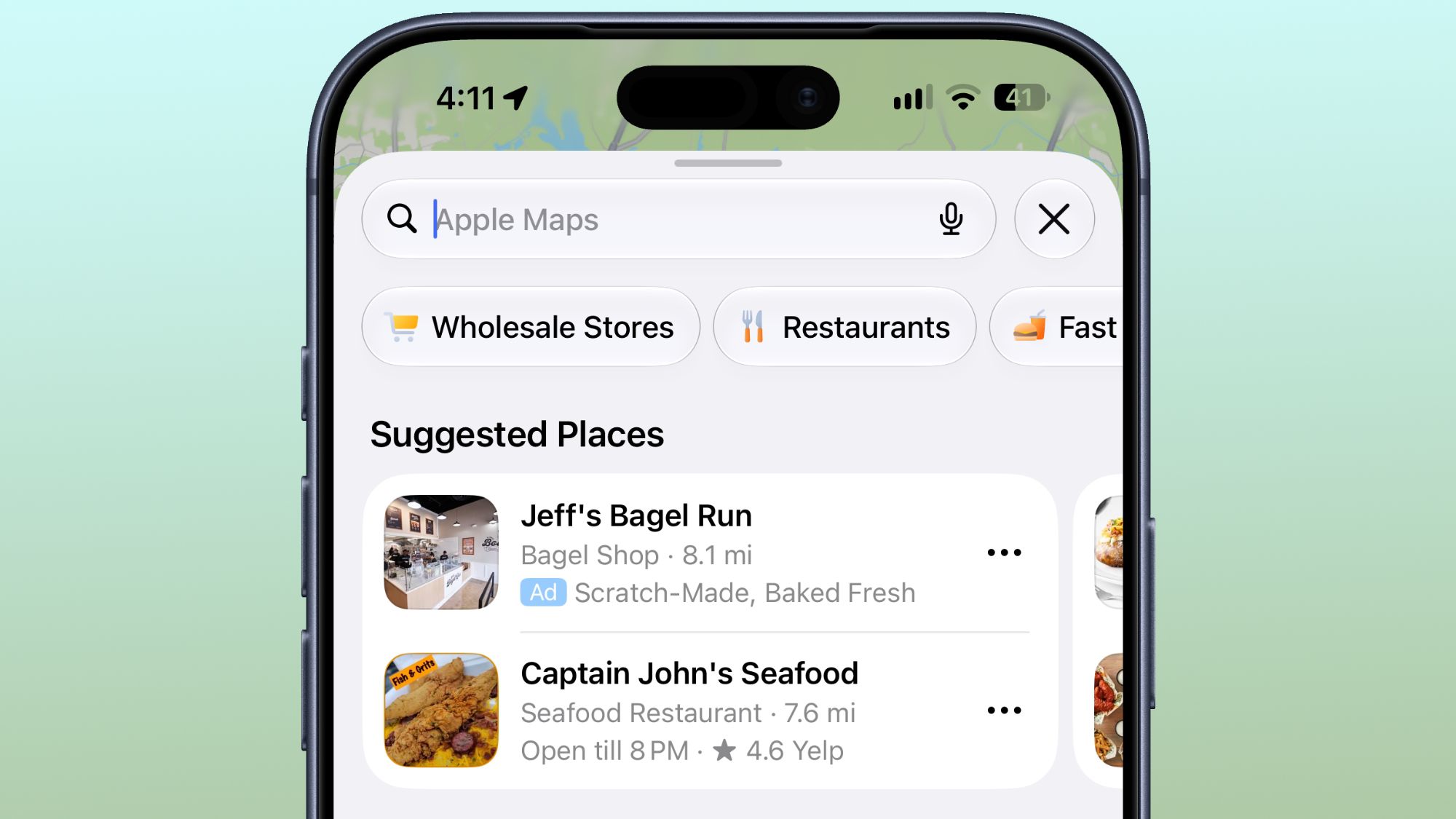
The Ad Appears, and You Cannot Dismiss It
Open Apple Maps in the United States or Canada today, and you will see a blue “Ad” tag at the top of search results. The ad is not a banner at the bottom of the screen; it is embedded in the list of places. Search for “coffee,” and the first result may be a sponsored café. Search for “auto repair,” and a paid listing for a tow truck company appears before organic results. There is no toggle to turn it off. No switch in Settings. No paywall that removes the interruption. Just a mandatory advertisement in an app that once defined what a user-friendly, uncluttered experience could look like.
Apple confirmed the rollout began last week, following a summer of quiet testing in iOS 26 betas. The company has spent months preparing both users and advertisers. In August, it opened a self-serve portal for businesses to buy ad slots, offering a 15 percent credit on up to $1,000 of monthly spend in the first year. That introductory discount is a classic land-grab tactic: lure early advertisers with cheap rates, then raise prices once the inventory is scarce and the audience is proven.
The product rules are telling. Apple bans ads for bail bonds and cryptocurrency ATMs, citing its Advertising Services policy. Medical-service ads are evaluated case by case. The goal is to keep the Maps experience from feeling like a tabloid sidebar. But the more significant restriction is the one missing entirely: there is no restriction on the number of ads, no guarantee of ad-free browsing, and no user control. Apple has decided that the friction of an ad is worth the revenue, and that you will accept it because you have nowhere else to go.
The Privacy Shield Is Thinner Than It Looks
Apple has always sold privacy as a core value. iPhone ads in Safari are targeted but limited; the App Store is curated; iCloud data is encrypted. In the Maps ad announcement, Apple stressed that interactions are not linked to your Apple Account and that no data is shared with third parties. This is a narrow claim, and it matters more than it sounds.
The company is drawing a line between identity and behavior. It may not know who you are, but it knows what you search for, where you go, and what you click. That behavioral profile is still valuable to advertisers, even if it is not tied to your name. More importantly, the data stays inside Apple’s walled garden. It does not flow to Google, Meta, or any other ad network. The privacy promise shifts from “your data is not sold” to “your data is only sold by us.” That is a crucial distinction for users who assume that Apple’s restraint means something broader.
The lack of an opt-out is the real story here. Google Maps lets you manage ad personalization; Samsung’s browser has a clear ad-blocking toggle; even Amazon’s shopping app allows some degree of tracking control. Apple has removed the levers that users used to push back. This is not a technical limitation. It is a policy choice. Apple could add a setting tomorrow. It has chosen not to.
Why the Pivot Is Happening Now
The timing is not accidental. iPhone sales in mature markets are flattening. Services revenue—the cloud, subscriptions, payments—has been Apple’s growth engine, but that segment is now saturating. Advertising is the next obvious frontier. Apple’s ad business, built around App Store listings and Apple Music promotions, already generates billions. Maps adds a high-intent context: people searching for places they want to visit or businesses they want to visit. Location-based ads convert better than banner ads. They are closer to the point of purchase.
The shift also reflects a broader industry move. Every platform is becoming a monetized channel. Google turned Search into an ad machine. Meta turned social into a targeting engine. Even Adobe, once a software company, now pushes subscription ads. Apple has resisted this pattern long enough. The question is no longer whether it will monetize more aggressively, but how far it will go before the ecosystem feels compromised.
Who Wins, Who Loses
Advertisers win, especially small and local businesses that can now buy visibility in an app with over a billion active devices. The 15 percent credit and the straightforward self-serve portal lower the barrier to entry. Apple wins through incremental revenue that requires little incremental cost. The marginal cost of showing an ad in Maps is near zero; the profit margin is therefore high.
Users lose the ability to opt out. They lose the expectation that a core Apple service remains ad-free. They lose the implicit contract that choosing an iPhone means avoiding the attention-extraction model that defines most of the internet. Competitors like Google Maps gain a relative advantage in features and user control, but Apple’s lock-in neutralizes that threat for most buyers.
The bigger loss is abstract: the erosion of a standard. For years, Apple’s refusal to clutter its interfaces was a market differentiator. It set a tone that influenced competitors and shaped user expectations. With Maps, that tone is gone. If Apple can justify ads here, what stops it from justifying them in Health, Calendar, or even the App Store?
What Happens Next
Expect the rollout to expand. Canada was the first test market; Europe and Asia will follow as Apple adapts its ad taxonomy and compliance frameworks. The self-serve portal will likely broaden to include more ad formats—video placeholders, richer business profiles, maybe even native integrations with Find My or Apple Pay. The pricing will rise as the 15 percent incentive expires.
More importantly, watch for spillover into other apps. The precedent is set. If Maps can carry ads without triggering mass churn, then any app with sufficient engagement becomes a candidate. The walled garden is no longer a sanctuary; it is a monetizable surface.
For now, the ads are labeled and limited to one per search result. Apple is careful not to cross into full-blown disruption. But the direction is clear. The company has moved from curating experiences to exploiting attention. The privacy language is a shield, not a wall. And users, with no alternative but to stay, have lost the one thing that matters in a platform monopoly: the power to leave.
The Real Story Is Not the Ad, It’s the Precedent
Apple Maps ads are not a revolution. They are a correction. The company is aligning its services with the revenue logic of the rest of the tech industry. The novelty is not that ads exist, but that they appear in a space that was supposed to be immune. The lesson is that no part of Apple’s ecosystem is sacrosanct. If you can monetize it without breaking the user base, you will.
The next question is not whether other apps will get ads, but which ones will be next, and how much control users will be allowed to retain. Right now, Maps has none. That may be the most significant detail in the entire rollout.