An Attempted Kill at Russia's Bomber Base Shows the War Is Closing In
A Russian major general commanding strategic bombers at Engels was shot near a base that flies Tu-95 and Tu-160 sorties over Ukraine. The attack signals a new dimension in the war — targeting the leadership behind Moscow's cruise missile campaign, not just the aircraft.
A Shot Rings Out at the Edge of Russia’s Strategic Reach
On September 3, a gunman on a motorcycle pulled up to a private house in Probuzhdenie, a settlement just outside Engels in Russia’s Saratov region, and opened fire. Two bullets found their marks: one in the torso, one in the face. The victim was Major General Nikolai Varpakhovich, commander of the 22nd Heavy Bomber Aviation Division, the unit responsible for flying Russia’s most destructive long-range strikes against Ukraine. His driver was wounded but escaped and called for help. Varpakhovich survived — doctors removed the bullets and prepared him for transport to Moscow on a specialized medical aircraft. His condition remains serious.
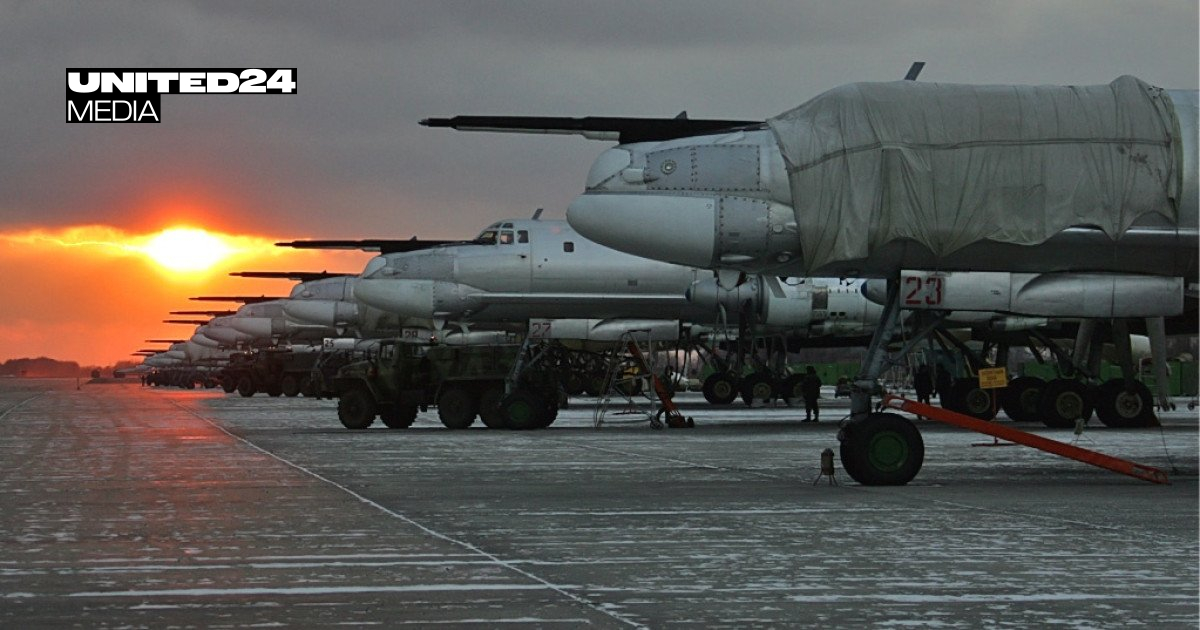
The location is the signal here. Engels-2 is one of two bases — the other being Dinara near Orenburg — that houses Russia’s Tu-95MS and Tu-160 strategic bombers. These aircraft launch Kh-101 and Kh-102 cruise missiles at Ukrainian cities from hundreds of kilometers inside Russian territory. For two years, they have been the primary tool of Moscow’s campaign of strategic bombing against civilian infrastructure. The commander of the division flying those missions now lies in a Moscow hospital with a bullet in his face, shot by someone who approached a house on a motorcycle wearing a helmet.
The Target Was Already on Sanctions Lists
What makes this attack structurally significant rather than simply dramatic is that Varpakhovich was already a named target in the eyes of Ukraine’s security apparatus. According to the Security Service of Ukraine (SBU), on July 8, 2024, he issued the combat order authorizing a Kh-101 cruise missile strike by aircraft from his 22nd Heavy Bomber Aviation Division. One of those missiles struck Kyiv’s Okhmatdyt Children’s Hospital during a massive Russian barrage. The European Union formally identified him as commander of the Engels-2-based division responsible for the strike and sanctioned him for his role in actions supporting Russia’s war of aggression.
This means Varpakhovich was not a coincidental victim of proximity. He was the most senior officer in the chain of command directly linked to one of the war’s most photographed atrocities. The SBU had publicly named him. The EU had sanctioned him. And yet he continued to command from a house near the base, not in a fortified command bunker somewhere else in Russia.
The fact that he was shot near his home rather than on the base itself is noteworthy. It suggests the attacker had specific intelligence about his daily routines — where he lived, what time he might be there — information that would be difficult to obtain without access to channels inside or adjacent to the military command structure at Engels.
The Engines That Keep Flying
The broader context of this attack is the irreplacability of the platform it targets. Russia’s Tu-95MS fleet totals approximately 31 aircraft, with another 27 upgraded to the Tu-95MSM standard. Production ended in 1992. The Tu-160, even more sophisticated, is still being assembled at the Kazan plant at a rate of roughly two per year — far slower than the attrition rate at which Moscow has been losing them to Ukrainian air defenses and drone strikes.
The Tu-95MSM upgrade is not cosmetic. It introduced new engines, updated navigation and avionics equipment, an improved defensive suite, and the ability to carry eight Kh-101 or Kh-102 cruise missiles on external pylons instead of the older internal bay configuration. Each missile has a range of 2,500 to 5,500 kilometers depending on the variant, meaning the bombers can launch from deep inside Russian territory and still reach any point in Ukraine. They cannot be replaced. Each loss — whether from ground fire, drone strikes, or now possibly from internal violence — permanently reduces a fleet that was built before Ukraine existed as an independent state.
Moscow has already lost several Tu-95MS aircraft to Ukrainian strikes at Engels and other bases. In April 2024, the SBU claimed it had struck a Tu-95MS at Engels using a drone. In May 2024, another Ukrainian drone attack damaged aircraft at the same base. The pattern is clear: Russia’s strategic bombing fleet is under sustained attack from below, and now, apparently, from within.
Who Wins, Who Loses
The immediate effect of this shooting is difficult to measure. Varpakhovich is in serious condition and undergoing treatment in Moscow. Whether he will return to command is unknown. His division continues to fly missions — the Russian military has demonstrated a willingness to replace senior officers quickly when the operational need demands it. But the psychological impact is the more consequential outcome.
For the crews and commanders at Engels, the message is unambiguous: the war has reached the base’s periphery. The gunfire came from a motorcycle on a public road, not from a drone or a long-range missile. It required human intelligence, human proximity, human risk. Someone knew Varpakhovich’s schedule. Someone was willing to get close enough to shoot him.
For Moscow, the incident raises questions about the security of its strategic command structure that go beyond one injured general. The Long-Range Aviation of the Russian Aerospace Forces operates from a small number of bases — Engels and Dinara for the Tu-95 and Tu-160 fleets, plus a handful of other locations for tanker and reconnaissance aircraft. The command hierarchy is concentrated. Each senior officer removed from the chain creates a ripple effect that is difficult to absorb in a military already stretched by two years of high-intensity conflict.
What Happens Next
The most likely immediate outcome is a security clampdown at Engels and the other strategic aviation bases. Expect increased perimeter checks, restricted movement for senior officers, and possibly a relocation of command functions away from the base periphery. Varpakhovich’s division will continue to fly — the Kh-101 strikes on Ukrainian cities have not stopped, and Moscow has shown no willingness to reduce the bombing campaign in response to internal violence against its own commanders.
But the structural implication is harder to reverse. The war is penetrating Russia’s military command at a level that goes beyond intelligence leaks or sabotage. It is reaching the homes of senior officers who issue combat orders for strikes on civilian infrastructure. The attack on Varpakhovich is not an isolated incident — it is a symptom of a conflict that has no clear boundary between the frontline and the rear, between the military and the civilian, between Russia and Ukraine.
The Tu-95s will keep flying from Engels. The Kh-101s will keep falling on Ukrainian cities. But the commander who ordered that strike on Okhmatdyt is now in a Moscow hospital, and the person who put the bullet in his face approached on a motorcycle, not from the sky. That shift in the geometry of the war matters more than any single casualty.