Audi's $4bn US Factory Reveals Europe's Automotive Squeeze
Volkswagen's $4bn Audi plant in Georgia, announced alongside 100,000 German job cuts, exposes how European automakers are being forced to choose between American market access and domestic survival.
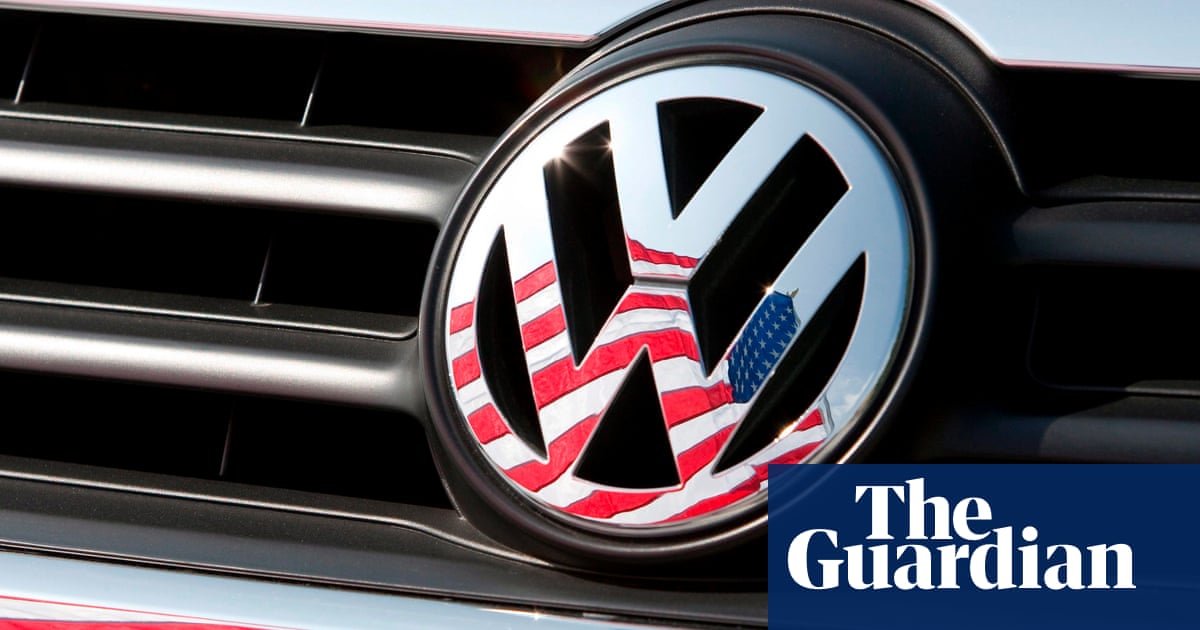
The Double Move
Audi is building its first American factory. Volkswagen, its parent, is cutting 100,000 jobs in Germany. The two stories happened at the same time, which is not a coincidence but a pattern that defines European industry today.
The $4 billion plant in Macon, Georgia will produce 200,000 SUVs annually — the Q7, Q8, and the company’s largest-ever model, the Q9. It creates roughly 4,500 permanent jobs plus an estimated 8,000 construction positions over the build phase. The Bratislava factory in Slovakia will lose some of that production, leaving a gap in the company’s Central European footprint that union leaders warn could trigger a second wave of layoffs.
Meanwhile, Volkswagen started to shed workers across Europe this month. The company blames three things at once: Chinese competition, the costs of shifting to electric vehicles, and the tariffs Trump imposed on EU imports. Works councils at plants in Wolfsburg, Emden, and Calw have called emergency meetings. The German government has offered faint promises of support but no concrete rescue plan.
This is what European automakers look like when they are forced to choose between markets. The choice is never clean.
The Rally That Wasn’t Supposed to Happen
Gernot Döllner, Audi’s chief executive, stood on stage with Donald Trump at a campaign rally on Saturday night. This was days before the US midterm elections. A major European brand doing this is unusual — it signals desperation as much as diplomacy.
Trump wants to keep control of both houses of Congress. He is polling poorly on the economy. Fuel prices are higher because of his war on Iran. Trade tensions with US partners are rising. Yet he seized on the Audi announcement anyway. He called it a “huge victory for American workers” and pointed to the stadium crowd as proof his tariff strategy works.
The timing was not accidental. Trump has spent years saying tariffs create American manufacturing jobs. Any new factory is proof his policy works. But US vehicle and parts employment has fallen since he took office last year, according to Bureau of Labor Statistics data. The plant creates 4,500 jobs. The company is cutting 100,000 at home. The math does not favor the narrative.
Inside the auto industry, the image of a German executive standing beside Trump drew quiet scorn from colleagues. Some viewed it as surrender. Others saw it as survival. Both reactions were correct.
The Tariff Bill
Trump’s 15 percent tariff on EU imports is costing Volkswagen up to €5 billion a year. That is before the impact on sales. The company said this month it is still struggling with “continued high pressure from import tariffs” — language that understates the damage. Profit margins on EU-sourced vehicles have compressed to single digits. Some models are now barely profitable after tariff costs.
Volkswagen also shifted some production of cheaper cars — the Jetta sedan and the Taos SUV — from Mexico to the US. The Mexican factories were hit by Trump’s broader pressure on Chinese-linked supply chains. Companies with parts sourced through Chinese vendors in Mexico faced renewed scrutiny and de facto penalties. The shift was reactive, not strategic.
But shifting production from one country to another does not solve the underlying problem. The tariffs make every car more expensive to build. They make the German plants less competitive against domestic American manufacturers who do not face the same cross-border costs. They force the company to choose where to invest — and every choice burns elsewhere.
European suppliers are feeling the strain too. Bosch, Continental, and ZF have reported declining orders from their German operations. Some are considering their own American expansions, but the capital required far exceeds what small and mid-tier suppliers can raise without external support. The ripple effects will spread beyond Volkswagen’s plants.
The Chinese Question
Volkswagen has blamed job cuts on Chinese competition. That is partly true. Chinese carmakers are gaining market share globally at a pace that surprised even pessimistic analysts. BYD alone has surpassed Volkswagen in global EV sales. NIO, XPeng, and Li Auto are expanding into Europe with vehicles that undercut German rivals on price and technology.
Chinese companies are building electric vehicles faster and cheaper. They control the battery supply chain from lithium refining to cell production. Their cost advantage on comparable EVs runs 20 to 30 percent. European manufacturers cannot match those numbers without restructuring costs that, paradoxically, look like the very job cuts triggering political backlash at home.
But the tariffs are also a factor. Trump wants automakers to localize production in America. He is pressuring companies with Chinese supply chain connections to move. Volkswagen has significant ties to China through joint ventures with SAIC and FAW, which together account for roughly a fifth of the group’s sales. Those ventures are now exposed to a second set of tariffs if Washington moves against Chinese-made components inside American-built cars.
The company is caught between two forces: Trump wants factories in America. Chinese competition is making those factories less profitable. The tariffs are supposed to protect but are actually making things worse by raising input costs and compressing margins simultaneously.
The SUV Paradox
Audi is building its largest SUV ever. The Q9 is designed with the American market in mind — large, roomy, and powered by a conventional internal combustion engine. Large petrol-powered SUVs have played a big role in global carbon emissions. The US still has strong demand for them, and demand is not disappearing despite regulatory pressure elsewhere.
Trump is pushing against electric vehicle mandates. He has rolled back fuel economy standards and spoken openly about preferring petrol cars. Audi is responding by betting on the American preference for large SUVs. This is a market decision, not an environmental one. It is also a bet that the political landscape will remain favorable for the next decade — a bet that carries its own risk.
The factory will shift some production from Slovakia. It adds to the tension in Germany where plants are closing. The company says it needs to invest heavily in EVs for other markets, particularly China and Europe, where regulations demand it. But those markets are struggling with Chinese competition and tariff pressure. The group’s EV transition is being financed by profits from American SUV sales — a circular dependency that feels unsustainable.
Industry watchers note that no other European manufacturer is making a parallel bet on large American SUVs. BMW is focusing on electrification. Mercedes is splitting its strategy between luxury sedans and American trucks through its Ram partnership. Audi is alone, which makes the move both bolder and more vulnerable.
The Political Fallout
German politicians are divided. The Christian Democrats want to negotiate a tariff deal. The Greens want to accelerate the EV transition to reduce dependency on American markets. The far-right AfD is using the job cuts to attack the current government’s energy policy. None of them have a coherent industrial strategy.
The European Commission has opened an antitrust investigation into Chinese EV subsidies, but the process will take years. In the meantime, Volkswagen’s American expansion is proceeding without Brussels approval — because approval is not required for foreign direct investment, only for state aid. The company is moving unilaterally, which reflects the urgency but also the fragmentation of European industrial policy.
Workers’ unions in Germany have threatened strikes if the job cuts proceed. Management has responded by offering voluntary departure packages and early retirement incentives. The numbers suggest the voluntary route will work — but only for a fraction of the targeted workforce. The rest will face involuntary layoffs, which carry legal complications under German co-determination law.
The Impossible Choice
European automakers face a simple question wrapped in enormous complexity: where do you build when every market is hostile?
China wants local factories but competes with Chinese companies. America wants local factories but imposes tariffs that make them expensive. Europe wants clean vehicles but cannot compete on price. The trilemma has no clean solution.
Volkswagen is choosing America for premium SUVs. It is choosing Germany for efficiency and technology. It is choosing China for volume and growth. None of these choices are easy. Each one requires sacrificing something else. The group’s board has called it “strategic triage” — a term that captures the clinical coldness of decisions that will affect hundreds of thousands of livelihoods.
The $4 billion plant is real. The 100,000 job cuts are real. Both are true at the same time. That is what strategic pivots look like when you are being squeezed from every direction.
What Comes Next
Trump will keep talking about jobs created. The numbers will not support him. European automakers will keep building factories in America to avoid tariffs. They will keep cutting jobs at home to stay competitive. The cycle will repeat until one side blinks or the economics break entirely.
Chinese carmakers will keep gaining market share. They will keep building electric vehicles cheaper. European companies will keep struggling to respond, caught between political pressure from Washington and competitive pressure from Beijing.
The Audi plant in Georgia is not a victory. It is not a defeat. It is a symptom — of an industry under structural stress, of trade policy that rewards proximity over efficiency, and of a continental manufacturing base that is contracting even as it tries to hold its ground. The question is not whether Volkswagen can survive. It is whether the European automotive model can survive the choices it is forced to make.