The B-2 Flyover as Diplomatic Theater
Trump's decision to roll out B-2 bombers and F-22 Raptors for Xi's state visit isn't just pageantry—it's a calculated message about where US-China relations stand, even as both sides talk about cooperation.
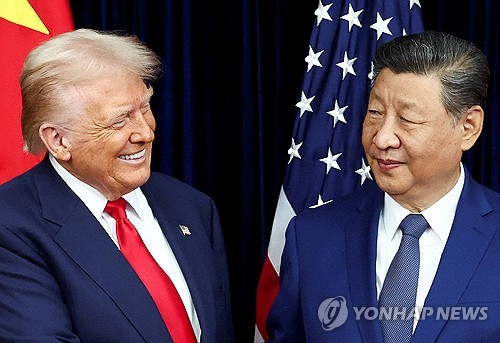
The B-2 arrives before the negotiators
Donald Trump is greeting Xi Jinping with a flyover of B-2 Spirit strategic bombers and F-22 Raptors at Andrews Air Force Base. The gesture is unmistakable: this is a state visit draped in the language of American military supremacy.
Xi’s arrival comes after an 11-year gap since his last visit to the White House. Trump, who hosted him in Busan last October, is marking the occasion with what the White House calls one of the most elaborate protocols ever assembled for a Chinese leader on American soil. Melania Trump, typically out of the public eye, is expected at three events. The itinerary includes a welcoming ceremony, a state banquet, and private discussions—trade, security, the usual heavy lifting.
But the centerpiece is not the agenda. It is the airspace above Washington.
A message, wrapped in protocol
The B-2 is the kind of aircraft China does not want visible overhead. It is a stealth bomber designed to penetrate air defenses—precisely the kind of defenses China has built across the South China Sea and the western Pacific. Flying one over the nation’s capital during a visit from the country with which it is engaged in a deepening strategic rivalry is not a neutral choice. It is a statement.
Trump has a long history of using military displays as diplomatic theater. The B-2 was prominently featured during the 2018 Trump-Xi summit in Mar-a-Lago. The pattern is clear: when talking heads meet, talk of weapons happens nearby.
What makes this iteration different is the timing. The US has been pulling back from some areas of engagement with China while accelerating others. Tariffs, export controls, AI safeguards—these are the subjects on the table. The flyover is the punctuation mark Trump wants readers to notice first.
There is also a procedural dimension that often goes unnoticed. Andrews Air Force Base is not a ceremonial runway in the traditional sense. It is a working military installation. Inviting a foreign head of state to witness aircraft that project reach across two oceans signals that the US treats this relationship as fundamentally different from allies whose leaders arrive at commercial terminals. The staging itself is a hierarchy. China is being reminded of where it sits—not as an enemy, but as the adversary the United States prepares for most carefully.
The two tracks: competition and conversation
Xi’s itinerary includes something quieter but arguably more consequential than the bombers: a dialogue channel on AI safety. Both sides have talked about managing the risks of artificial intelligence, particularly around nuclear command and control systems and autonomous weapons. The US views China’s AI trajectory through a security lens; China views American claims of safety cooperation through a lens of strategic competition.
These tracks coexist in Trump’s schedule by design. The bombers say one thing. The AI talks say another. The question is whether the second track can survive the friction generated by the first.
There is a practical reason for keeping both alive. The US cannot unilaterally regulate Chinese AI development. China cannot unilaterally regulate American AI deployment. But both sides can agree on guardrails around dangerous capabilities—autonomous targeting, nuclear command integrity, biological research. These are narrow corridors. They are also the only ones with room to grow.
Behind closed doors, US officials have pressed for something concrete: a commitment from China not to integrate AI systems into early-warning networks for nuclear forces. The concern is existential—misinterpretation by an algorithmic system could compress decision timelines to seconds, removing human judgment from the most consequential choice a government can make. China has not accepted the frame. Beijing argues that AI integration is a defensive modernization, not a first-strike enabler. The disagreement is real and unresolved. It does not mean the conversation stops. It means the corridor remains fragile.
Second-order effects
The flyover will not change Xi’s calculus on Taiwan or the South China Sea. It will, however, shape the tone of the negotiations. A visiting Chinese delegation arriving beneath low-flying stealth aircraft carries an implicit subtext into every room: the United States does not need to threaten escalation to assert its position. The platform speaks for itself.
For Beijing, the optics matter too. Chinese state media has already framed the display as aggressive. That framing serves a domestic audience that expects the leadership to project strength even when receiving visits from adversaries. The counter-narrative in China—that the US is anxious enough to announce its power visually—has less purchase now because the hardware backing it is undeniable. The B-2 fleet numbers only 20 airframes. Each one costs roughly $2 billion to produce. Their presence is scarce by design, and scarcity amplifies perception.
The second-order effect reaches beyond the immediate talks. Defense contractors, analysts, and allied capitals will read this as a signal that Washington intends to keep military superiority at the center of its China posture, regardless of trade outcomes. Japan and Australia will take note. The Philippines will recalibrate. NATO partners will wonder whether the transatlantic dimension of great-power competition is also being reframed through a similar lens.
What happens next
The B-2 will fly. The F-22s will follow. Xi and Peng Liyuan will step off the plane onto the red carpet. The photographs will look like cooperation. The flyover will look like deterrence.
In the days that follow, reporters will scan the joint statement for language on trade, on Taiwan, on technology. The AI safety channel will appear in the fine print. Neither story will capture the full picture.
The full picture is this: Trump is hosting Xi with every tool at his disposal—the ceremonial and the coercive. The display is not a signal of hostility. It is a signal of confidence. America still has the bombers. America still sets the terms of the encounter.
Xi, for his part, has survived a decade of American pressure. He knows how to read the room when the room is filled with American steel. The question is not whether he noticed the B-2. It is whether he will respond in kind at the next meeting—or whether China has already moved on to something else entirely. The answer to that question may matter more than anything produced at Andrews.