Baltic Cable Sabotage Conviction Tests Global Infrastructure Law
A Finnish court's conviction over undersea cable damage sets a legal precedent, exposing the weakness of protections for critical seabed infrastructure and raising questions about hybrid warfare.
A Rare Prosecution With Wide Implications
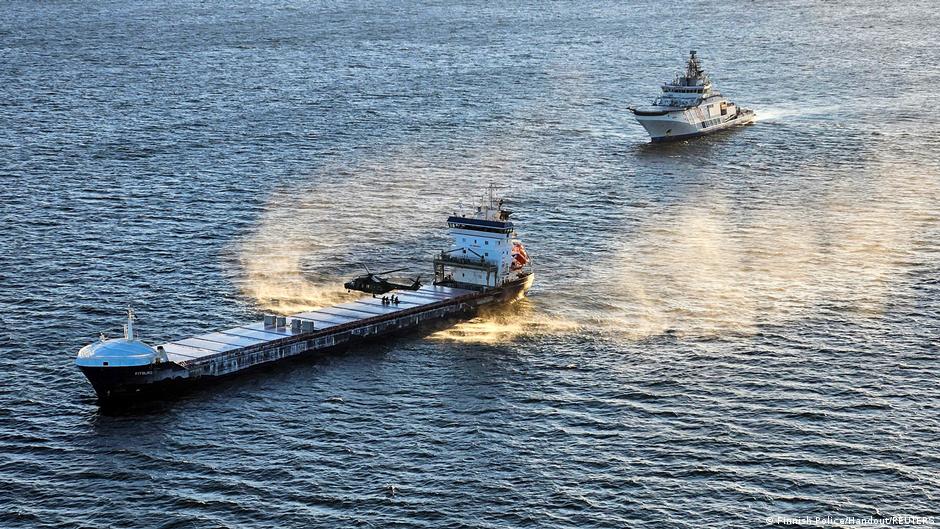
A Finnish court convicted a Russian captain and an Azerbaijani crew member of aggravated criminal damage after their cargo ship, the Fitburg, dragged its anchor for roughly 130 kilometers across the Gulf of Finland, severing critical telecommunications cables linking Helsinki and Tallinn. The sentence — three-and-a-half years for the captain and nearly three years for his crewmate — carries symbolic weight far beyond Scandinavia.
Undersea cables carry 99 percent of international data traffic, yet few jurisdictions treat their destruction with anything approaching the severity reserved for bombing a bridge or shooting down a plane. This conviction is one of the first where a court explicitly treated cable damage as a major offense, rather than a navigational accident deserving a fine.
What made the Fitburg case remarkable was not just the outcome but the evidence presented. Prosecutors relied heavily on seismic monitoring data from seabed sensors placed by telecommunications companies, combined with satellite-derived vessel tracking records and sonar readings from the ocean floor. The timeline reconstructed during trial showed the anchor had been dragged long enough and far enough to rule out accidental contact — no routine anchoring pattern covers 130 kilometers of seabed. Forensic experts testified that the damage profile on the cables matched anchor drag rather than fishing gear snagging or natural sediment movement.
What the Verdict Actually Means
Finland prosecuted the case under its own criminal code and universal principles of maritime law. The court found that the anchor had been deliberately dragged along the seabed. That finding matters. Intentionality shifts the narrative from negligence to sabotage, however indirect.
Both defendants denied wrongdoing and challenged Finland’s jurisdiction, arguing that the ship was simply passing through international waters en route from St. Petersburg to Haifa. Their objection tests a key assumption: can a coastal state prosecute damage to cables that serve its territory, even when the offending vessel is foreign?
The answer so far is yes. And that answer may soon be tested elsewhere.
Legal scholars note that the conviction rests on Finland’s interpretation of the United Nations Convention on the Law of the Sea, which grants coastal states certain authority over cables crossing their continental shelves. But the convention was drafted decades before undersea infrastructure became a recognized target in gray-zone conflicts. The Fitburg ruling stretches existing treaty language into territory its authors never anticipated, and lower courts in other nations may interpret those precedents differently.
Why Russia’s Shadow Fleet Is Relevant Here
The Fitburg incident did not occur in isolation. Since Russia’s full-scale invasion of Ukraine in 2022, the Baltic Sea has seen repeated damage to cables and pipelines. Many of those incidents share a pattern: ships operating under opaque registries, crews drawn from multiple post-Soviet states, and routes threading close to sensitive infrastructure corridors.
Russia’s “shadow fleet” of aging tankers and bulk carriers — many insured through informal networks — operates in gray zones that complicate accountability. Whether the Fitburg crew acted intentionally or carelessly, the broader context suggests that maritime infrastructure in contested seas is increasingly exposed to risk, whether planned or accidental.
Independent analysts have documented at least seven separate cable disruptions in the Baltic between 2022 and 2024, several involving vessels later flagged in non-transparent ownership structures. None have resulted in prosecutions comparable to the Fitburg case, partly because no other jurisdiction has pursued charges with the same vigor. Insurance investigators working behind the scenes have raised internal concerns about what they term “credible ambiguity” — situations where deliberate sabotage and negligent operation produce identical physical evidence on the seabed.
Who Loses When Cables Break
When undersea cables fail, the consequences ripple outward. Interruptions affect everything from banking transactions to emergency services. In the Nordic region alone, dozens of fiber-optic lines crisscross the seabed. Each break slows recovery, increases costs, and exposes deep reliance on routes that receive almost no systematic protection.
When the Fitburg-cut cables failed, traffic rerouted through longer paths around the Baltic, adding latency measured in milliseconds to transcontinental connections used by everything from algorithmic trading platforms to VoIP routing systems. For most users, the degradation went unnoticed. For institutions dependent on deterministic network performance, the impact was immediate and costly.
Insurance firms, tech companies, and governments all feel the pain. But the heaviest burden falls on ordinary users who cannot see the cables beneath them — and therefore cannot demand their safety. Public awareness remains low precisely because redundancy usually masks fragility until a failure occurs.
The Legal Gap That Remains
Despite the conviction, the Fitburg case does not solve the underlying problem. International law lacks a dedicated treaty governing undersea cable protection in wartime or in periods of heightened tension. Existing frameworks — the United Nations Convention on the Law of the Sea, regional agreements — offer vague language about safeguarding infrastructure but no clear penalties or enforcement mechanisms tailored to modern hybrid threats.
That gap allows bad actors to exploit ambiguity. It also makes future prosecutions unpredictable. Will every coastal state feel empowered to try foreign sailors for cable damage? Will courts accept the same evidence standards? The answers remain unclear.
Defense ministries across NATO are now treating undersea infrastructure as a strategic vulnerability comparable to power grids and communication satellites. The European Union has begun drafting legislative proposals that would classify intentional cable severing as a hybrid attack, triggering collective response mechanisms. None of these initiatives will matter unless they translate into enforceable legal obligations with defined penalties — something the Fitburg verdict approximates but does not codify internationally.
What Comes Next
The Fitburg ruling gives Finland a model. Other nations with valuable cable landfalls — the UK, Norway, Poland, Japan — may follow similar legal paths. Industry groups are already pushing for stronger classification requirements for ships navigating near cable routes and better surveillance of anchoring practices in sensitive zones. Satellite-based AIS monitoring and automated vessel behavior analysis could flag suspicious patterns before damage occurs.
But without binding international norms, each conviction will remain an isolated statement rather than part of a coherent system. That fragility is exactly what makes this case worth watching closely. The next prosecution may depend not on Finnish law but on whether a network of like-minded states chooses to build parallel enforcement architectures that close the gaps the Fitburg verdict alone left open.
The Baltic Sea trial proved one thing: nations can hold individuals accountable for damaging undersea cables. The harder question — how to prevent it at scale before the next anchor drags across the seafloor — remains unanswered.