Bessent Told the Bond Market to Obey. Yields Went Higher Anyway.
Scott Bessent claimed dominance over the $32 trillion bond market. Markets ignored him. The 10-year Treasury yield hit 4.93%, exposing the limits of Treasury rhetoric against global capital flows.
The House Didn’t Win
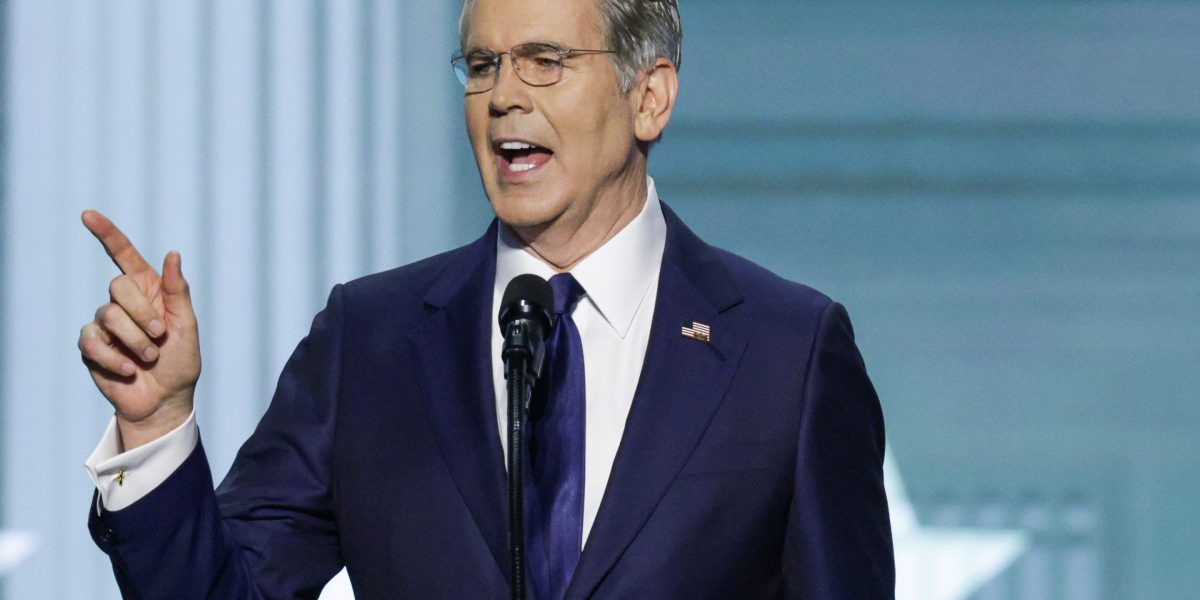
Scott Bessent walked onto a stage at Southern Methodist University and told the world’s deepest capital market to behave. “I am the house now,” he said, invoking the cold logic of a casino operator who knows the odds are rigged in his favor. He was talking about currency intervention, specifically his leverage over Japanese policymakers after the U.S. and Japan jointly bought yen in late July. But the message was clearly aimed at something far larger: the $32 trillion U.S. Treasury market, where yields have been climbing relentlessly despite his warnings.
The market did not comply.
By Thursday morning, the yield on the 10-year Treasury had surged to 4.93 percent — its highest level since 2023, teetering inches above the psychological threshold of 5 percent. That milestone has been breached only once in the past two decades. Every basis point higher makes borrowing more expensive for a government that already carries $40 trillion in debt. Bessent’s declaration that “we can grow our way out of that” sounds confident on CNBC. It rings differently when the bond market is charging you more to lend it money.
What the Yen Trade Revealed
To understand why Bessent’s bond market gambit stumbled, you have to look at what happened during the yen intervention. When the U.S. and Japan coordinated their purchase of yen in late July, everyone knew the collateral risk: Japan holds roughly $1.2 trillion in U.S. Treasuries. If Tokyo needed to sell those bonds to raise dollars for currency support, U.S. yields would spike. That’s basic bond math — yields move inversely to prices.
The yen did strengthen. It recently climbed to a nearly seven-month high against the dollar, which Bessent had called “undervalued.” So the intervention worked on its stated objective. But the Treasury market absorbed the collateral damage without much help from Washington’s rhetoric. The Department announced Wednesday it would buy up to $6 billion in 10- to 20-year bonds through its buyback program, an increase from the $4 billion minimum flagged the prior month. The official rationale was liquidity. The unspoken goal was to put a floor under yields. Yields kept rising.
The 5 Percent Line
Five percent on the 10-year is not an arbitrary number. It is a line that changes how the market prices American risk. Cross it and institutional investors — pension funds, insurance companies, foreign central banks — start rebalancing portfolios toward longer-dated debt, which pushes yields even higher in a feedback loop. It also raises the cost of everything indexed to Treasuries: mortgages, corporate debt, municipal bonds. For the U.S. government, the arithmetic is brutal. At current borrowing levels, every full percentage point above where rates were just two years ago adds hundreds of billions in annual interest service.
Thomas Kikis at Standard Chartered put it plainly: “Normally, when these red lines are put out, people like to test them. The market’s gonna give him a bit of a run over the next few days.” Bessent drew a line. The market walked across it.
The Quiet Fed Problem
Compounding the problem is a Federal Reserve that has deliberately stepped back from its traditional role as market whisperer. Fed Chair Kevin Warsh has embraced what he’s called a “quieter Fed,” cutting back on forward guidance and leaving less signposting for traders to latch onto. That philosophy transfers influence directly to Bessent. Instead of reading the Fed’s next move, markets are scanning Treasury Department statements and Bessent’s press remarks for clues about where rates and yields might land.
It is a risky transfer of gravity. A central bank speaks in calibrated increments and lives by institutional credibility. A Treasury secretary is a political appointee whose track record includes a single high-profile currency stabilization — the Argentine peso last year. The White House’s Kush Desai invoked that precedent in a statement to Fortune, arguing that Bessent’s “gravitas and the power of the American economy” make him effective at market stabilization. Gravitas does not fill order books. Power does — but only up to a point, and the bond market is the arena where that point is being tested right now.
The Iran Overhang
None of this exists in a vacuum. Brent crude settled above $100 this week, its highest reading since May, reviving inflation fears at a moment when the Federal Reserve needs to convince markets that price pressures are fading, not returning. The Iran war is disrupting oil flows and trade routes in ways that keep risk premia elevated across every asset class. When energy prices run hot and debt levels run higher, the bond market demands more compensation — and it does not care about your rhetoric.
Kikis noted that corporate America is still growing impressively, fueled in part by AI-driven productivity gains, and that GDP continues expanding despite the geopolitical noise. In theory, growth justifies higher rates. In practice, the speed of the yield climb suggests the market is pricing in something beyond fundamentals: the risk that Washington is fighting a multi-front war against market forces and losing at least one of those fronts.
What Happens Next
Bessent’s real lever — beyond buybacks and public statements — is spending cuts. Kikis flagged this directly: to move yields meaningfully, the administration may need to reduce the deficit, not just talk about growing out of it. That is politically treacherous for a Trump administration that has shown little appetite for fiscal restraint. The $40 trillion debt ceiling debate is looming, and every delay makes the bond market more nervous, not less.
The White House will point to the yen win and the Argentine peso intervention as proof that Bessent’s approach works. It does, in narrow currency cases where the U.S. can coordinate with allies and deploy targeted liquidity. The Treasury market is a different beast entirely — 18,000 trades per second, trillions in daily volume, participants across every timezone and asset class. You cannot verbally dominate that. You can only influence it, and influence requires either credibility or coercion. Bessent has credibility from his hedge fund career. He has some coercion through buybacks. But the bond market is telling him, through the yield curve, that it is not enough.
The 10-year at 4.93 percent is a warning shot. If it crosses 5 percent, the test Bessent issued to the market becomes the market’s test of him. And right now, the house is not looking quite as unbeatable as it claims.