Bessent's Iran D-Day Threat Rings Hollow Without Teeth
Treasury Secretary Scott Bessent warned of an economic D-day against Iran but offered few specifics. Markets aren't buying the bluster — and Iran's threat to block the Strait of Hormuz could reshape global energy flows regardless.
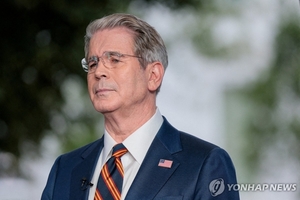
The D-Day That Never Drops
Scott Bessent stood at the podium and announced an economic D-day. The Treasury secretary, writing in the Financial Times ahead of what he called the largest financial operation ever mounted against a hostile state, evoked the Normandy landings. The goal, he said, was to sever every economic lifeline propping up the Iranian regime until Tehran fully isolated itself.
The rhetoric was sharp. The detail was conspicuously absent.
CNN flagged it immediately: Bessent threatened countries doing business with Iran but disclosed almost nothing about how the United States would actually enforce those threats. The op-ed amounted to a restatement of President Donald Trump’s warnings from the previous week, amplified but not substantiated.
For markets, that distinction matters more than either man realizes. Ambiguity is cheap. Enforcement is expensive. And Washington has never demonstrated a willingness to pay the price for the latter when it conflicts with energy affordability at home.
Bessent’s op-ed outlined a framework of secondary boycotts — penalties on third-country banks and firms that continue transacting with Iranian entities listed under existing sanctions regimes. But the document sidestepped the three questions traders actually care about: Which specific Iranian central bank channels would be targeted? What threshold of transaction volume triggers enforcement? And who in the US government has discretionary authority to grant waivers, and on what basis?
The answers matter because the 2018 maximum-pressure campaign demonstrated that every broad sanction promise eventually encounters a cascade of exemptions — for humanitarian goods, for allied commercial interests, for diplomatic leverage. The mechanism of erosion was never named in Bessent’s piece, but every institution with Iran exposure remembers it well.
TACO Is Not a Meme. It’s a Trading Strategy.
Wall Street has long operated under an unspoken acronym: TACO — Trump Always Chickens Out. The pattern is well established. Executive orders are signed with fanfare. Sanctions regimes are announced with maximum theater. And then, months later, waivers multiply, exemptions appear, and the initial hard line softens into something far more negotiable.
This is not speculation. It is the cumulative learning of every institution that has priced Iran exposure since 2018, when the first round of secondary sanctions was announced with similar gravity and subsequently eroded through relentless behind-the-scenes dealing. The Japanese trading houses that secured de facto toleration for Iranian energy purchases. The European banks that negotiated narrow carve-outs for non-proliferation-related transactions. The Chinese institutions that simply waited out the initial enforcement window and then recalibrated their compliance desks rather than exiting the market entirely.
Bessent appears to understand the dynamic. His cautious, principle-heavy op-ed — deliberately vague on enforcement mechanisms — may be the only card he can safely play. Any specific threat he makes today can be walked back tomorrow by the president. So he stays abstract. He quotes Blaise Pascal. He warns that nations choosing defiance will become economic pariahs. He promises that nations choosing compliance will gain access to global capital.
It is a speech designed to move nothing and offend no one. That is precisely the point.
The Real Threat Isn’t Sanctions. It’s Hormuz.
Here is what the op-ed ignored entirely: Iran has been threatening to close the Strait of Hormuz for years. The strait carries roughly 21 million barrels of oil per day — about 21 percent of global petroleum consumption. When Iran blocks it, the world does not wait for Treasury press releases. Oil prices do not care about Bessent’s Pascal.
The calculus is straightforward. Iran knows its economy is vulnerable to financial pressure. But it also controls the single most consequential chokepoint in global energy trade. Closure of Hormuz would send crude prices well beyond $100 a barrel within days, potentially much higher. The ripple effects would hit every major importer, but Asian economies — Japan, South Korea, India, China — would feel them first and hardest, since they depend on Middle Eastern shipments in proportions no Western nation does.
The Iranian rial, already collapsing toward 2 million to the dollar, is a domestic disaster. But Tehran may calculate that global chaos is an effective shield against domestic decay. A collapsing currency punishes the population slowly. A blocked strait punishes the world quickly — and creates political pressure on Washington and Beijing and New Delhi to de-escalate before the pain becomes unbearable.
Second-order effects are already visible in futures markets. Contango in the front month of Brent crude has steepened, reflecting inventory-build expectations. Insurance premiums for vessels transiting the Gulf have risen sharply, a signal that maritime risk models are pricing in escalation scenarios that official Washington still treats as hypothetical. These are not abstractions — they are real costs being absorbed by shippers, refiners, and ultimately consumers.
Who Wins. Who Loses. What Happens Next.
The immediate winner of Bessent’s rhetoric is ambiguity. The market does not know enough to reprice anything meaningfully. That buys time for negotiators and uncertainty for traders — a comfortable position for Washington regardless of which side blinks first.
The loser is anyone who depends on predictable energy flows. Asian refiners sitting on long-term Gulf contracts face the same risk they have always faced: American foreign policy is binary and dramatic, but their supply chains are continuous and mundane. A sanction announced on a Tuesday does not prevent a tanker from transiting Hormuz on Wednesday. Only military action does that. And neither Bessent nor Trump has signaled any appetite for kinetic escalation.
But the silence on military options is itself a signal. It tells Tehran that the United States is willing to threaten economic warfare without the credible follow-through of naval enforcement. Iran’s Revolutionary Guard Corps has been running precision tests on Strait-mining capabilities for years. The question is not whether they could disrupt traffic — it is whether they believe they can absorb the retaliatory cost of doing so.
What happens next is harder to predict than the rhetoric suggests. If Iran tests the waters with partial Hormuz disruptions — mining operations, drone swarms, fast-boat harassment — oil will spike and stay spiked regardless of Washington’s next press release. The secondary boycott framework Bessent outlined requires actual enforcement, not just words, and the United States has shown repeatedly that it prefers symbolism over the institutional costs of genuine financial interdiction.
The rial’s collapse will deepen Iran’s internal crisis. But history suggests that internal economic pain does not reliably translate into external behavioral change for the Iranian leadership. It translates into more aggressive asymmetric action instead. The 2019 tanking of two tankers in the strait, the 2020 assassination of Qasem Soleimani triggering proxy retaliation across the region, the repeated attacks on Saudi and Emirati infrastructure — each escalation followed the same pattern: economic pressure produced not concession but lateral violence.
Bessent’s D-day will be remembered for its anniversary. The Hormuz crisis, if it comes, will be remembered for its price. The gap between those two memories is where the real risk lives — in the space between a threat without teeth and a lever Iran is perfectly positioned to pull.