BioWare's Death Signalizes the End of the AAA RPG
EA's closure of BioWare after three decades marks the end of an era for narrative RPGs. The shutdown reveals how the gaming industry's pivot to live services is leaving single-player blockbusters behind.
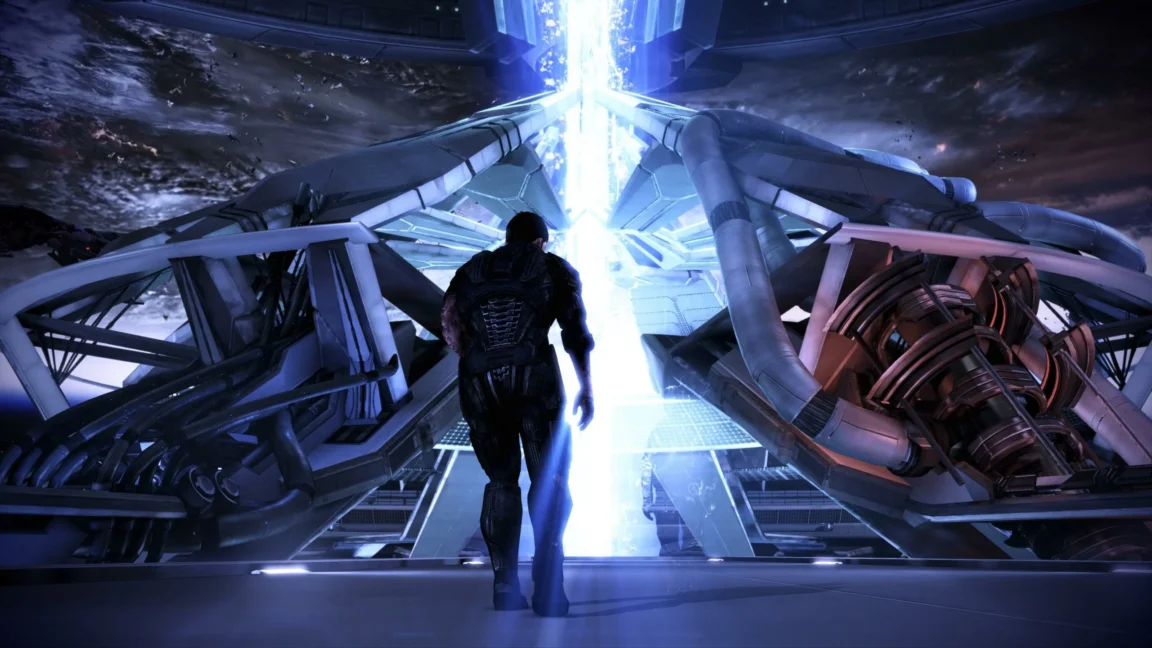
BioWare Is Dead. The Industry Learned Nothing.
The news arrived on a Wednesday afternoon, but it felt like a eulogy for something that died years ago. BioWare, the Edmonton studio that gave the world Mass Effect, Dragon Age, Neverwinter Nights, and Knights of the Old Republic, announced its closure on social media with a terse statement that offered no specifics about ongoing projects or severance terms. The next Mass Effect project—still in early development under a shadow code name—dies with it, its design documents already locked away.
EA executives called it a deliberate choice. A message to staff read: “We are aligning talent and investments where we see the greatest opportunities for players and long-term growth.” The company is also cutting 400 jobs across its portfolio, 50 of them at BioWare itself, according to Bloomberg’s reporting. Those layoffs cascade into a broader contraction—contractors, vendors, and support staff who operated in the periphery of the studio’s ecosystem will feel the ripple within weeks.
The word “deliberate” matters here. This isn’t a panic move or a cost-cutting accident born from a single bad quarter. It’s a declaration that the type of game BioWare built—massive, narrative-driven, single-player RPGs with three-to-five-year development cycles— are no longer strategically valuable to the company that acquired them nearly two decades ago.
The Privatization That Killed a Studio
To understand why BioWare is dying, you have to follow the money. EA went private last year in a $55 billion leveraged buyout led by Silver Lake, Saudi Arabia’s Public Investment Fund, and Jared Kushner’s Affinity Partners. The company is now saddled with an estimated $25 billion in debt, and every decision flows through a single question: does this improve our debt-service ratio?
Analysts told Ars Technica at the time that the deal would bring layoffs, studio closures, and IP sales. They were right about the direction. What they couldn’t fully predict was how quickly the axe would fall on one of the most decorated studios in interactive entertainment—or how methodically the kill would be executed.
When EA acquired BioWare in 2007, before Mass Effect or Dragon Age had even shipped, CEO John Riccitiello called it one of “the most respected studios in the industry.” He promised it would drive “long-term value for shareholders.” He was right about the value BioWare generated. He was just wrong about whose long-term it served.
The transformation has been gradual and total. Under successive leadership, BioWare was pushed toward sequels, then toward multi-platform releases, then toward post-launch monetization. Anthem was the first public fracture—a $200 million live-service gamble that bombed and cost executive jobs. Mass Effect: Andromeda’s technical failures followed. Dragon Age: The Veilguard arrived with mixed reviews and sold below internal targets. Each misstep was catalogued, each metric fed back into the equation, and each time the result was the same: less autonomy, more oversight, shrinking budgets relative to peers.
By the time the private equity deal closed, BioWare was already a studio operating under constant remediation. Its closure is the logical terminus of that trajectory.
The Economics of Narrative Risk
BioWare’s problem was never quality. It was economics, and the arithmetic has only grown more unfavorable.
A Mass Effect game costs between $150 million and $250 million to develop and market, launches once, and generates revenue for roughly eighteen months before declining into discount bins and subscription libraries. A live-service title generates revenue continuously through microtransactions, season passes, battle passes, and cosmetic shops. The math is brutal and inescapable: investors now view single-player RPGs as speculative bets. You spend a quarter-billion dollars hoping for a hit. If it flops, you’re left with a catalog item that sells at 60 percent off within six months and generates residual revenue measured in fractions of a cent per unit.
Live-service games offer recurring revenue, predictable monthly pipelines, and monetization hooks embedded into the core loop. They generate telemetry. They produceDAU and MAU figures that look clean on slide decks. They justify their existence quarter after quarter regardless of critical reception.
This doesn’t mean narrative games can’t be profitable. Baldur’s Gate 3 proved that emphatically. But Larian made that game on a budget EA would consider negligible, with a team roughly one-fifth the size BioWare maintained at its peak. The question investors are really asking is whether you can build a Baldur’s Gate 3 every three to four years—and the historical answer is a consistent and emphatic no. Most studios can’t even replicate it once.
The risk profile of narrative AAA is worsening, not improving. Development timelines have stretched from two years to five. Team sizes have ballooned. Budget inflation outpaces revenue growth. And yet the expected return on a single-player RPG has dropped because publishers can now compare it against the near-risk-free cash flows of live-service ecosystems.
Who Wins, Who Loses
The winners here are unambiguous. EA’s private equity backers extract higher margins from a leaner operation. The company’s remaining studios—likely those working on EA Sports FC, Madden NFL, or live-service tentpoles—absorb the capital and talent BioWare was draining. Shareholders see improved return-on-investment metrics because the company is shedding its most expensive creative risks and replacing them with calculable revenue streams.
The losers are harder to quantify but structurally deeper. BioWare’s 50 employees lose their jobs. Hundreds more across EA’s portfolio lose theirs too. But beyond the immediate layoffs, the industry loses a studio that was arguably the last great maker of character-driven, choice-heavy, branching narrative RPGs at the AAA scale. That capability doesn’t transfer. It can’t be outsourced or algorithmically replaced.
Other developers will feel this immediately. Studios currently greenlit for ambitious single-player projects at Sony, Microsoft, and Ubisoft will face new scrutiny from leadership and their own investors. Internal pitch decks will need to justify not just creative vision but monetization architecture. The signal from Burnaby to Montreal to Redmond is unmistakable: if your game can’t monetize after launch, it’s a liability, not an asset.
The second-order effect is quieter but more significant. Game design education programs will adjust curricula. Young designers entering the field will be steered toward multiplayer and service-oriented frameworks. The apprenticeship model that produced BioWare’s veteran writers and quest designers—people who learned by doing on Neverwinter Nights and then Dragon Age: Origins—ceases to exist. There is no pipeline anymore.
The IP Graveyard
Perhaps the most haunting detail is that the next Mass Effect—still in early pre-production—has been terminated. This means the intellectual property enters a holding pattern, dormant until EA decides to sell, license, or shelve it indefinitely. BioWare’s people built those worlds. They know the canonical boundaries, the tonal register, the unresolved threads from Andromeda and The Veilguard. Now they’re dispersed, and EA owns the rights to something they clearly have no intention of using.
This is the well-worn pattern. When studios die under private equity ownership, their IP often survives as a commodity—sold to cheaper developers in Eastern Europe or Southeast Asia, revived by mobile studios chasing nostalgia revenue, or left to gather digital dust on a publisher’s balance sheet. The creative DNA is extinguished. The brand becomes a label attached to products no one inside the company cares about.
We’ve seen this before with Tomb Raider, Silent Hill, and Dead Space. The difference now is the scale. BioWare wasn’t a niche brand. It was a cornerstone of EA’s identity for twenty years. Its closure signals that even cornerstones are expendable when the balance sheet demands it.
What Comes Next
The gaming industry already knew this was coming. The shift toward live services began over a decade ago, accelerated by pandemic-era spending patterns and normalized by the subscription economy. Star Wars Battlefront II’s microtransaction backlash in 2017 was an early warning. The collapse of Crackdown 3 in 2019. The cancellations of Daedalus and Anthem. The closure of ZeniMax Online’s competitor studios. Each was a signpost. BioWare’s shutdown is just the most visible one yet—the one that proves the trend isn’t slowing down.
What happens next depends on whether the market corrects itself. Player demand for narrative experiences hasn’t disappeared; it’s been underserved. Maybe that demand coalesces into a commercial force large enough to force publishers back. Maybe a surprise hit from an independent or mid-tier studio proves the model viable at a different budget tier. Maybe another studio—perhaps FromSoftware, perhaps an unexpected European partner—picks up the torch.
But right now, the message from EA’s boardroom is surgical and unambiguous: BioWare was a prestigious mistake. The future belongs to recurring revenue, not legendary developers. The next generation of RPGs will be built by teams that answer to metrics, not to stories. And the studios that remember how to do the latter will do so outside the AAA structure entirely.
The door hasn’t closed completely. But the hinges are rusting, and the people who knew how to maintain them are gone.