Boeing's Max 10 Certification Marks a Narrowbody Turning Point
After a decade of delays, the FAA has finally approved Boeing's largest 737 Max for service — a move that reshapes the narrowbody market and puts renewed pressure on Airbus.
The Long Road Back
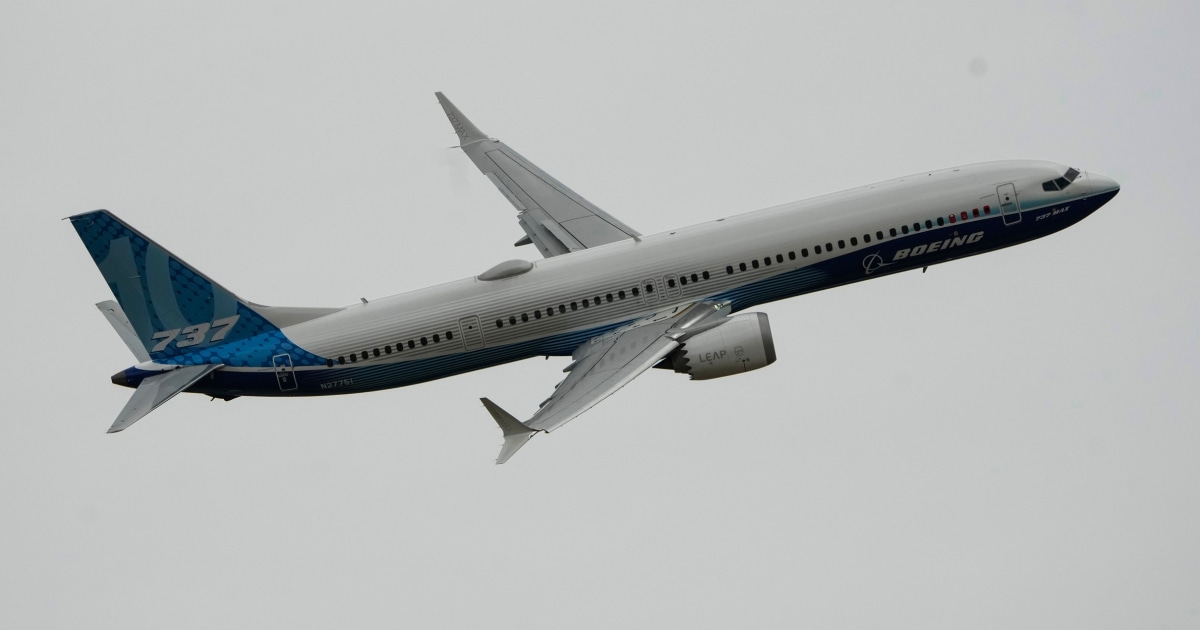
Ten years. That is how long Boeing has been chasing the 737 Max 10 from its debut at the Paris Air Show in 2017 to Tuesday’s FAA certification. The milestone matters less for what it says about the aircraft itself — a stretched fuselage carrying 185 to 210 passengers — and more for what it signals about a company finally clawing its way out of a self-inflicted abyss.
More than 1,555 Max 10s sit on order books worldwide but have yet to roll off a production line. That figure accounts for over 30 percent of Boeing’s entire 737 Max backlog. United Airlines, Delta Air Lines, American Airlines and Ryanair are among the customers waiting. Alaska Airlines added 105 in January. Together, they represent a financial lifeline Boeing has been starved of for far too long.
A Fleet in Pieces, Then a Line Restored
The certification completes the Max family. The Max 7 was cleared for operations in August. With the Max 8 already in service and the Max 9 certified, Boeing now has a full four-model lineup ready to sell — something that has been impossible since the Max 8 crashes killed 346 people in 2018 and 2019.
Those crashes triggered an FAA overhaul of Boeing’s certification process. Oversight tightened. Production caps were imposed. Boeing lost the ability to issue airworthiness certificates for its own planes, a responsibility handed back to regulators. The agency gradually loosened those constraints over the past 18 months, raising production limits and, in July, restoring Boeing’s authority to certify finished 737 Max and 787 aircraft again.
Tuesday’s announcement followed a visit to Boeing’s Everett, Washington plant by Transportation Secretary Sean Duffy, who called the certification a major win for American manufacturing. “To think that it took us almost 10 years to get here,” Duffy said. “We all probably had a little less gray hair 10 years ago.”
Stephanie Pope, Boeing’s commercial airplanes CEO, put it more directly: “It marks another major milestone in our recovery, and unlocks a key to our future growth.”
The Real Game Is Still Airbus
The Max 10 was designed as a direct competitor to Airbus’s A321neo, which entered service in 2017 and has been a runaway success. The A321neo carries more passengers, flies farther without refueling, and already dominates the high-density single-aisle routes that airlines are desperate to fill.
Boeing’s case rests on two claims: fuel efficiency per seat compared to older aircraft, and the sheer volume of orders already committed. Airlines facing soaring jet fuel costs — amplified by the U.S. war with Iran — have every incentive to switch from older 737s and A320s to newer, more efficient variants. The Max 10 offers that upgrade path, provided Boeing can actually build the planes it has promised.
Certification does not guarantee delivery. The FAA’s approval means the design meets safety standards after engineering reviews and thousands of hours of test flights. But Boeing still has to demonstrate it can consistently manufacture each aircraft to that approved design, clearing every single plane before it carries passengers. Quality control remains the company’s open wound.
Who Wins, Who Loses
For airlines, the Max 10 is a delayed opportunity. It offers more seats per flight, which lowers cost per seat on busy routes. For carriers like Ryanair and United, which operate some of the densest narrowbody fleets in the world, that margin improvement matters. The Max 10 typically seats 185 to 210 passengers, compared with 175 to 195 on the Max 9 and 160 to 180 on the Max 8.
For Airbus, the news is mixed. The A321neo still holds the range and payload advantage. But Boeing finishing its Max lineup removes a permanent gap in its product range and gives airlines a credible second source for the segment’s hottest aircraft. Airbus will feel pressure to keep delivering on its own promises and may face tougher negotiations from carriers who can now play one manufacturer against the other.
For Boeing, the Max 10 is existential. First deliveries are expected in 2027. Every month of further delay eats into revenue and erodes the trust it has spent years rebuilding. The company has more orders than it has historically been able to fulfill; the test now is whether it can convert those paper commitments into flying aircraft.
What Happens Next
The Max 10 certification is not the end of Boeing’s reckoning — it is the beginning of a harder phase. Building planes at scale, consistently and safely, is qualitatively different from designing them. The Alaska Airlines door plug incident in 2024 proved that design approval and manufacturing discipline are not the same thing.
The FAA’s decision to restore some certification authority to Boeing is a vote of confidence, but it is conditional confidence. Any new quality failure will reverse that trend immediately. Regulators will be watching production lines, not flight tests.
For the narrowbody market, the Max 10’s entry completes a competitive triangle that has favored Airbus for nearly a decade. Boeing may never regain the dominance it held before 2019. But a fully certified Max family, even arriving late, forces a recalibration of fleet planning, route economics and pricing power across the industry.
Airlines that have been stuck waiting on Max 10 orders for years will now have a timeline. Competitors will have to adjust. And Boeing, for the first time in a long while, will be judged not by what it promises but by what it delivers.