BOJ’s 31-Year High Rate Leaves Yen Weak—And Korea Watching
Japan’s rate hike to 1.25% fails to halt yen depreciation, exposing a policy paradox where higher yields do not command a stronger currency. The move reshapes household finances, intensifies pressure on Korean exporters, and raises the cost of JPY-denominated debt across Asia.
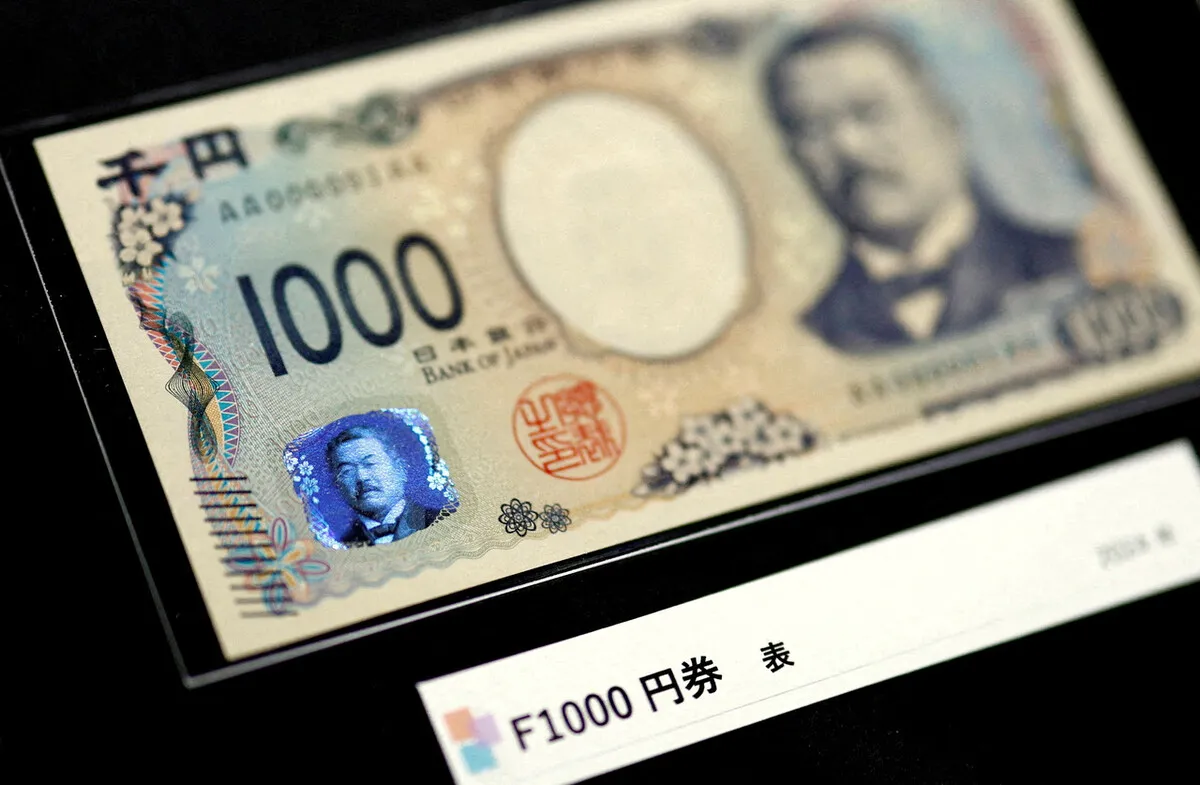
The Rate Hike That Fails to Halt the Yen
The Bank of Japan raised its policy rate to 1.25% on Tuesday, a 31-year high, yet the yen continued to slide. This is not a temporary glitch. It is a signal that the BOJ’s tightening cycle is hitting a wall where conventional interest-rate logic no longer applies.
For the first time since 1992, average deposit rates across Japan’s major banks have topped 0.4%. Mitsubishi UFJ, Mizuho, and SMBC are raising short-term prime lending rates to 2.625%, effective November 2. The era of near-zero rates is over. But the yen’s reaction proves that higher rates alone cannot command a stronger currency when market participants doubt the central bank’s ability to sustain the path.
The divergence between rate hikes and yen weakness exposes a deeper structural issue: global investors are not buying Japanese assets because they expect higher yields to persist. They are selling yen to hedge exposure elsewhere, to fund carry trades in higher-yielding currencies, or because they see the BOJ’s tightening as incremental rather than decisive. Each hike is priced in; each yen sale is not.
The Distributional Shock
The rate increase will not affect all Japanese households equally. According to Mizuho Research Institute, the average two-person household gains about 6,000 yen ($40) annually from higher deposit interest, while asset-heavy retirees in their 60s and 70s could see up to 20,000 yen extra. Meanwhile, younger borrowers face heavier mortgage payments. A 30-year-old with a 40-million-yen floating-rate loan will see monthly installments rise by roughly 5,500 yen once the rate differential kicks in. The net burden for households under 29 is estimated at 22,000 yen per year.
This is a transfer from borrowers to savers, from the young to the old, from those with debt to those with deposits. It is also a test of whether the BOJ can engineer a soft landing without choking domestic consumption. The household sector already carries one of the highest savings rates in advanced economies; pushing more of that savings toward banks may not stimulate lending if corporate demand remains cautious.
The FX Feedback Loop
The yen’s persistence in falling despite rate hikes creates a feedback loop that complicates the BOJ’s mandate. A weaker yen raises import costs, fueling inflation in an economy still trying to achieve the 2% target. Higher import prices squeeze household budgets, especially those with new loan obligations, and could dampen spending. The BOJ faces a trilemma: tighten further to support the yen, risk slowing growth; hold steady and watch inflation re-accelerate; or signal more hiking to anchor expectations, but risk a currency overshoot that still fails to materialize.
Global markets interpret the BOJ’s moves through a different lens. When the Federal Reserve signals cuts, capital flows toward higher-yielding assets like the yen, strengthening it. When the Fed stays hawkish, the yen sells off regardless of BOJ action. The current dynamic suggests the yen’s weakness is more a function of dollar strength and Fed policy than a lack of BOJ credibility. That means the BOJ is fighting a losing battle on its own terms.
Spillovers to Korea
For South Korea, the yen’s depreciation is a double-edged sword. On one hand, a cheaper yen makes Japanese exports more competitive in third markets, from semiconductors to automobiles. This puts direct pressure on Korean manufacturers, particularly Samsung Electronics, SK Hynix, and Hyundai Motor, which compete head-to-head with Japanese rivals in memory chips and electric vehicles. On the other hand, a weaker yen lowers input costs for Korean companies that rely on Japanese components, partially offsetting the competitive hit.
The more immediate impact, however, lies in financial markets. Korean corporations have issued substantial yen-denominated debt, taking advantage of ultra-low borrowing costs before the rate hikes. As Japanese rates climb, rolling over that debt becomes more expensive. According to the Bank of Korea, outstanding yen bonds issued by Korean firms exceeded $30 billion in 2024. A sharp yen appreciation would ease refinancing, but the current trajectory suggests refinancing costs will remain elevated while the currency stays weak.
The BOJ’s stance also influences regional capital flows. A tightening cycle typically attracts foreign investment into Japanese government bonds, but if the yen remains weak, foreign investors face currency risk that eats into yield differentials. That reduces the incentive to buy JGBs, forcing the BOJ to rely more on domestic buyers—a shift that could compress long-term rates and limit further hikes.
The BOJ’s Narrowing Room
The central bank’s policy committee is now walking a line between two risks: premature tightening that crushes recovery, and delayed tightening that entrenches inflation expectations. The 1.25% rate is a milestone, but it is not a turning point. Markets are already pricing in a possible 0.25% hike at the December meeting, and beyond that, uncertainty grows.
What matters is not the next move but the message. If the BOJ signals that the path to 2% is open and conditional on wage growth and core inflation, the yen may stabilize. If it hedges, citing growth concerns, the currency will continue to drift lower. The recent failure to stop yen selling suggests the latter scenario is more likely, at least for now.
What Comes Next
The immediate aftermath will see Japanese banks adjusting their lending and deposit rates, with further retail rate hikes expected in coming months. Households with variable-rate mortgages will feel the pinch starting November. Corporate Japan will reassess its yen-denominated borrowing plans, potentially shifting to dollar or euro funding if the yen remains weak.
Korean policymakers will monitor the yen’s trajectory closely. The Financial Services Commission and Bank of Korea may consider interventions or guidance to Korean banks holding yen exposures. If the yen breaks below 160 against the dollar, as some analysts project, the BoJ could feel pressure to coordinate with the Ministry of Finance to stabilize markets, though such intervention would be temporary.
For investors, the key takeaway is that the BOJ’s rate hikes are not a standalone catalyst for yen strength. Until wage growth accelerates and inflation expectations become anchored, the currency will remain vulnerable to external shocks. The real test will come when the Fed cuts rates and the BOJ continues to tighten—that is when the yield differential finally favors the yen, and when the full impact of Japan’s monetary normalization will be felt across Asia and global bond markets.