Brunson's DMZ Comments Ignite Korean Sovereignty Fire
A US commander's offhand remark about the DMZ boundary has triggered a diplomatic row in Seoul, exposing the fragility of alliance messaging and casting doubt on the pace of wartime command transfer.
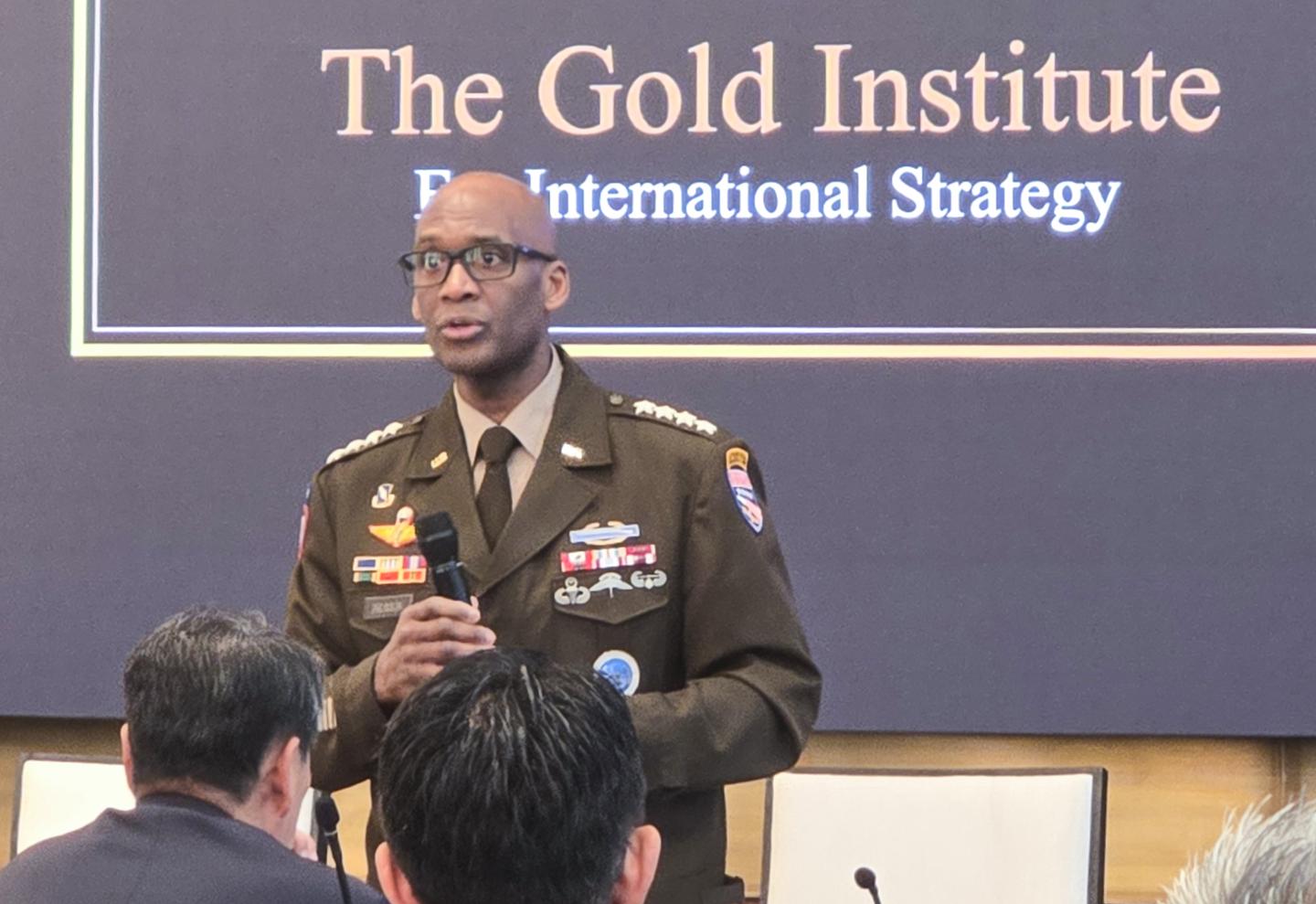
A General’s Offhand Remark, a Sovereignty Shock
General Xavier Brunson did not set out to start a diplomatic crisis. On October 14, he stood before an audience at the Center for Strategic and International Studies — or rather, at a seminar hosted by CSIS-affiliated researchers in Washington — and spoke about the Demilitarized Zone in terms that, taken literally, would redraw the map of South Korea.
Brunson, who serves concurrently as commander of United Nations Command, described the MDL and the two-division zone flanking it. Then he said something that immediately inflamed a deeply sensitive nerve: the Republic of Korea, he stated, begins at the southern wire fence of the DMZ. Not the Military Demarcation Line. Not the northern boundary of South Korean-administered territory. The southern fence — the one that separates the DMZ from South Korean territory proper.
By that framing, Korea does not extend into the DMZ at all. It starts where the fence ends.
The reaction in Seoul was immediate and furious.
Who Got Angry and Why It Matters
Kim Byung-ju, the president’s defense policy adviser and a senior member of the ruling Democratic Party, took to Facebook on October 17 sharing Brunson’s words with a single demand: retract the statement and apologize to the people of South Korea.
His argument was grounded in law, not just emotion. The armistice agreement that ended active fighting in 1953 gave UN Command authority over access to the DMZ and limited civil administrative functions within it. It did not cede sovereignty. South Korea’s own constitution defines its territory as the Korean peninsula and its附属 islands — a definition that encompasses the land between the MDL and the southern wire, the very ground Brunson appeared to place outside Korean jurisdiction.
Jin Sung-jun, chairman of the National Assembly Defense Committee, went further. He called the remark a denial of Korea’s territorial sovereignty and urged Washington to send a clear message that Brunson’s personal view did not reflect US policy — and to take necessary corrective action.
The timing amplified the damage. South Korea has been pushing for a transfer of wartime operational control — OPTRANs — from the US to Seoul before Brunson’s tenure ends. The Yoon administration and now the incoming presidential administration have both signaled they want the transfer completed quickly. Brunson’s comments, read through that lens, looked less like an accidental turn of phrase and more like a signal: perhaps the conditions for transfer are not as ready as Seoul hopes.
The Subtext Everyone Is Reading
Here is what English-language coverage often misses: the DMZ question is not a niche geopolitical quibble. It is one of the most emotionally charged sovereignty issues in Korean politics. The armistice zone sits inside the legal territory of South Korea, yet it is administered by a UN entity commanded by a US general. That arrangement was always understood as a temporary necessity born of an unfinished war. Every statement that appears to legitimize the status quo — that treats the DMZ as anything other than Korean land under temporary military arrangement — strikes at a foundational grievance.
Brunson’s phrasing did exactly that. He said, essentially, that from the UNC perspective, Korea starts at the southern fence because that is where his command responsibility ends. Whether he meant it as a legal statement or a practical observation about administrative boundaries, the effect was the same: it flattened a complex reality into a sentence that sounded like a redrawing of the map.
The South Korean Defense Ministry moved quickly to contain the bleed. On October 18, it issued a statement calling Brunson’s remarks his personal opinion and reaffirming that Korea’s sovereignty over the DMZ is non-negotiable. The message was calibrated — acknowledge the concern without repudiating the general outright.
But calibration does not always calm a fire. The ruling party had already framed this as a sovereignty violation. Once that frame takes hold, nuanced disclaimers look like damage control, not resolution.
What Happens Next
The most immediate consequence is diplomatic friction at a moment when the alliance needs coherence, not friction. North Korea continues to test the peninsula with increased military activity and rhetorical escalation. A public dispute between Seoul and Washington over the meaning of a single sentence — however loaded — gives Pyongyang material to exploit.
The operational control transfer remains the deeper story. Seoul wants it done. Washington has been cautious, citing the need to verify that South Korean forces can effectively execute complex joint operations under wartime command. Brunson’s remarks, whatever his intent, fed the perception in Seoul that US commanders may be signaling reluctance to hand over authority — or at minimum, that they have not thought carefully about how to communicate that position without offending a critical ally.
Political consequences inside South Korea are likely as well. The Democratic Party, now in a position of influence if not full control depending on the exact parliamentary arithmetic, has already used this incident to project toughness on sovereignty — a position that polls well and carries little risk. Expect more statements like Kim Byung-ju’s before this cools.
For Brunson, the path forward is narrow. An apology might placate Seoul but undermine his credibility with American audiences who expect US commanders to speak plainly about strategic realities. Silence risks letting the narrative harden. Washington will likely push for a low-key correction rather than a formal retraction — a clarification that the UNC’s administrative role in the DMZ does not imply any change to Korean sovereignty.
That should resolve the legal question. It may not resolve the political one.
The Real Takeaway
Alliances run on trust as much as treaties. When a senior commander’s words trigger a sovereignty crisis, it is rarely about the words alone. It is about what those words confirm in the minds of the ally hearing them: that Washington still sees the DMZ through a Cold War lens, that the unfinished war has not truly finished for its American architects, and that the timeline Seoul is counting on may not align with what its partners believe is ready.
Brunson did not intend this. But intention is the cheap part of diplomacy. The expensive part is fixing what happens after.
The South Korean government has restated its position on OPTRANs transfer. It will now watch closely to see whether Washington’s actions match its allies’ expectations — or whether the next remark from a US commander will set off another flare.