BYD Banned at US Base in Japan — a Signal to Chinese EV Makers
The US military has banned BYD electric vehicles from a key Okinawa base, extending the China-US tech decoupling from smartphones and telecom gear to the auto industry. It signals deeper barriers ahead for Chinese automakers targeting Western markets.
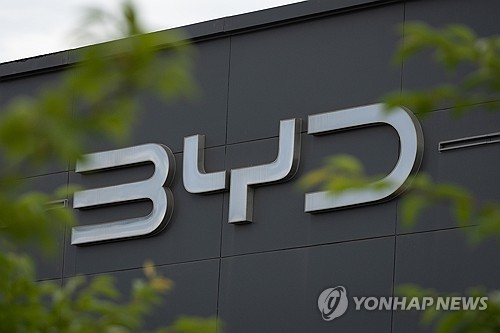
The car is the new smartphone in the US-China tech war
The battlefield between Washington and Beijing is shifting. In 2018, the Pentagon banned Huawei and ZTE smartphones from military installations. Three years later, the same logic reached telecom infrastructure, closing the door on Chinese gear around US bases worldwide. Now the list has a new name: BYD.
On Oct. 26, US forces at Yokosuka and beyond began enforcing a ban on BYD vehicles entering Kadena Air Base in Okinawa. The order covers everything — personally owned cars, contractor fleets, taxis, delivery vans, commercial vehicles. No exceptions. Security guards are posted at every entrance specifically to enforce it.
The rationale mirrors the earlier Huawei ban: vehicles equipped with advanced cameras, lidar, and telemetry sensors could serve as rolling surveillance tools. The Pentagon fears that data captured near sensitive installations might eventually feed back to Chinese state-linked entities. What sounds abstract becomes concrete when you consider what sits at Kadena.
Kadena is the largest US Air Force base overseas and the linchpin of the Pacific security architecture. It hosts the 18th Fighter Wing and functions as the central hub for US deterrence against China, North Korea, and Russia. The base also houses the Typhoon system, the launcher for Tomahawk cruise missiles — weapons with a range of roughly 1,600 kilometers that can strike deep into Chinese territory from western Japan. Every camera and sensor inside or near that perimeter is, in Washington’s assessment, a potential intelligence risk.
This matters far beyond one base in Okinawa.
Why BYD became the flashpoint
BYD was not chosen at random. In June, the US Department of Defense added 188 Chinese companies to its 1260H procurement blacklist, formally designating them as Chinese military companies operating directly or indirectly in the United States. BYD made the list alongside firms long associated with China’s defense industrial base.
That designation carries real consequences. It blocks US government contracts and reinforces the legal framework for excluding BYD products from sensitive environments. But it also signals that the Pentagon now views Chinese automakers through the same lens it once reserved for telecom and electronics firms.
The leap from smartphones to EVs may seem like an expansion of scope, but it follows a coherent strategy. Electric vehicles are, by design, data-collection machines. They stream location, camera feeds, battery diagnostics, and driver behavior to cloud servers. For China-based manufacturers, those servers are likely reachable from Chinese territory. In a scenario where a military base needs to prevent any uncontrolled data exfiltration, a BYD parked outside a hangar is no different from a Huawei phone in a briefing room — the vector changes, the threat model does not.
Who wins, who loses
The immediate winner is the US military’s information-security apparatus, which now has a clear rule it can enforce without ambiguity. The loser is BYD, which has invested heavily in becoming the world’s dominant EV maker and was likely counting on global brand exposure, including in markets where American influence runs deep.
Japanese businesses serving the base — logistics contractors, shuttle operators, vending and supply vendors — also lose. The ban applies to all vehicle types, so local firms using BYD models for fleet operations face replacement costs and scheduling disruptions. Okinawa, where the base dominates the local economy, feels this most acutely.
Chinese automakers broadly face a harder road into Western markets. The precedent is what matters more than the specific ban. If BYD can be excluded from a US base over sensor data, other Chinese EV brands — Geely, NIO, XPeng, SAIC’s MG — can be treated the same way, even without a formal 1260H listing. National security is a flexible category, and once a vehicle is classified as a potential intelligence risk, the burden of proof shifts onto the manufacturer.
What happens next
US officials are already discussing whether to extend the ban to other bases in Okinawa, including Futenma, and potentially to US military installations in South Korea. The logic is identical: any Chinese EV near a sensitive facility is a potential data leak. If the order spreads, it could effectively lock Chinese EVs out of every US base in East Asia — a region where the military footprint is dense and the political sensitivity to China is high.
The 1260H listing creates a lasting obstacle. Companies on the list face ongoing restrictions on US government procurement and increased scrutiny from allies who coordinate on technology security. European and NATO partners have signaled interest in adopting similar frameworks, meaning the Okinawa ban could be an early test case for a broader coalition approach.
For BYD, the strategic question is whether the company will try to comply with data-localization demands — storing vehicle data on servers outside China — or accept that the US market and its allied ecosystems remain closed. Other Chinese automakers watching this development are likely doing the same calculation.
The bigger picture
The BYD ban is a small administrative order with outsized symbolism. It marks the moment when the US-China technology conflict moved from chips and cables to the vehicles driving past base gates. Chinese EVs were supposed to be the country’s next great export success story, riding a wave of cost advantage and battery innovation. The Okinawa decision suggests that success will be harder to achieve than the sales figures alone imply.
National-security reviews do not typically consider market share. They consider control. And in that calculus, a Chinese-owned EV rolling onto a US base in Okinawa is not a commercial product — it is a potential vulnerability.
What happens next depends on whether Washington expands the definition of “sensitive data” in vehicles, and whether Tokyo and Seoul align with the US posture. The ban at Kadena is just the first move. The game is larger than one base.