California Just Turned Solar Into a Consumer Appliance
SB 868 lets Californians plug solar panels into a standard outlet — no rewiring, no contractor, no rooftop. The move could unlock a market hundreds of thousands of renters and homeowners were locked out of.
The Appliance Door Has Opened
For decades, solar in California has meant one thing: a contractor, a roof inspection, a permit, and a bill in the tens of thousands. That model built the state’s solar empire but left most renters, apartment dwellers, and anyone without a suitable roof on the outside looking in.
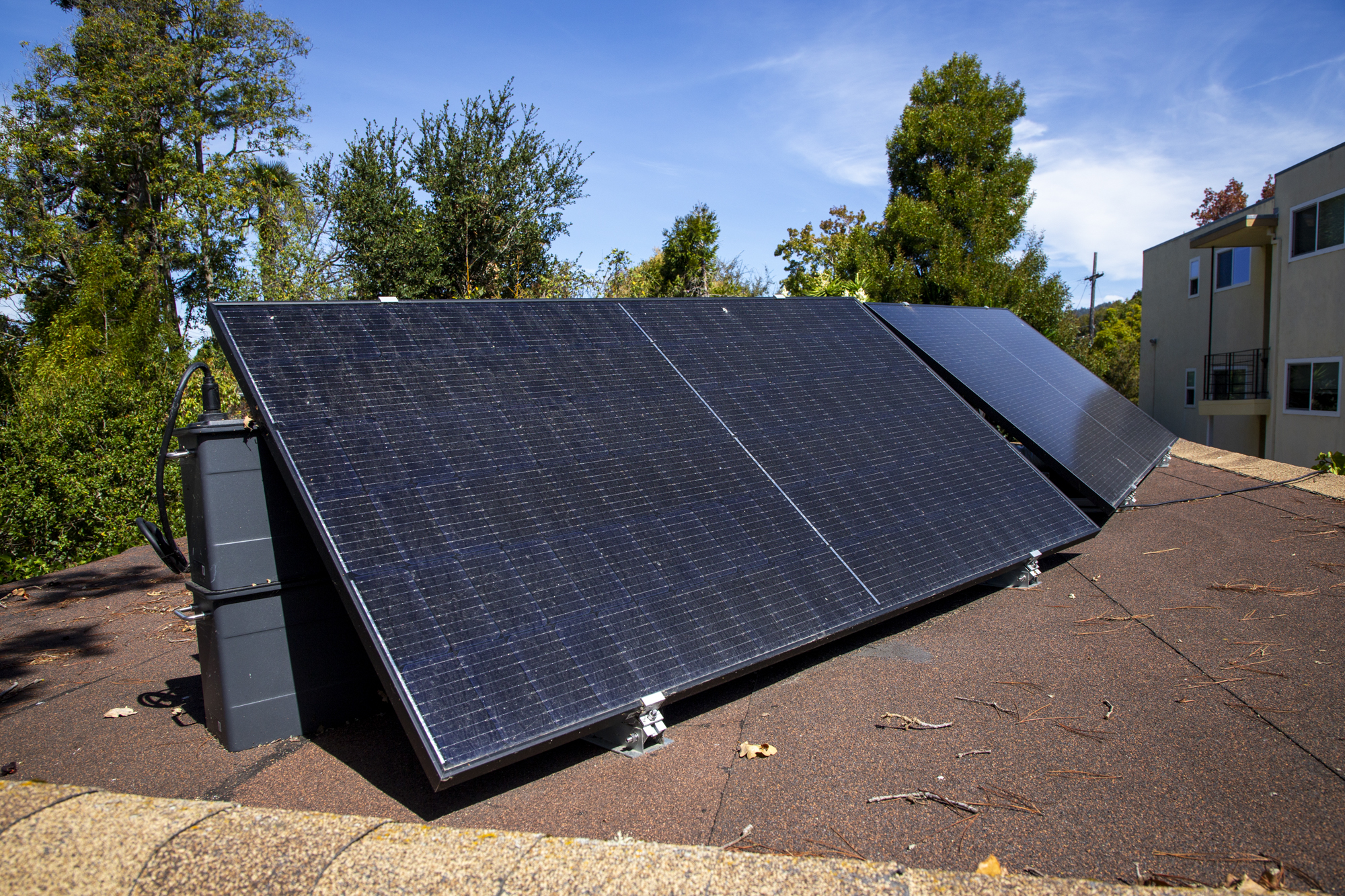
SB 868 changes the math entirely. By legalizing plug-in solar — small, portable systems capped at 1,200 watts that plug directly into a standard wall outlet — California is effectively reclassifying solar from a home improvement project to a consumer appliance. You can buy it, carry it home, and install it yourself. The comparison Del Chiaro of the California Solar & Storage Association makes to a Home Depot rack isn’t casual. It’s the whole point.
This is a category shift, not a tweak.
Who This Actually Helps
The bill’s real beneficiaries aren’t homeowners who already have solar or the cash to install it. They are the people the solar industry has largely ignored: renters, residents of multi-unit buildings, people with shaded or structurally unsuitable roofs, and those priced out of rooftop systems that cost $20,000 to $40,000 before incentives.
A single 400-watt plug-in panel, according to Del Chiaro’s estimate, could offset roughly 14 percent of a typical renter’s annual electricity bill — about $250 in savings per year. That’s enough to run a refrigerator, a modem, and Wi-Fi. A full 1,200-watt system adds enough capacity to power a window air conditioner, which matters enormously as California’s hottest days keep breaking records and cooling costs spiral.
The economics only work if the interconnection process doesn’t eat the savings. Advocates pushed hard against requiring the same permit-and-inspection regime as rooftop solar, arguing that a $100 to $800 PG&E interconnection fee and a multi-day wait would double or triple the effective cost. The bill’s framework sidesteps that by treating these systems more like plug-in appliances than grid-connected generators — though the final regulatory shape will matter enormously in practice.
The Device Gap Is Real
Here’s the catch: no plug-in solar product on the market today meets SB 868’s requirements. The new rules demand UL certification, a 1,200-watt cap per home, standard outlet compatibility, onsite consumption offset, and a anti-islanding feature that shuts the system off if the grid goes down. Current models don’t check those boxes, which means customers are still stuck registering their installations through the old rooftop solar process.
That creates a brief window where advocates can celebrate passage but consumers can’t yet act. Companies are already developing compliant units, and if everything moves smoothly, compatible kits should appear in spring 2027. But product development timelines are never guaranteed, and the gap between legislative victory and retail reality is where many energy policies go to die.
The 2030 Sunset Is a Problem
The bill includes a sunset provision that expires in 2030. That means the entire legal framework for plug-in solar in California has a three-year shelf life unless the Legislature reauthorizes it. For an industry that needs years of stable policy to justify manufacturing investment, that’s an uncomfortable uncertainty.
Cora Stryker of Bright Saver called the sunset and other provisions “the devil in the details” that make the bill “not a home run.” She’s right. The sunset signals political compromise, not conviction. It also creates a deadline pressure that could either accelerate adoption or discourage it — manufacturers may hesitate to bet on a market that could vanish in four years, while advocates will face a recurring fight to keep the program alive.
The annual implementation cost of $200,000 to $500,000 for program administrator positions is modest by state standards. But the political cost of renewing the sunset could be significant, especially if utility lobbying intensifies as plug-in solar scales.
The Utility Question No One Is Answering Yet
The most consequential question about SB 868 isn’t whether the panels work — it’s what happens to the grid and to utility revenue when thousands of renters start generating power from balconies and backyard tents.
California utilities already operate under tight margins, with fixed infrastructure costs spread across a customer base that’s slowly shifting toward self-generation. Rooftop solar already drew criticism from investor-owned utilities for eroding rate base. Plug-in solar, which reaches customers rooftop solar never could, accelerates that trend. PG&E and its peers will watch this closely.
There’s also the grid stability question. Anti-islanding protection is required by the bill, which is the right safeguard. But distributed generation at scale — even at 1,200 watts per unit — introduces variability that grid operators must manage. California’s high solar penetration already creates duck-curve challenges in the afternoons. More behind-the-meter generation, even from small sources, adds to that dynamic.
Utilities haven’t publicly positioned themselves on SB 868 in the reporting available. Their silence is itself a signal.
The National Ripple
California isn’t alone. Eight states now have balcony solar legislation on the books, including Utah, Colorado, Virginia, and Maine. Bills in New York and New Jersey are pending gubernatorial signature. Germany has been doing this for years — millions of balcony panels across the country — and its experience suggests the demand side is enormous when you remove the installation barrier.
What California does next will shape the rest of the country. The state’s market is large enough to justify product development that smaller states can’t. If California’s plug-in solar standards become a de facto national benchmark — the way California’s vehicle emissions standards often do — then the devices coming to market here will set the rules everywhere.
The potential is massive. Advocates have floated estimates in the billions for the consumer appliance market this could unlock. Whether that materializes depends on product availability, utility response, federal policy continuity, and whether the 2030 sunset becomes a permanent feature or a temporary compromise.
What Happens Next
If Newsom signs SB 868 — which his office’s track record suggests he will — the clock starts on a new chapter in California energy policy. Compatible kits should reach consumers by spring 2027. Renters who’ve been priced out of solar for decades will finally have a path in. Landlords will need to decide whether to allow balcony installations. Utilities will recalibrate their forecasts. And the Legislature will face a renewal fight in 2029 that will test whether plug-in solar is a permanent fixture or a pilot program that ran its course.
The technology was always there. The barriers were legal, not engineering. SB 868 removes the legal ones. What happens next depends on whether the market and the politics can sustain what the law now permits.