Canada Fires Back: How the $20 Billion Tariff War Reshapes North America
Canada's retaliatory tariffs on American goods mark the sharpest escalation yet in the US-Canada trade dispute — and the ripple effects will reach far beyond the 49th parallel.
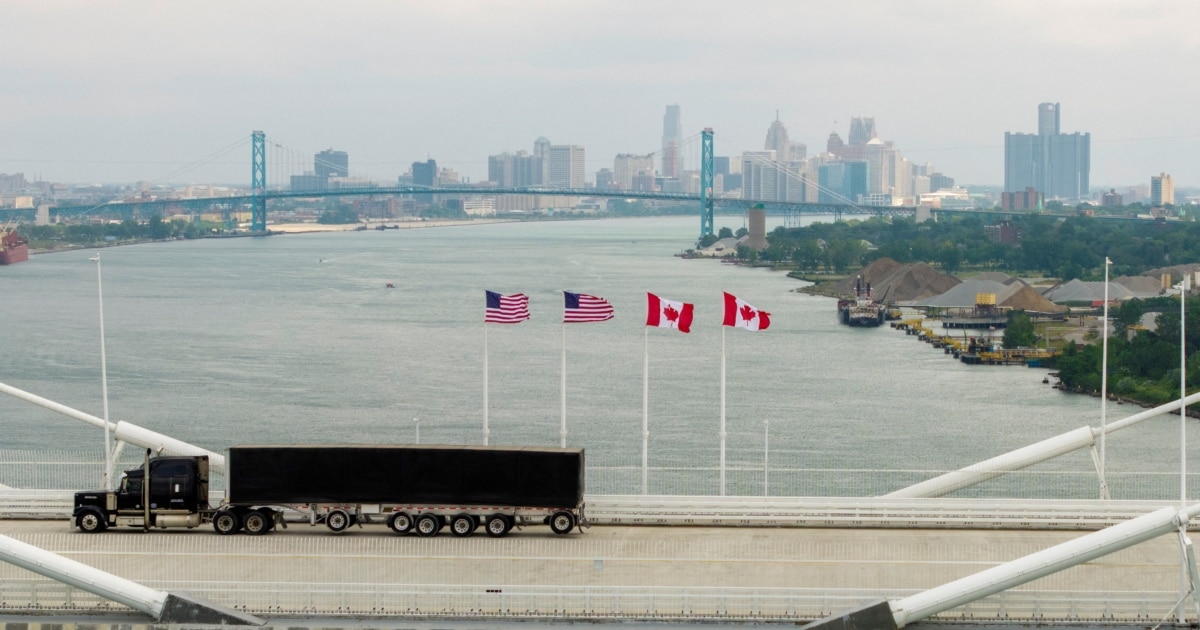
Canada Just Made the US-Canada Trade War Real
Canada on the 25th announced it will levy tariffs of up to 50 percent on more than $20 billion worth of American goods, starting September 8. The move is a direct counterpunch to President Donald Trump’s tariff cascade that began on the 22nd, when the US slapped 50 percent duties on a comparable sweep of Canadian exports — wine, cement, dairy, furniture, sports equipment, and clothing.
The timing is significant. Trade negotiations between the two countries broke down without agreement on the 21st after months of talks. Within 48 hours of that collapse, both sides had escalated to near-maximum tariff levels on multi-billion-dollar product categories. This is no longer a bargaining posturing exercise. It is an active trade war between the two largest trading partners on Earth.
The Targeted Nature of Canada’s Response Is the Story
Finance Minister François-Philippe Champagne called the response a “proportional and targeted strategic approach.” That phrasing matters. Canada is not randomly punishing American exporters. It is hitting sectors where political pressure can be redirected onto US lawmakers and industries that depend on Canadian supply chains.
The affected categories — steel, dairy, home appliances, agricultural machinery, paper, and electronics — are not abstract. They are concentrated in states that have political sway over trade policy. Steel hits the Rust Belt. Dairy and agricultural equipment touch the Midwest. Electronics and appliances span multiple congressional districts. The targeting is designed to make the pain politically legible, not just economically real.
What Happens Next in the Auto Sector
The auto industry is the canary. Trump announced on the 24th that starting in January, the US will impose 50 percent tariffs on Canadian-made automobiles and auto parts, on top of existing steel duties. Canada has not yet publicly listed auto parts in its retaliation package, but the signal is clear: the next round will almost certainly include them.
North American vehicle production is deeply integrated. A single car crosses the border an average of eight times during assembly. Parts sourced in Canada feed plants in Michigan, Ohio, and Indiana. US parts feed plants in Ontario and Quebec. Tariffs at 50 percent do not merely raise costs — they break the architecture that made North American auto manufacturing competitive against Asia and Europe.
Automakers in both countries are now facing a choice between absorbing costs that could exceed $3,000 per vehicle, relocating supply lines, or passing prices to consumers who are already strained by inflation. No one wins. But the political pressure will flow differently in each country, and that asymmetry is where the next rounds of negotiation — or escalation — will be fought.
Carney Draws a Line
Prime Minister Mark Carney made his position unmistakable on the 24th. He rejected the framing of Canada as a subordinate to the United States, saying the government cannot accept negotiations built on that premise. His message was diplomatic in tone but firm in substance: Canada wants an agreement that benefits both sides, but only one that respects sovereignty and independence.
That is a rhetorical shift. Previous Canadian governments have often hedged, leaving room for compromise on the appearance of deference. Carney is closing that door. The implication is that Canada will absorb economic pain rather than concede political subordination, and that changes the calculus for US negotiators who may have counted on Canadian flexibility.
Trump’s Theatrical Escalation
The trade dimensions are serious. The theatrical ones are alarming. On the 25th, Trump took to Truth Social to propose renaming Lake Ontario — which forms part of the border between Ontario and New York — as “America Lake.” He cited the same logic he used last year when he renamed the Gulf of Mexico as the “America Gulf” by executive order.
This is not policy. It is spectacle. But spectacle shapes markets and signals intent. The naming campaign reframes a shared geographic feature as a unilateral American possession, which in turn normalizes a rhetoric of territorial dominance. For Canadian business leaders and policymakers, the message is unambiguous: economic leverage will be paired with symbolic assertions of sovereignty. The border is not just a line on a map — it is a political frontier being redrawn in real time.
Who Loses First
American consumers and manufacturers lose immediately through higher input costs and reduced export volume. Canadian consumers and manufacturers lose through retaliation-driven price increases and disrupted supply chains. The difference is that Canada’s economy is far more trade-dependent — roughly 30 percent of GDP flows through exports compared with roughly 12 percent in the US — which means the proportional pain is deeper north of the border. But depth of pain does not equal political vulnerability. Canada’s targets are chosen to maximize US political exposure, not to minimize Canadian suffering.
American farmers are already feeling the squeeze from lost Canadian demand. Auto plants are calculating January cost scenarios. Steel producers face dual pressures: cheaper imported steel from other markets, and retaliatory barriers that reduce their access to Canadian buyers.
The Signal to Other Partners
This is the part the world is watching. Mexico, the European Union, Japan, and South Korea are all US trading partners navigating their own tariff exposures. Canada’s response sends a clear signal: retaliation can be calibrated, proportional, and politically targeted without triggering a spiral that neither side can control. Canada demonstrated that it could match the US dollar-for-dollar while keeping its language measured and its product lists deliberate.
Other partners are likely to study the Canadian playbook — not necessarily to replicate it, but to understand that the era of unconditional tariff acceptance is over. The question for Washington is whether it wants to set a precedent of symmetric retaliation or risk a cascade of reciprocal measures that erode the entire framework of American trade leverage.
The Numbers Behind the Narrative
$20 billion: the approximate value of US goods hit by Canadian tariffs — a substantial but not crippling share of the roughly $700 billion in annual US exports to Canada. The US hit a comparable figure going the other direction. Both sides have enough at stake to feel the pain, but not enough to be destroyed by it. That is precisely why this is dangerous: neither side has an exit ramp that looks like victory.
50 percent: the top tariff rate on both sides, applied to automobiles, auto parts, and steel by the US, and to an equivalent range of Canadian imports by Canada. Rates that high do not merely tax trade — they extinguish it for marginal producers.
September 8 and January: the two key implementation dates. Canadian tariffs take effect in early September. US auto and steel tariffs take effect in January, giving firms roughly four months to adjust — or to concede that adjustment is impossible.
What Comes Next
Trade wars of this scale do not resolve themselves through logic. They resolve through political cost calculations. If Canadian retaliation lands on enough US constituencies before the next election cycle, the pressure for a deal increases. If the US believes Canadian concessions are forthcoming under sustained pressure, it will wait. Carney’s sovereignty framing makes the second scenario harder for Washington to sustain without appearing to bully a sovereign ally.
Supply chains will not reset quickly. The auto sector alone employs hundreds of thousands on both sides of the border. Any meaningful reconfiguration would take years and tens of billions in investment. That inertia is a form of leverage — for both sides, and for everyone watching from Brussels to Seoul.
The trade war between the US and Canada is no longer a dispute about tariffs. It is a test of whether the two countries can coexist as economic equals or whether one will simply dictate terms. Canada just answered that question with a tariff schedule.