Canada's Tariff Strike Is Aimed at Swing States, Not Just Factories
Canada's dollar-for-dollar retaliatory tariffs are calibrated to hit Republican voters in midterm swing states — Wisconsin cheese, Maine lobster, Kentucky washing machines. The auto industry's cross-border supply chain is the real pressure point.
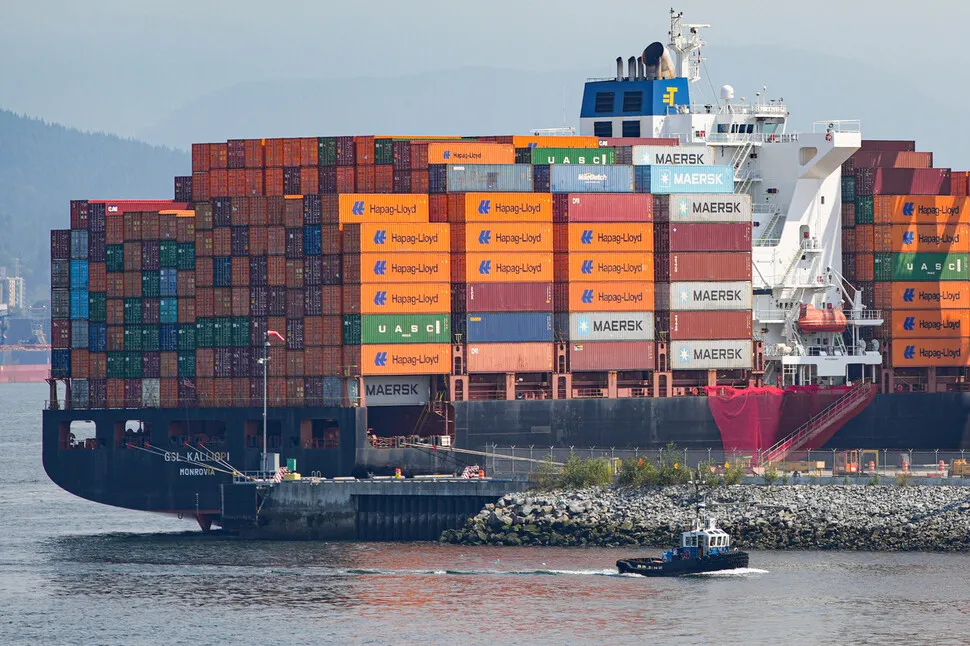
Canada isn’t just hitting back. It’s aiming for the map.
Ottawa announced on September 25 that starting September 8, it will slap 15, 25, and 50 percent tariffs on $27.6 billion in US goods — matching dollar for dollar and percentage point for percentage point the 50 percent tariff Washington imposed on Canadian imports on September 22. But the real story isn’t the arithmetic. It’s the anatomy.
The product selection reads like a midterm election map drawn by someone who knows how Congress works. Wisconsin’s processed cheese. Maine’s seafood. Kentucky’s washing machines and dryers, produced at a major General Electric facility. These aren’t random choices. They are calibrated pressure points.
Melanie Joly, Canada’s industry minister, said plainly at the press conference that the list was shaped to target “certain states” and called the response “smart and strategic.” A senior official later walked it back to AP, saying the political calculus was secondary. Both versions can be true. Ottawa wanted the world to know it was being surgical without conceding it was being political.
Why swing states matter more than supply chains right now
The US midterm cycle turns on roughly 40 competitive districts and a handful of Senate races. In 2026, the map tilts Republican, which is exactly why the political stakes are higher than in a normal year. A tariff that raises the price of cheese in Green Bay or lobster in Portland hits not just consumers but lawmakers who need those voters.
Susan Collins, the Republican senator from Maine facing reelection, was already publicly pushing back. She flagged that Maine’s blueberries, potatoes, lobster, and timber flow into Canada for processing and then re-enter the US — a loop that makes any tariff on Canadian-origin goods a boomerang. The cost lands on American grocers and home builders. That’s a recipe for political pain that travels fast.
The logic is the same in Wisconsin and Kentucky. Processed cheese is a symbolic staple of Wisconsin identity, and GE Appliances in LaGrange, Kentucky, is one of the state’s largest single employers. If a tariff makes those products more expensive in US stores, the political message reaches voters whether Ottawa intended it or not.
The auto industry is already sweating
Here is what the diplomatic language doesn’t cover: the North American auto supply chain runs so deeply through the border that almost no vehicle crosses it twice without touching both countries at least once. Parts move across the US-Canada border an average of six times before a car is finished. That is the structural reality the tariffs are pressing against.
Toyota and Honda have been the canaries in this mine for years. Toyota’s biggest North American plant is in Cambridge, Ontario, and its Indiana plant in Greenville anchors a cluster of parts suppliers that also straddle the border. Honda’s Oxford, Ohio, and Lincoln, Alabama, engines and transmissions feed plants in both countries. When Ottawa taxes US-made auto parts, appliances, and industrial machinery, it is not just raising costs — it is slowing a production rhythm that has been tuned for decades to run at the speed of just-in-time delivery.
The numbers matter. The US auto industry imports roughly $100 billion in auto parts from Canada annually, according to industry estimates. A 15 to 50 percent tariff on even a fraction of that adds billions in cost to vehicles assembled in Michigan, Ohio, Alabama, and Indiana — states where Republican lawmakers have a lot to lose in a midterm cycle.
The ripple effect is not abstract. An extra $2,000 to $3,000 per vehicle from tariff-driven parts costs translates directly into higher prices at dealerships and lower margins for automakers trying to compete in a market already struggling with elevated interest rates. That is a political problem for whoever sits in the state delegations that hold swing seats.
The legal angle Trump may not have expected
The Trump administration is leaning on Section 338 of the Tariff Act of 1930 to justify the current tariffs. That is a statute last used in practice nearly a century ago. There is virtually no case law, no regulatory framework, and no clear standard for how courts should review it. The Supreme Court already struck down Trump’s reciprocal tariff program in February. A new legal challenge under Section 338 is essentially untested ground, and the Court of International Trade is likely to see its docket fill up.
That creates uncertainty on two fronts. First, companies cannot plan inventory or pricing when the legal basis for a tariff is this thin. Second, if the courts block or narrow the authority, the administration faces a choice: backtrack and lose credibility, or double down and risk further escalation. Either path is politically costly in a midterm year.
What Ottawa can still pull
So far, Canada has responded with tariffs. But the escalation ladder goes higher. Doug Ford, Ontario’s premier, warned that Canada could cut off electricity exports to the US. Ontario sends millions of megawatt-hours of power south each year, much of it to states in the Northeast and Midwest that are themselves politically sensitive. Critical minerals — lithium, cobalt, nickel — are another lever. Canada is one of the few reliable non-China sources for the raw materials underpinning the electric vehicle transition.
Mark Carney, Canada’s prime minister, signaled that nothing is off the table. That is a polite way of saying Ottawa is holding options it has not yet opened. If the dispute drags into late 2026, those options become real, and the cost to US states that rely on Canadian power and minerals rises with them.
Who wins, who loses, what’s next
Canada wins by making the dispute political rather than purely economic. It shifts the conversation from trade deficits to voter wallets. The US auto industry loses first, because the supply chain is the most exposed artery. Swing-state Republicans lose second, because their constituencies feel the price increases. The Trump administration loses legitimacy third, because a tariff regime built on a century-old statute with no modern precedent is harder to defend in court and in campaigns.
What happens next depends on timing. If the legal challenges move quickly, Ottawa may have leverage to negotiate a narrower deal. If they stall, the tariff regime hardens, and Canada has already shown it is willing to widen the fight. Either way, the North American auto sector is running on a timeline that has nothing to do with election cycles and everything to do with parts shipments — and that mismatch is where the next crisis lives.