Canada's 50% tariffs are a warning shot across global supply chains
Canada's dollar-for-dollar tariff retaliation against the US is the most aggressive trade move by Washington's neighbor in decades — and it threatens to unravel thirty years of North American manufacturing integration in ways that reach far beyond the border.
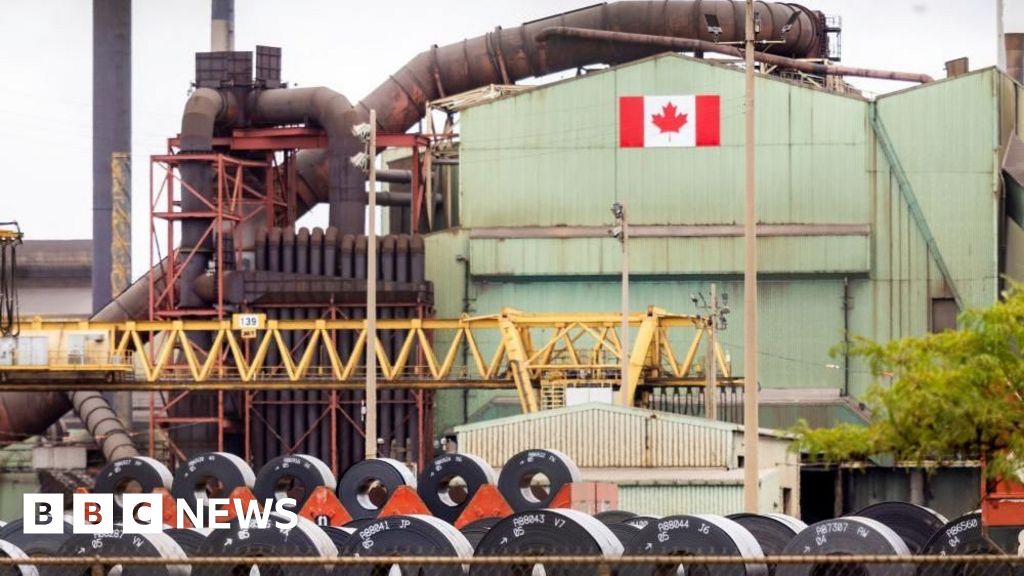
The tariff list tells a story the rhetoric doesn’t
Canada’s Commerce Minister announced roughly 900 American products now face retaliatory levies starting 8 September. The headline number — tariffs as high as 50% — grabs attention, but the real signal is in the selection criteria.
Canadian officials said they targeted goods consumers and businesses could source from elsewhere: Korean steel, European furniture, Thai seafood. This is not a blind swing. It is a carefully calibrated calculation that a portion of the pain can be outsourced to third countries.
That detail matters because it means Canada’s tariff list is simultaneously a bargaining chip and a preview of supply chain re-routing. The question is whether American exporters can survive long enough to force a compromise, or whether the damage becomes structural.
Thirty years of integration on the chopping block
The US, Canada, and Mexico have spent three decades building one of the world’s most deeply integrated manufacturing ecosystems. A single vehicle crosses the border roughly seven times during production. Steel mills in Ontario feed foundries in Michigan, which supply stamping plants in Ontario, which ship bodies to assembly lines in Michigan and Illinois, which return parts north for final installation.
This is not theoretical. The North American auto sector alone accounts for roughly 15 million jobs across the three countries. The USMCA was designed to lock in exactly this kind of interdependence — not out of idealism but because geographic proximity and decades of investment created cost advantages no one could easily replicate.
Trump has already signaled a 50% tariff on Canadian automobiles starting 1 January. Carney called it an attempt to destroy key Canadian industries. Champagne’s counter-tariffs on steel and aluminum — raised to 50% — are a direct answer aimed at the inputs those auto plants depend on.
What this creates is a feedback loop: US tariffs on Canadian autos push Canada to tariff US steel, which raises costs for US automakers, which justifies further US protectionism. Neither side is pulling punches. The loop tightens every week.
Who wins and who loses — and it isn’t who you expect
American farmers are already in the crosshairs. The Canadian tariff list includes agricultural products, though the source text notes honey and dairy among the higher-tariff items. But the more significant damage may flow south through industrial inputs. US steel producers who counted on Canadian demand face a 50% wall. US furniture makers, appliance manufacturers, and clothing exporters lose a market that absorbed $356 billion in Canadian purchases last year — more than China, Japan, and South Korea combined.
Canadian businesses lose access to their largest supplier for intermediate goods. American consumers will face higher prices on everything from aluminum siding to kitchen appliances. But the biggest losers may be manufacturers on both sides who built their cost structures around seamless border crossings. Every new tariff layer adds friction that no efficiency improvement can fully offset.
Mexico’s President Claudia Sheinbaum sent Economy Secretary Marcelo Ebrard to Washington for emergency talks precisely because she sees the domino effect. If Canada and the US tear apart their trade relationship, the USMCA unravels — and Mexico, the third pillar of North American manufacturing, faces isolation from both neighbors.
The global routing question
Here is what English-language coverage of this dispute consistently underplays: the signal traveling beyond North America.
When Canada deliberately targets US goods that can be replaced by Korean, European, or Southeast Asian supply, it is sending procurement signals to the world. Companies that previously sourced from Ohio and Pennsylvania will begin qualifying suppliers in Busan and Bilbao. Once those qualification processes start — and they take months, often years — they do not reverse quickly even if tariffs fall.
The same logic applies to US exporters facing Canadian barriers. American firms that lose market share in Canada to third-country competitors will look for other markets or restructure entirely. This is not a temporary disruption. It is the early stage of a permanent realignment.
For global trade routing, Canada’s tariff strategy looks a lot like the playbook India and Brazil have used in their own disputes with the US: identify the pain points, target politically sensitive export categories, and accelerate diversification simultaneously. The difference is that Canada is doing this against its largest trading partner — and with a product mix that overlaps heavily with other US trade disputes across Asia and Europe.
The political math on both sides
Polls show majority Canadian support for the government’s hard line. The Conservative opposition wants the full text of the collapsed draft deal released — a sign that even Canada’s political opponents see the negotiation process as damaged, not just the outcome. Doug Ford’s shift from calling Trump a loser to saying he wants a deal on CNN suggests provincial politicians feel the pressure acutely, even as they support the federal posture.
On the US side, Trump’s Truth Social posts — including the theatrical threat to rename Lake Ontario as Lake America — are performative politics. They have zero policy substance and maximum domestic audience. But the policy substance is real: the 50% auto tariff proposal is concrete, and it targets the sector most dependent on cross-border integration.
The White House statement calling Canada’s demands unreasonable follows the same script Trump has used with every major trade partner this term: frame concession as weakness, frame escalation as strength, and leave the details to the next round.
What happens next
Several trajectories are plausible.
The most optimistic: both sides resume talks after the initial tariff wave lands and the economic shock forces compromise. Champagne has left the door open. Ford has signaled willingness. Trump has never shown aversion to a deal that can be framed as a win.
The more likely scenario: tariffs take effect in phases, with partial de-escalation around specific sectors — autos, energy, dairy — while broader disputes linger. Canada would continue rerouting procurement. The US would seek new export markets. Both economies absorb higher costs.
The worst case: the 50% auto tariff triggers a full breakdown of USMCA cooperation, Mexican intervention fails, and North American manufacturing fragments into three competing blocs — one centered on US domestic production, one on Canadian resource exports, and one on Mexican assembly with Asian inputs.
None of these scenarios produce winners in the traditional sense. But the global trade system loses most in the fragmentation scenario, because North America has been the single most efficient large-market manufacturing zone on Earth. Breaking it apart does not just hurt the US and Canada. It sends shockwaves through every supply chain that depended on the assumption that the border between them was the calmest in the world.
The calendars are ticking. September 8 brings the first wave. January 1 brings the auto tariff threat. Between now and then, every day of silence is a day companies start looking for alternatives — and alternatives, once found, are hard to unfind.