Canadas Electricity Playbook Is a New Kind of Trade Weapon
Canada is threatening to cut power and critical mineral exports to the US in retaliation for Trump's 50% auto and steel tariffs. The strategy targets American states — and could rewrite North American industrial policy.
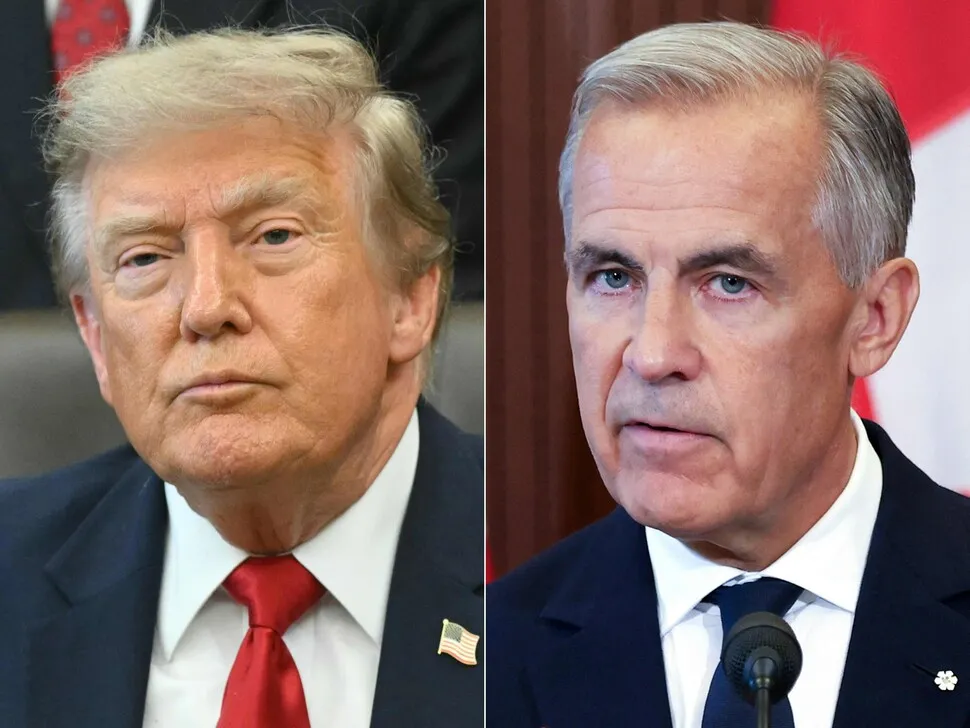
The tariff was the headline. The real weapon is on the grid.
Donald Trump announced on Truth Social that starting January 1, 2027, the United States will impose a 50 percent tariff on all Canadian automobiles, trucks, auto parts, and steel. He did not stop there. He called Canada the most difficult country to deal with, declared that Washington no longer needs Ottawa, and mocked Prime Minister Mark Carney as a mere governor. The language was escalatory by design.
But the response from Canada was not the usual diplomatic deflection. It was a direct threat to American infrastructure.
Ontario Premier Doug Ford told AP that Canada has every option ready, including a complete cutoff of electricity flowing from Ontario and Quebec into the US Midwest — particularly Michigan and Minnesota — and a halt on critical mineral exports. If Trump targets Canadian oil or potash, Ford said, Canada will strike back with equal force. The 76 percent of Canadians who supported halting trade negotiations, according to an Angus Reid poll released the same day, are not just backing their government. They are backing a strategy that hits Americans where it hurts most: at home.
Why the power grid is Canadas nuclear option
Canada exports roughly 100 terawatt-hours of electricity to the United States annually, nearly all of it from Quebec and Ontario. The majority flows south into the Northeast corridor and the Great Lakes region. Michigan draws significant power from Ontario across the Detroit River. Minnesota receives electricity from Manitoba and Saskatchewan through northern transmission lines, but also has interconnections with Ontario. A coordinated shutdown would not be symbolic. It would be immediate and physical.
The US has no quick alternative. Building new transmission lines takes years. Restarting idled coal or gas capacity faces permitting delays and environmental review. For households and factories in the Midwest and Northeast, a Canadian power cutoff would translate into blackouts, rolling brownouts, and spike-pricing within weeks, not months.
Ford invoked Ronald Reagan when he said the former president would be retching in his portrait if he saw the current state of affairs. It was a pointed choice. Reagan championed free trade and signed the original US-Canada Free Trade Agreement in 1988. The irony is not lost on anyone in Ottawa. But Ford was not making a historical argument. He was making a tactical one: even a Republican icon would find Trump’s approach indefensible, and the American public may agree.
Critical minerals change the calculus
Electricity is the lever. Critical minerals are the insurance policy.
Canada is one of the few stable, treaty-bound sources of rare earth elements, uranium, lithium, and graphite that the United States needs for defense manufacturing and the green energy transition. The Pentagon relies on Canadian supplies for missile guidance systems, radar components, and nuclear submarines. The Department of Energy counts on Canadian uranium for reactor fuel. Any disruption to these flows would be felt in defense contracting offices in Washington and in battery factories in the Rust Belt.
The AP noted that these minerals matter deeply to US security and manufacturing. That is an understatement. The US has spent billions trying to onshore critical mineral processing since 2022, and Canada remains the only ally with the geology, the permits, and the proximity to deliver at scale. Cutting off those exports would force American automakers and defense contractors to choose between production delays and sourcing from China-aligned suppliers. Neither is acceptable to the Trump administration, which has itself been pushing tariff walls against Chinese goods.
This contradiction is exactly where Canada is aiming.
The long game: beyond the midterms, beyond the term
Bloomberg reported that Canada’s cabinet is preparing a long-term support package for hit industries, designed to outlast the current dispute and possibly the Trump presidency itself. The timeline matters. The November 2026 midterms could shift control of Congress. If Democrats regain seats in Michigan, Minnesota, Wisconsin, or Massachusetts — states that receive Canadian electricity — pressure on the White House will grow from within the legislative branch, not just from provincial governments.
Canada is also counting on public opinion. The 76 percent approval rating for the trade pause is not a temporary spike. It reflects a broad consensus that caving to American pressure is politically suicidal. Carney, who took office in 2025 after Justin Trudeau’s departure, has staked his leadership on this hard line. A negotiated retreat would look like weakness. There is no path back to the old normal without a visible win for Ottawa.
Who wins, who loses, what happens next
The auto industry loses first. American plants in Michigan, Ohio, and Illinois that rely on Canadian parts and cross-border assembly lines will face a 50 percent tariff wall overnight. Those plants already operate on thin margins. The tariff does not just raise costs. It makes the entire North American production model uneconomic. Some capacity will relocate. Some will idle. The question is where and how fast.
American consumers lose second. Higher prices on vehicles and steel flow directly into retail. Electricity shortages flow into utility bills. The Midwest and Northeast feel both.
Canada loses third, but it is positioned to absorb the blow better than its trading partner expects. The government’s support package, the public mandate, and the structural leverage of energy and minerals give Ottawa room to endure. The real risk for Canada is not the tariff — it is the precedent. If the US can unilaterally redefine a 40-year alliance as a subordinate relationship, no trade deal is secure.
The next move belongs to Trump. He can escalate further and risk an energy crisis on his own soil. He can offer a carve-out for Canada and look flexible. Or he can let the tariffs stand and watch the fallout play out across midterm districts that already voted him in. Whatever he chooses, the old assumption that Canada is the junior partner in the relationship is gone.
The grid remembers.