The Charlie Kirk Trial Will Define Political Violence Law
A Utah judge faces a landmark decision on whether Tyler Robinson stands trial for killing conservative activist Charlie Kirk. The ruling could reshape how the world understands political assassination law.
A Ruling That Could Echo Beyond America’s Borders
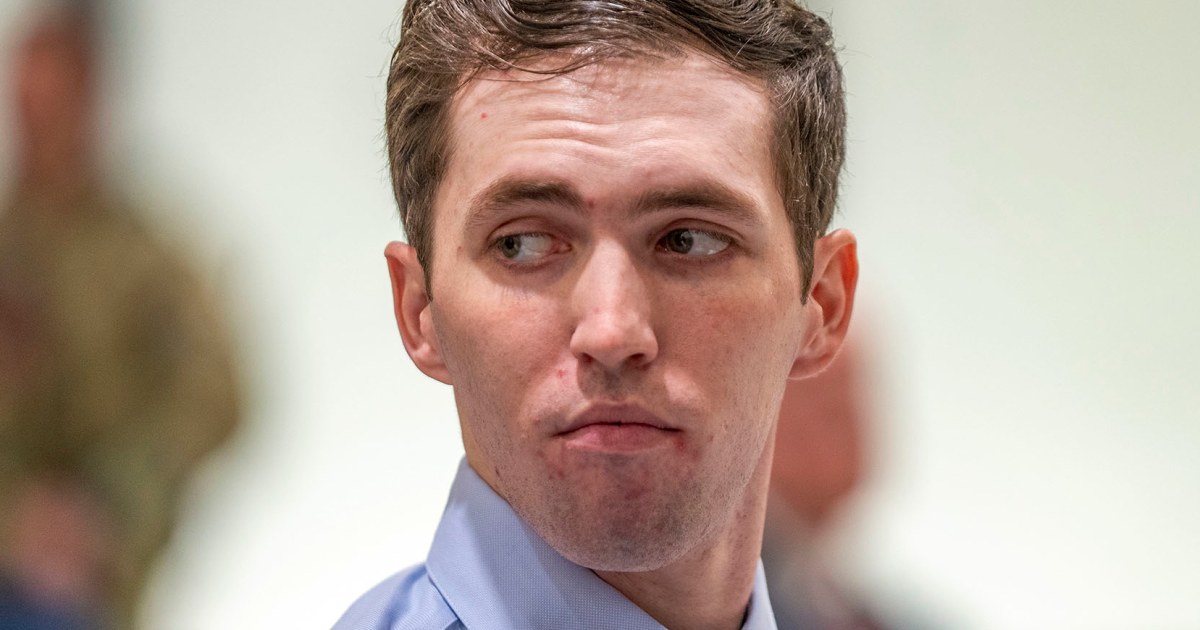
A Utah judge is about to make a decision that extends far beyond courtroom procedure. On Tuesday, District Judge Tony Graf must determine whether there is sufficient evidence to proceed with a trial against Tyler Robinson, the 23-year-old man accused of fatally shooting Charlie Kirk at Utah Valley University on September 10 of last year.
Kirk, the 31-year-old co-founder of Turning Point USA and a close ally of President Donald Trump, was killed addressing a crowd of approximately 3,000 people. The assassination sent shockwaves through American politics. But the gravity of Judge Graf’s upcoming ruling lies not only in its domestic consequences — it carries implications that will reverberate through legal systems and political discourse worldwide.
The Evidence: A Pattern of Premeditation
The state’s case rests on a carefully reconstructed timeline. According to testimony from David Hull, a former State Bureau of Investigation agent, Robinson arrived at the university hours before the shooting, purchased a meal at a campus Chick-fil-A, and made contact with representatives for Turning Point USA.
He then changed outfits and took position on a rooftop overlooking the amphitheater where Kirk was speaking. Surveillance footage shown in court captured Robinson crouching on the roof. After the fatal shot was fired, the video shows him darting across the roof, dropping to ground level, and sprinting away on foot.
The physical evidence is damning. Investigators recovered a bolt-action rifle wrapped in a towel in a wooded area near the amphitheater. DNA from both Robinson and his former partner, Lance Twiggs, was found on the towel. The bullet casings bore inscriptions that left little ambiguity about intent: “Hey Fascist! Catch!” and “If you Read This, You are GAY.”
Perhaps most incriminating is the testimony of Twiggs, Robinson’s former romantic partner and roommate. In a recorded interview played in court, Twiggs recounted that Robinson paced nervously after the shooting and admitted, “I wish I hadn’t done it.” Robinson told investigators he intended to confess to his parents or turn himself in — and he did exactly that the following day.
The Defense: Attacking Motive, Not Method
Robinson’s defense team has adopted an unusual strategy. Rather than offering an alternative theory about who killed Kirk, they are attacking the prosecution’s ability to prove motive — the very element that distinguishes this case from an act of random violence.
Defense attorney Richard Novak emphasized that there is no testimony that Robinson had ever discussed Charlie Kirk before the shooting, never spoken about him, and never heard anything he said. Robinson and Twiggs had originally bonded over video games, Novak noted, with no apparent political connection to their shared interests.
Defense attorney Staci Visser also challenged Utah’s legal aggravator regarding risk of death to others. She argued that because there was only one shot, one bullet, and one victim, the statutory enhancement did not apply.
This is a legally precarious position. Prosecutor Ryan McBride countered during closing arguments that shooting a rifle into a crowd of 3,000 people inherently creates great risk of death to everyone present — regardless of how many bullets were fired.
Why This Matters Worldwide
The Charlie Kirk assassination case forces the world to confront uncomfortable questions about political violence that extend well beyond American jurisprudence.
In the United Kingdom, where debates about protest law and political assembly have intensified following recent demonstrations, the Robinson case offers a cautionary precedent. British legal scholars are watching closely to see how American courts define the line between political grievance and criminal conspiracy when the target is a political activist rather than a government official.
Germany, which has struggled with right-wing and left-wing extremist violence in recent years, finds particular resonance in the inscribed bullet casings. The explicit political messaging — the fascist slur, the homophobic taunt — mirrors patterns seen in German political violence cases, where perpetrators have used symbols and language to signal ideological alignment. German prosecutors will be examining whether such inscriptions meet the threshold for proving political motivation in court.
Canada, which has experienced its own wave of politically motivated violence, faces similar questions. How does a legal system distinguish between a lone actor driven by ideological rage and a coordinated political assassination? The Robinson case, with its evidence of premeditation and surveillance positioning, may establish standards that Canadian courts reference in future proceedings.
The Bigger Picture: Political Accountability in an Age of Extremism
What makes this case truly exceptional is not merely the violence itself but what it reveals about the deteriorating relationship between political discourse and personal safety in democratic societies.
Charlie Kirk was not a head of state. He was not a sitting politician. He was a political organizer — the kind of figure who builds movements, mobilizes young conservatives, and shapes public debate through media and events. His assassination sends a message that transcends American borders: no one associated with political activism is immune.
The prosecution’s characterization of the motive — that Robinson found Kirk’s views “repugnant” — frames this as a politically motivated killing. But the defense’s challenge to that narrative raises an even more fundamental question: In an era of hyper-polarized political discourse, where can the line between criticism and criminal intent be drawn?
If Judge Graf allows the trial to proceed, it will set a precedent for how American courts handle cases where political ideology appears to be the primary driver of violence. If he dismisses the case for insufficient evidence, it could create a legal gap that extremist actors elsewhere might exploit — establishing a threshold so high that politically motivated killings become nearly impossible to prosecute.
What Happens Next
Judge Graf is expected to issue his ruling from the bench on Tuesday. If he determines probable cause exists, Robinson will face trial on charges of aggravated murder — a first-degree felony that carries the possibility of the death penalty.
Regardless of the ruling, the case will reshape conversations about free speech, political violence, and legal accountability not only in the United States but in every democracy grappling with the same questions. The inscriptions on those bullet casings — crude, hateful, deliberate — serve as a reminder that political violence is never just about one victim. It is about the message sent to everyone who participates in the democratic process.
The world will be watching how America responds.